50% rise in lekking Capercaillie at Abernethy over five years
RSPB records 30 lekking male Capercaillie at Abernethy in 2025 - a 50% increase since 2020 - as new habitat techniques are trialled to help halt national decline
A lift for a bird on the brink
The RSPB says the number of lekking male Capercaillie recorded at RSPB Abernethy in Scotland rose to 30 in 2025, a 50% increase since 2020. The charity describes the rise as a promising sign for one of the UK’s rarest birds, with the species now confined to native pinewood forests in Scotland and facing a serious risk of extinction.
The Capercaillie, was once more widely spread across the UK, but is now limited to Scotland’s Caledonian pine forests. Nationally, the most recent survey (2021 - 2022) estimated a total population of 532 birds - the lowest recorded since surveys began in 1992 - 1994 and a marked decline since the previous survey in 2015 - 2016.
Why lek counts matter
The spring “lek” is the Capercaillie’s famed courtship gathering, where males display at traditional sites using clicks, pops and short flutter-jumps. Counting lekking males is one of the key ways conservationists monitor the health of the remaining population.
At Abernethy, the RSPB reports an increase from 20 lekking males counted in 2021 to 30 in 2025. In a wider national lek count this year, Abernethy is said to hold more than 20% of the 143 lekking males recorded, underlining the reserve’s importance as a last-ditch stronghold.
A forest specialist with little room left
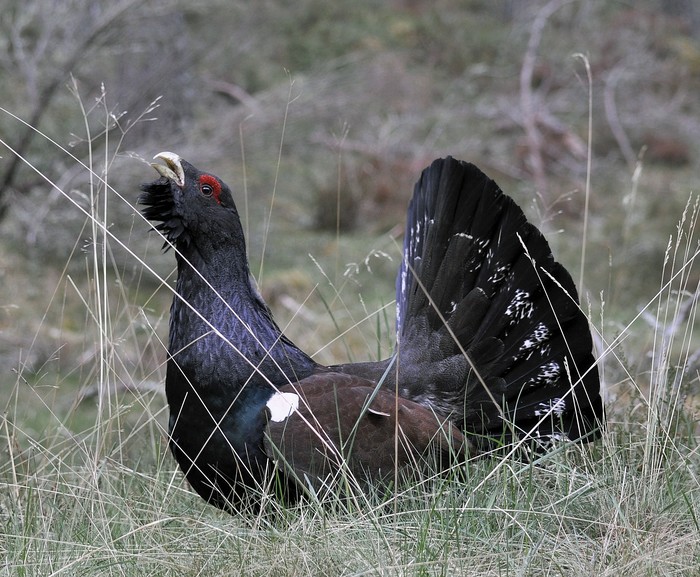
Within the UK, Capercaillie can now be found only in Scotland’s native pinewoods. Males are striking birds - black with a metallic green sheen, a fan-shaped tail, and a thick red wattle above the eye. Their size and the male’s “clip-clop” lek call have earned them the Gaelic name “horse of the woods”. Females are much smaller and cryptically patterned in mottled browns and greys, nesting on the forest floor.
The species’ long decline has been linked to multiple pressures acting at once, including reduced habitat quality and extent, egg and chick predation, collisions with deer fences, and disturbance from people in sensitive areas.
New techniques to improve habitat
The RSPB says two large-scale ground-vegetation management trials at Abernethy are helping improve conditions in the forest.
- A remote-controlled mower is being used to cut back dominant heather in difficult terrain, encouraging Blaeberry to regenerate - an important food source for Capercaillie and a key host plant for moth caterpillars that provide vital food for chicks.
- ‘Virtual fence’ cattle collars are being used to enable targeted grazing without installing physical fences in hard-to-fence areas, reducing the need for structures that can pose a collision risk for flying Capercaillie.
‘Hopeful - but still in the balance’
Richard Mason, the RSPB Abernethy Conservation Manager, said the rise in lekking males reflects the scale of habitat work underway, and that the combination of cutting and extensive cattle grazing has “dramatically improved conditions” in the forest. He added that staff are seeing many chicks reaching full size and expressed hope that these methods can support recovery, while stressing that the future of Capercaillie remains uncertain.
An emergency plan - and a wider partnership effort
The Scottish Government has announced a Capercaillie Emergency Plan led by the Cairngorms National Park Authority and NatureScot, with the aim of reversing long-term declines of the species. The RSPB says it is working with landowners, partners and government across the Capercaillie range to have the greatest possible impact.
Alongside the trial techniques at Abernethy, the RSPB describes a broader package of measures being used or supported across Scotland, including public-awareness work to reduce disturbance, diversionary feeding of predators, forest restructuring, bog woodland restoration, research and monitoring, and advisory events for forestry managers.
Through the Cairngorms Connect partnership, the RSPB is working with NatureScot, Forestry and Land Scotland, Wildland Ltd and the Cairngorms National Park Authority on action both on the ground and at a wider landscape scale.
Funding - and what happens next
The initial trials of the remote-controlled mower and virtual fence collars were funded through the LIFE 100% for Nature project. The RSPB says demonstrating these techniques and showing what works in real forests could support wider rollout elsewhere in Scotland, particularly where land managers are trialling new approaches with support from the Scottish Government’s Nature Restoration Fund managed by the Cairngorms National Park Authority.
For now, the RSPB’s message is clear - the increase at Abernethy is encouraging, but saving Capercaillie will depend on sustained, coordinated work across multiple sites, and on giving Scotland’s native pinewoods the right structure and ground vegetation for breeding success.
February 2026
Get Breaking Birdnews First
Get all the latest breaking bird news as it happens, download BirdAlertPRO for a 30-day free trial. No payment details required and get exclusive first-time subscriber offers.
Share this story