23 Buzzards killed in mass poisoning
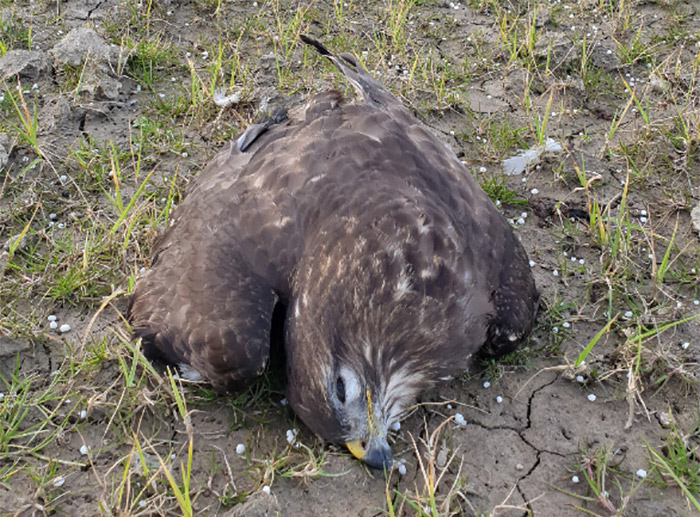
The Irish Raptor Study Group and BirdWatch Ireland have reported the illegal poisoning of 23 buzzards in a single incident in Co Cork.
Birdwatch Ireland released the following statemenet
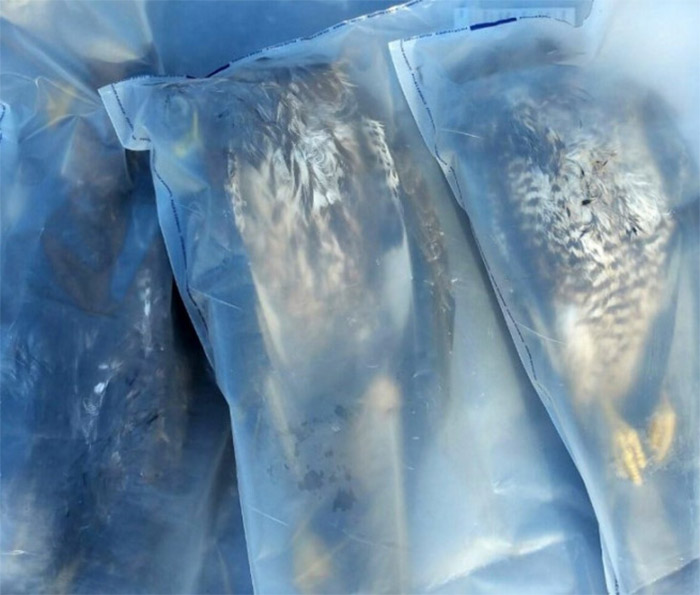
We have recently learned of the illegal poisoning of 23 Buzzards in County Cork. This incident is the single largest poisoning of birds of prey in this country in decades and the largest since the legislation was amended to ban the use of poison meat baits in 2010. We understand that the 23 Buzzards were recovered at the scene last December and were sent for testing under the Raptor Protocol, which subsequently confirmed that all had died due to ingesting the highly toxic and banned substance, Carbofuran.
The targeted use of bait laced with poison to kill protected birds of prey remains widespread and one of the most common substances used is Carbofuran, despite being banned. This incident follows the death of Mary, the satellite-tagged Hen Harrier, late last year, also illegally poisoned, also by Carbofuran (for more details see here and here).
These incidents, along with the countless other similar horrific poisonings of birds of prey, demonstrate that current efforts are simply not sufficient in stopping the persecution of our birds of prey. History dictates that incidents such as this mass poisoning will continue to occur unless appropriate action is taken. While we do not know who is responsible for this incident, we do know that the motives of those that persecute birds of prey are inherently flawed and display an ignorance and lack of understanding of our environment. Buzzards and other birds of prey are indicators of a healthy countryside and perform a vital role in the ecosystem, we cannot and should not tolerate the damaging actions of a minority to eradicate them from our countryside.
We understand that NPWS held an investigation, but that similar to the poisoning of Mary, those responsible were not held accountable. Why is more action not being taken to tackle Carbofuran and other illegal poisons, which are horrendously toxic and pose a serious threat to humans as well as to wildlife? Does an unwitting person trying to assist a stricken bird have to die before the State finally takes action?
We will be liaising with NPWS, we offer our support to them and urge a unified approach to tackling wildlife crimes. Unless proper resources are allocated, to include an established wildlife crime unit and greater powers and resources to investigate and enforce the legislation, incidents such as this one will continue without consequence. We will bring you more on this incident once we have further details.
Ends
There is a poor record of enforcement measures against raptor persecution in many parts of Ireland and so it is being seen as a significant move that the local politician Christopher O’Sullivan has called for a full investigation.
The Golden Eagle Trust, the wildlife charity behind the reintroduction of Golden Eagles, White-tailed Wagles in the Republic of Ireland released the following statement on the incident..
The continued wilful persecution of birds of prey is decreasing the population of Peregrines, Hen Harriers, Buzzards and the reintroduced native populations of Eagles and Kites, in some parts of Ireland. It can be very difficult to find the evidence that could link an individual with an act of poisoning and thereby present sufficient evidence before a judge in order to secure a successful prosecution. Therefore, the Golden Eagle Trust is calling on Government Departments to draft and enact a defined piece of legislation which makes it illegal for anybody to be in possession of Carbofuran and several other lethal substances, whose former agricultural uses have been banned and phased out. We are also calling on the Department of Culture, Heritage and the Gaeltacht to revisit their discussion on whether it would be helpful to establish a small (one or two person) Wildlife Crime Unit within NPWS, in order to provide specialized advice and expertise in responding to reported wildlife crime incidents and presenting a strong legal case to the State Solicitors and to be put before the Courts; whenever the evidence allows a case to be initiated. It is difficult to assess the effectiveness and enforcement of National and European wildlife legislation in Ireland and the degree of deterrent it might offer, arising from successful Irish wildlife court cases; as court cases or successful wildlife crime prosecution figures are not readily available. However, a crude review of available internet media sources, might suggest that there has not been any successful wildlife crime court case, over the last 4 or 5 years, in Counties Cork or Kerry, for example. The general public have a very important role in reporting dead birds of prey to NPWS and they in turn, need appropriate laws, staff resources and appropriate management facilitation in implementing the law, where the evidence allows it, in some of these ongoing poisoning incidents. Whilst there may be several legitimate administrative reasons for the lack of clarity surrounding Ireland’s biggest raptor persecution case, arising from the current Coronavirus crisis; there is also a competing responsibility to keep communities informed of nearby risks related to illegal poisoning activity. The wider context reveals an unfortunate pattern of Peregrines being killed at the same nests annually and Common Buzzards and Red Kites being poisoned, in localized areas, on a regular basis. It can be extremely difficult to identify the perpetrators of these crimes against nature and therefore the legislation needs to keep abreast of the collated RAPTOR Protocol dataset and counter, the primary threats that the accruing results suggest. In July 2010, the Grant Thornton, ‘Organisational Review of the National Parks and Wildlife Service (NPWS), suggested in Section 4.5.1 (Page 55) that:
“Enforcement and prosecution activity is represented as being low with only some 30 cases per annum being prosecuted. Progress in this area seems to vary depending on Division.” The Golden Eagle Trust wonder if the level of nature protection enforcement activity might have fallen even further since 2010? We are concerned that a lack of Ministerial, Departmental or Party-Political support, for some aspects of the Law, may have weakened NPWS managerial resolve, in some areas, over the last decade. In a small number of places, recreational family groups, dog walkers and landowners may need to be especially vigilant as regards the possibility that poisoned meat baits have been left out in the open. This incident revives the independent expert opinion and concern (as set out in the Grant Thornton Organisational Review) whether some NPWS managers need more support and resources in progressing illegal wildlife activity cases? The unpalatable alternative, is that the Department of Culture, Heritage and Gaeltacht transparently seek to repeal defined aspects of Irish or European Wildlife Legislation, which they may no longer endorse.
Regardless of the context; we are shocked by the number of dead Buzzards found in Cork and the 23 associated positive toxicology results – it is a wake-up call to us all. Ends
11 May 2020
Share this story