Talking Birds - Mark James Pearson talks to Kimberley Kaufman
In the latest instalment of his interview series with some of the leading lights in birding and conservation, Mark talks to a legend in North America's birding and conservation community, Kim Kaufman. Kim's combination of deep-seated passion, boundless enthusiasm and sharp focus, all underpinned by an unshakable desire for equality and diversity, has seen her achieve great things at her beloved Black Swamp Bird Observatory and much further afield.

(MP) You're a much-loved and respected player in the North American birding community, not least as Executive Director of the mighty Black Swamp Bird Observatory but also as a campaigner and ambassador on a variety of conservation issues. Was it all part of a cunning plan, or was it a series of happy accidents that brought you to where are today?
(KK) Well, first of all, thanks for the very kind (and far too generous) assessment of me. I’m just incredibly fortunate to be part of the Black Swamp team and to do work that makes a difference. And I don’t think I could get away with saying it was all part of some cunning plan. It was more like a combination of determination, sheer stubbornness, a bit of luck, and an intense desire to give back to the birds that gave me a purpose in life.
(MP) Where did it all begin for you, and did you have a mentor who steered you onto your birding path?
(KK) American Goldfinches changed the entire course of my life. I grew up on a small farm in Ohio and spent nearly every waking moment outside. But somehow, I didn’t really connect with birds until my late 20s. I was at an appointment, no more than 10 miles from the farm I grew up on. Outside the office they had a bird feeder, and on every perch, there was a beautiful American Goldfinch, all males in cracking gold summer plumage. I had never seen a goldfinch, and I was stunned to discover that these glorious birds—so common in Ohio—could have escaped my attention all my life. That moment quite literally changed the course of my life. I was consumed with by an intense curiosity about what other treasures the natural world held in store, and an intense desire to share these discoveries with others, so their lives could be changed, too.
(MP) Some will have heard of Black Swamp Bird Observatory (and some may have been lucky enough to visit), but many may not be aware of this amazing place and the work you do there. How about a rapid-fire distillation for our uninitiated benefit?
(KK) At the heart of BSBO’s mission is a scrappy, skilled, determined, and passionate staff of scientists and educators—working together with some of the most dedicated volunteers in the world—to do good things for the birds that bring so much joy to our lives.
BSBO is a non-profit founded in 1992, and we’ve been bringing birds and people together, with the ultimate goal of generating support for habitat conservation, for more than 25 years. But, I can’t tell the story of BSBO without first talking about its location. The Great Black Swamp was a vast area of forested marsh that spanned more than 1,500 square miles, much of it in Ohio along the north coast of Lake Erie. Teeming with birds and wildlife, the swamp seemed an impenetrable barrier to settlers. Sadly though, much of the area was eventually drained and more than 90% of the marshes were lost. The remaining areas of marshes and forested areas in northwest Ohio have been designated as a Globally Important Bird Area, and they provide critical habitat for migratory birds. And the birding is absolutely mind-blowing.
It’s here, in the remaining vestiges of a once immense area of habitat in northwest Ohio, that BSBO calls home. BSBO was founded by scientists to help disseminate the scientific data they were collecting in our primary banding station, where we’ve banded more than 600,000 birds. Our detailed knowledge of bird migration combined with our dynamic education programs, builds support for conserving the habitat in the region. Our spring birding festival, The Biggest Week In American Birding, helps bring more than 90,000 birders to the area each year, generating an annual economic impact of $40 million. The economic impact data we collect gives us a powerful voice to promote the economic value of habitat conservation and restoration.

(MP) Can you tell us about a few of your most amazing birding experiences, at Black Swamp and/or elsewhere?
(KK) Oh my goodness. There are so many wonderful memories that they all blend into one love song. But, I think maybe the most amazing birding experience in my life involved the way a bird changed someone else.
BSBO was presenting a field-based bird banding and migration program for 150 inner-city high school students. In the back of the group, a tall, lanky kid was expressing his feelings about his current situation, and so far, this young man simply was not impressed. A high school senior and obviously one of the cool kids in his class, this young man had never been out of the city, and he was having trouble finding the value in spending time outdoors.
As I pulled the last bird of the day—a Blue Jay—out of the holding bag, my instincts told me what to do. Calling the young man forward, I showed him the proper way to hold the bird, and I carefully placed the Blue Jay in his hand. Turning back to the group, I finished the portion of the program that I had been sharing with his classmates.
Less than two minutes went by, but when I turned back, the tough guy had vanished, and in his place stood a boy who was clearly captivated by this bird. All of the bravado gone, the look on his face was one of unabashed awe. “How are you two doing?” I asked. His eyes never left the bird, and in a voice that had also been transformed, came the response. “This bird is SO blue!” My heart in my throat, I gently opened the bird’s wing to show its new admirer just how blue this bird really was. And with eyes wide, the young man gasped, “Whoa, that is so awesome!” “Go show your friends,” I gently urged, and he didn’t hesitate. Out into the group he went, proudly sharing his new discovery.
In the space of a few minutes, a Blue Jay—not some rare bird, but a common backyard bird in Ohio—had transformed this young man from a bored teenager into a proud teacher. It was a powerful feeling to see our goal of teaming research with education to promote bird conservation being achieved right before my eyes. And I will cherish that experience for the rest of my life.
(MP) The Biggest Week in American Birding – the justly famous and hugely successful birding festival was your idea, and you're still holding the reigns as it grows bigger every year. What was your original motivation, and has it turned out how you wanted it to?
(KK) With the astonishing bird migration through the area in spring, and the accessibility of the habitat for immersing people in the spectacle, I had been dreaming of organizing an event in this area for nearly a decade. The motivation was two-fold. First, we wanted to generate support for habitat conservation by collecting data that clearly demonstrated the economic impact of birding tourism. And secondly, in my heart, I am always searching for ways to bring the joy of birds and birding to more people. It’s the most incredible, life-changing gift to give someone. And the beauty is that it’s the first step toward building support for habitat conservation. People are more likely to protect the things they love, so we have to do all that we can to continue to bring more people into the birding and conservation community.
The success of the Biggest Week didn’t happen by accident. The triumph of the event is the direct result of a business plan designed and executed by BSBO that capitalized on our strengths. Our research team had detailed knowledge of bird migration through the area that lent itself to our development of high quality birding services. These services included free birding area maps, bird migration updates and predictions, guided birding services, and up-to-the-minute bird sightings on Facebook and Twitter. To this suite of services we added regional travel information. And, we offered all of these services free of charge. We wanted to establish BSBO as THE go-to source for birding information in the area.
We also recognized the need to connect with the business community, both in terms of educating them on how to provide quality services for birders, and to create a network to communicate conservation messages. To achieve these goals, in 2008, we developed our Birds and Business Alliance program. To date, more than 100 businesses are participating. In 2010, with all the other elements of our plan in place, we launched The Biggest Week In American Birding. We really hit the ground running in the first few years, and have achieved the distinction of being the largest birding festival in the country.
You asked if it turned out the way I wanted it to, and it’s everything I dreamed it would be – and so much more. I knew it would be a grand festival. But it’s stunning to me that in less than a decade, this festival has quite literally changed the culture of northwest Ohio. While every citizen might not be able to tell you how to age and sex a warbler, they definitely know that birding is a VERY big deal for the region. The Biggest Week has created a ground swell of appreciation for birds and birders, and the positive energy the event creates is something everyone should experience.

(MP) While things may be changing, however slowly, and while (in my limited experience) North American birding is a far more open and less male-dominated community than ours, it's still shocking and depressing to see the lack of gender and ethnic diversity in our pastime. As white male birders (that's most of us reading this), what can we do, or should we be conscious of, to improve and diversify our demographics?
(KK) Action changes things. We’ve got to stop talking about it and actually DO something. If you look at the line up for this year’s Biggest Week speakers and instructors, you’ll find more than a bunch of white males. Nine of our 11 keynote speakers are women, many of our speakers and leaders are African American, and we have many young birders involved in leadership roles as well.
Our event also features barrier smashing activities such as a tattoo contest, a birder prom, and free walks for families involved with African American and Latino community centers in our area.
Be the change you want to see.
(MP) I've got to be totally honest with you - I was totally blown away by your talk at IBOC (as was everyone else in the room, trust me); there were so many lessons to learn and so much inspiration to draw from it. One of those lessons was how much we can gain as a conservation collective from not just embracing but positively harnessing the power of social media. Can you expand on that a little for us?
(KK) Thanks so much for the very kind words about my talk at IBOC. I was so determined to drive home the message about the critical importance of telling our stories, and social media plays a major role in doing that effort. I sometimes wonder if we’ll eventually see a mass exodus from social media. But for now, if you want to communicate your message, you absolutely must have a presence in this space. In order to be successful, we must tell our story effectively. Sound scientific studies that expand our knowledge of the behaviours and habitat needs of birds is essential. But if we never connect the general public with the beauty, the joy, and the wonder of birds, we’ve only done a portion of our job. Social media, when utilized effectively, can help us connect birds and people in a way we never dreamed of in the past. Using stunning images of birds as the “hook,” and adding engaging, fun, and worthwhile narratives, we can garner the attention and capture the imagination of a huge number of people. And once we have their attention, we can offer simple conservation measures they can take in their own lives to help birds.
(MP) You started out as a field researcher and bander (ringer) – do you get any opportunities to keep your hand in these days, and if not, do you miss those disciplines?
(KK) Sadly, I don’t get to do much banding these days. Don’t get me wrong; I love what I do, and there’s something deeply rewarding about facilitating all aspects of our mission. But, there’s a magic in holding a tiny champion of endurance in your hand, feeling that spark of life. And I miss that connection very much.
(MP) From moral and environmental perspectives, it's hard to remember darker political times for both the US and the UK than those we're sleepwalking through presently. How hopeful are you for the future, and if so, can you share a little of that hope with us?
(KK) I get to see hope for the future on a regular basis through the lives and accomplishments of the kids in BSBO’s Ohio Young Birders Club program. The program is celebrating more than 12 years of connecting kids with birds and with other young birders who share their passion. Their intelligence, their insightfulness, and their fearless commitment to conserving natural resources is a constant source of hope, inspiration, and motivation.
(MP) Finally – what do you have planned for the future?
(KK) I’ve never been one to look too far to the future, choosing instead to do my best to be present in every moment, and celebrate today. But in a big picture sense, I’d just like to continue to do all that I can to connect people with birds in some capacity.
Black Swamp Bird Observatory - www.bsbo.org
Biggest Week In American Birding - www.bwiab.com
Read more interviews in the Talking Birds Series here
20 February 2018
Share this story

Mark Pearson
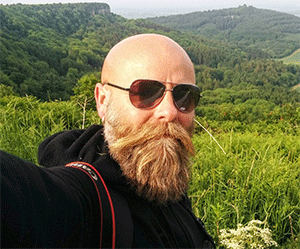
Mark is an obsessive birder, natural history writer, field ornithologist, speaker, guide and passionate conservationist. Originally from Flamborough, Mark recently returned to his beloved Yorkshire coast after many years elsewhere, and now calls Filey Bird Observatory home (where he juggles various roles for the Obs).
He has travelled extensively in pursuit of birds and wildlife but remains especially passionate about his native area. His writing is widely published, much of which is archived here, while his photographic nature journal Northern Rustic can be found here.
In Talking Birds Mark interviews some of the most well-known (and not so well known) birders from Britain and around the world. You can read previous interviews in the series here.
Other Talking Birds
 |
 |
 |
 |
|||
| Dawn Balmer | Kim Kaufmann | David Le Puma | Paul French | |||
 |
 |
 |
 |
|||
| Bob Flood | Jonathan Meyrav | Brett Richards | Jonny Rankin | |||
 |
||||||
| Andy Roadhouse | ||||||