Quarter of UK birds now on Red List
Curlew, Nightingale and Puffin join growing list of threatened birds while Bittern and Nightjar given the green light.
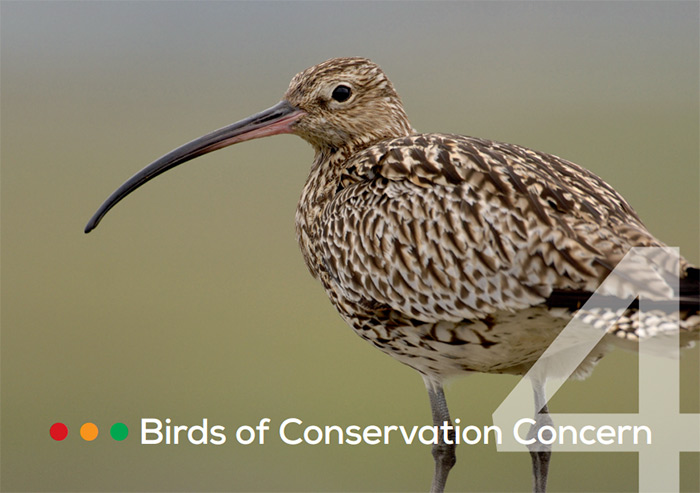
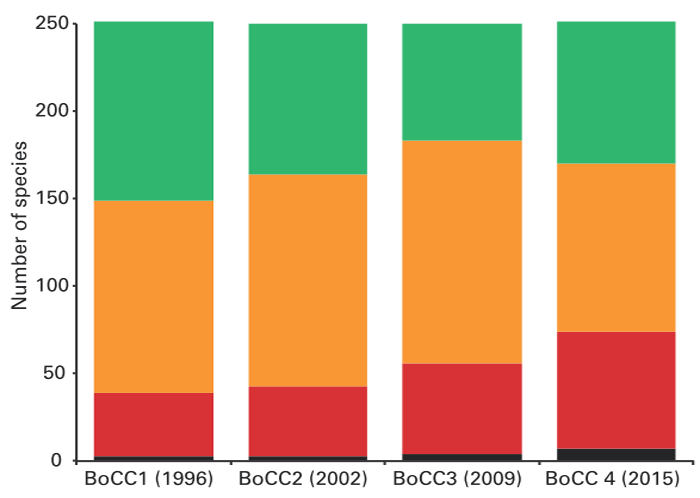
The latest assessment of the status of all the UK’s 244 bird species – Birds of Conservation Concern 4 – shows that 67 species are now of ‘highest conservation concern’ and have been placed on the assessment’s Red List. The revised Red List now includes even more well-known birds, including the Curlew, Puffin and Nightingale, joining other familiar species such as the turtle dove, cuckoo and starling.
Alarmingly, the Red List now accounts for more than one-quarter (27%) of the UK species. This is far higher than the last assessment in 2009, when 52 species (21%) were on the Red List. Most of the 67 species were placed on the Red List because of their severe declines, having halved in numbers or range in the UK in recent decades. Others remain well below historical levels, or are considered under threat of global extinction.
Birds of Conservation Concern 4 is a report compiled by a coalition of the UK’s leading bird conservation and monitoring organisations reviewing the status of all regularly occurring birds in the UK, Channel Islands and Isle of Man. Each species was assessed against a set of objective criteria and placed on the Green, Amber or Red List – indicating an increasing level of conservation concern.
Uplands in trouble
Amongst the species new to the Red List are five upland species, most notably Europe’s largest wading bird the Curlew. It was recently highlighted as possibly the UK’s bird of highest conservation priority because of UK and international declines, and the global importance of its UK population. It is joined by Dotterel, Whinchat, Grey Wagtail and Merlin whose addition to the Red List highlights that many of the UK’s upland species are in increasing trouble, with the total number of upland birds red listed now standing at 12.
The decline of widespread woodland birds is a theme which has continued to develop since the compilation of the last list in 2009. Nightingale, a species known for its expressive song, Pied Flycatcher, a bird mainly found in the west of the UK, and Woodcock are the most recent woodland birds to join the Birds of Conservation Concern Red List.
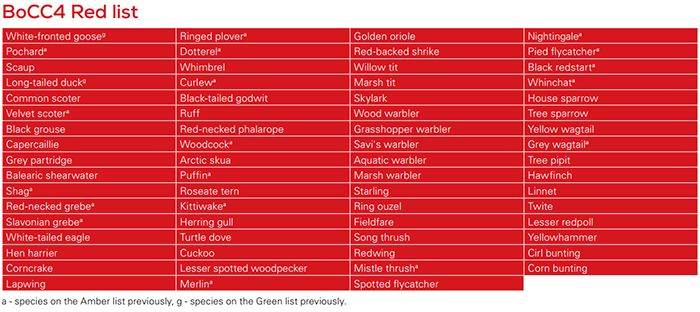
Three species of seabird also join the Red List for the first time. The Puffin has joined the growing list of seabirds added to the Red List after a worldwide population decline, which means that it is considered at risk of global extinction. Further declines of the UK’s internationally important seabird populations are highlighted by the addition of Shag and Kittiwake.
The Wryneck is the first once-widespread species to have been lost as a breeding bird in the UK in nearly 200 years. It was once a common bird being recorded breeding in 54 counties between 1875 and 1900. After a long decline from the 19th Century, it was last known to breed in the UK in 2002 and is now considered a former breeder. The Wryneck is still a regular autumn migrant in small numbers to sites on the eastern and southern coasts.
Martin Harper, RSPB Conservation Director, said: ““This update highlights the continued erosion of the UK’s wildlife. It is sobering that much loved species such as Curlew, Puffin and Nightingale are now of highest conservation concern in the UK. They are sounding the alarm that things are going wrong in our uplands, our seas, and for our migratory species. Addressing these declines must now become a priority.
“But, we must remain optimistic. This latest assessment shows that when have diagnosed the problem, identified solutions, and when conservation action is targeted and adequately funded, we can bring species back from the brink.”
David Noble, Principal Ecologist - Monitoring at BTO, said: “The new list demonstrates the crucial importance of long-term monitoring and the huge volunteer effort associated with them. Six species (Nightingale, Curlew, Whinchat, Pied Flycatcher, Grey Wagtail and Mistle Thrush) have moved from amber to red entirely due to evidence from the Breeding Bird Survey of continued and more severe declines in their breeding populations. Three species (White-fronted Goose, Ringed Plover and Red-necked Grebe) moved to red due to increasingly severe declines in wintering populations revealed by the Wetland Bird Survey.”
Some good news
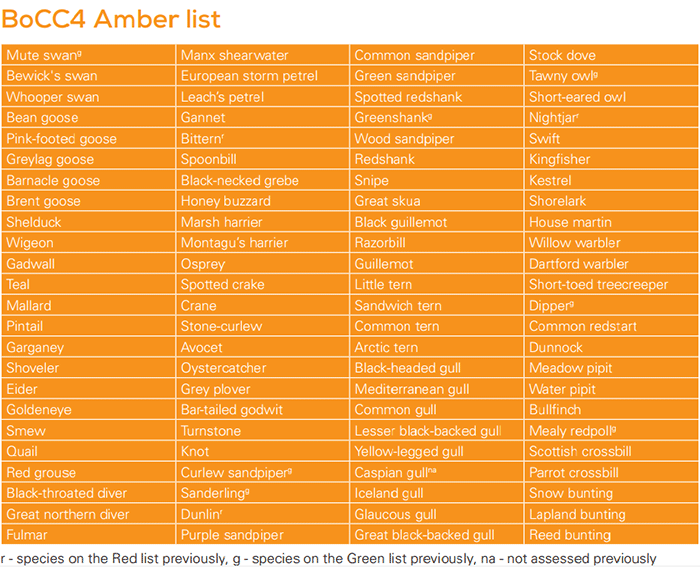
However, the 2015 assessment does contain some good news and demonstrates that targeted conservation action can make a real difference. Three species (Bittern, Nightjar and Dunlin) have been removed from the Red List and added to Amber. Both Bittern and Nightjar have moved to a more favourable conservation status because of targeted actions, which has triggered a boost in numbers.
The Bittern is bouncing back to full recovery. In 1997, Bitterns were heading towards a second extinction with only 11 booming males recorded in England. Thanks to efforts to improve its preferred habitat – wet reedbed – and significant funding from two projects under the European Union Life Program, the bittern was saved. This year, 150 booming males were counted in England and Wales, more than at any time since the early 19th Century. Similarly, the Nightjar has also benefited from a program of concentrated and targeted conservation work.
In addition to these successes, an additional 22 species have moved from the Amber to the Green list; meaning they are now of the lowest conservation concern. Most notably these species include Red Kite and Woodlark. Red Kites were once restricted to Wales but thanks to the efforts of conservationist and landowners in Wales and a long-term reintroduction programme in England, Scotland and Northern Ireland they can now be found in most parts of the UK. Woodlarks have benefited from improved land management, especially of healthland. Both birds were once on the Red List and so demonstrate how recovery is possible.
03 December 2015