Red-winged Blackbird and Masked Wagtail admitted to the British List
The British Ornithologists’ Union Records Committee (BOURC) has accepted the following to the British List.
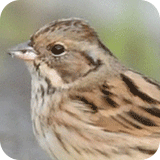
Red-winged Blackbird Agelaius phoeniceus
Female, second-calendar-year or older, Garso, North Ronaldsay, Orkney, 29 April to 14 May 2017.

Red-winged Blackbird breeds throughout North America south to Mexico with many subspecies recognised. Some populations, particularly in the north-east, move considerable distances between breeding and wintering areas.
 ...I could just see its head poking out with a broad supercillium, yellowish throat, streaked chest and pointed bill; my brain stuttered for a second as I went to myself ‘ohh, Redwing, no, yes, NO’! ..
Read Simon Davies finders' account here
Making the announcement the BOURA said “The appearance of a female of this species on Orkney in spring after a period of strong north-westerly winds is consistent with it having crossed the Atlantic and having a wild origin. There are no issues with provenance as the species is currently kept rarely in captivity in Europe.”
”Though the sub-specific identity of the North Ronaldsay individual could not be determined it seemed likely to have been one of the eastern forms, those more likely to be prone to trans-Atlantic vagrancy moving large distances along the east side of North America.”
The following subspecies has also been admitted to the British List:
White (Masked) Wagtail Motacilla alba personata
Male, second-calendar-year or older, 29 November to 26 December 2016, Camrose, Pembrokeshire (Sir Benfro)

Masked Wagtail breeds from northern Iran to south-west Siberia to west Mongolia, north-west China and the western Himalayas.
The BOURC said: “The Camrose individual showed all the features of this highly distinctive subspecies of White Wagtail, sometimes known as the Masked Wagtail. There are no issues with provenance as it is not currently known in captivity in Europe. Instead the Welsh record accords with a number of other recent north-west European vagrant records of this taxon from its central Asian breeding grounds”.
Upon publication of these decisions, the British List stands at 616 species (Category A = 598; Category B = 8; Category C = 10).
22 January 2018
Share this story