Spain bans Turtle Dove hunting for one year
The majority of regional authorities across Spain have agreed a one-year ban on the hunting of Turtle Doves, sparing an estimated 0.9 million birds that would otherwise be legally shot in the country.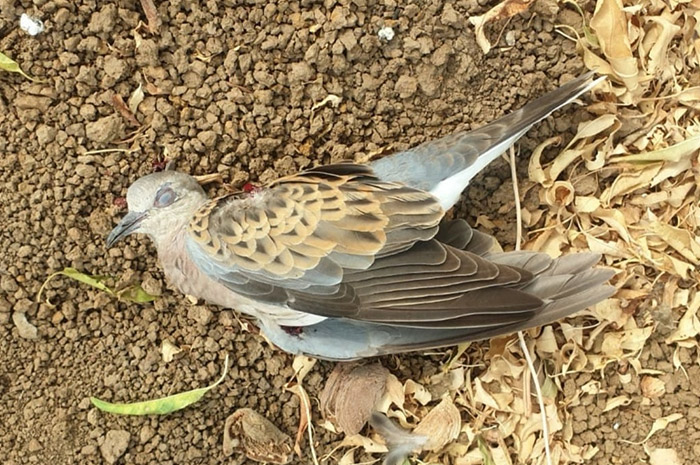
The engagement of the Spanish hunting community will make a significant contribution to help save this Globally Threatened species. Population modelling has shown that numbers of this migratory species in western Europe could increase by up to 5% annually if hunting is stopped; for this reason, scientists have recommended a 4-year ban along the entire migration route to allow for the population to recover sufficiently.
Dr Andy Evans, the RSPB’s Head of Global Species Recovery said, “This is a really positive step from Spanish authorities because Spain is a key country on the migration route of the species. Hunting exacerbates the problems for these birds caused by agricultural changes, but both problems need to be tackled in order to save the Turtle Dove. By stopping hunting, Turtle Doves are given a better chance to recover.”
SEO/BirdLife, the Partner organisation in Spain, has welcomed the news. But it also urges the Spanish authorities to list the Turtle Dove in the Spanish Catalogue of Threatened Species, which would prevent it from being hunted for as long as it remains threatened. At the same time, it would force authorities to develop conservation plans for the species, with a focus on habitat management measures.
The Turtle Dove has been in steep decline for several decades across its European range, mainly as a result of agricultural changes but also exacerbated by unsustainable hunting mainly in Mediterranean countries such as Spain, France and Portugal on its migration route through western Europe, and Italy, Greece, Bulgaria and Malta in its eastern one.
The number of Turtle Doves in the UK has plummeted to just 5% of what it was only 25 years ago, leaving an estimated 3600 breeding territories in 2016. This is mirrored in other countries, mostly in central-northern Europe (the Netherlands, Germany) but also elsewhere. Across the western European migration route, the overall decline has seen the loss of 700,000 pairs in the last 15 years.
The decline of the Turtle Dove is largely due to agricultural changes including the loss of mixed farming, high production focused arable and livestock management, increased effectiveness of herbicides and weed removal from crops. These have all led to huge reductions in annual plants (usually called ‘weeds’) on our farmland – the seeds of which were Turtle Doves main food during the summer.
This lack of food has made it more difficult for Turtle Doves to breed successfully. And studies have shown that their breeding season has become shorter and the birds are making fewer nesting attempts, which all leads to fewer chicks fledging to sustain numbers.
24 Jun 2021
Share this story