Plans to reintroduce Ospreys to Suffolk
Suffolk Wildlife Trust has launched a consultation on reintroducing Ospreys to Suffolk.
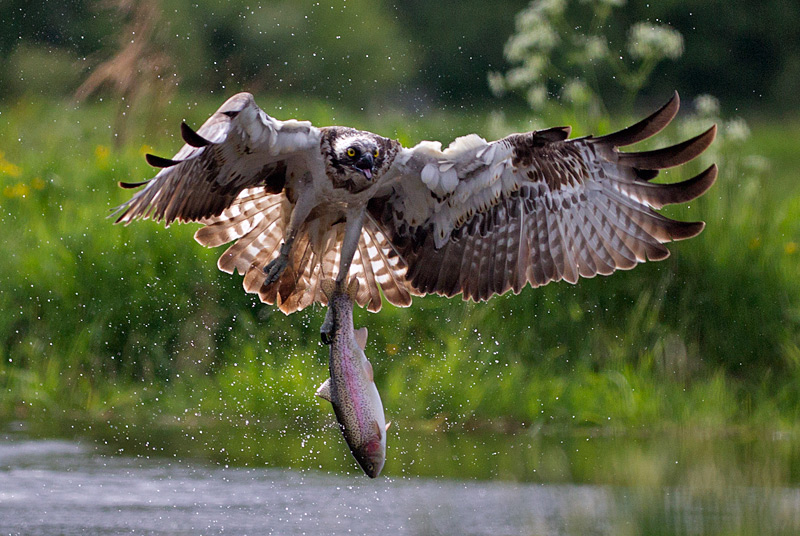
Working with the Roy Dennis Wildlife Foundation and others, they plan, over a period of five years, to move up to eight juvenile Ospreys per year to Suffolk from the Rutland Water area in the East Midlands where a healthy population is now established following a successful translocation project.
They say the project is needed as Ospreys are slow to spread to new areas. This is because males, in particular, are very faithful to the location from which they fledged. When a young Osprey leaves its nest for the first time and begins to explore its surroundings, the geographical location is imprinted in its memory, and despite flying thousands of miles on migration, most young birds return to the same location and nest site. Translocation projects respond to this behaviour by moving juvenile Ospreys a few weeks before they fledge to a new location, which will then become its imprinted home.
Females are a little more adventurous and are not so site-loyal until they find a nest and a mate. The aim is to create a self-sustaining population of breeding Ospreys to enhance the species long-term chances of survival after intense and widespread persecution and to bring the majestic sight of the Osprey back for everyone to enjoy.
The Suffolk coast and the Blyth estuary has ideal habitat for Ospreys to thrive with safe access to rivers and the estuary and plentiful fish, such as Grey Mullet.
The young birds, around six-weeks old, would be collected from nests with more than one healthy chick. The populations in the donor sites will not be impacted negatively, and young will not be collected if there is an unsuccessful or poor breeding season.
The population around Rutland is significant enough that young males are now competing for nest sites and females, sometimes inadvertently damaging or breaking eggs in the process. The project will help by relocating surplus birds and allowing the population to spread to highly suitable habitat at a much faster rate than would occur naturally.
The Wildlife Trust is working in partnership with a local landowner and plan to build a purpose-built aviary to safely house the young Ospreys for a short period before they are ready to fly. Th will be fed fresh fish through a hatch for 2-3 weeks, so they have no contact with humans and remain totally wild. The birds will be monitored 24/7 through CCTV cameras.
Post release they will continue to provide fresh fish for them until they are ready to depart on their migration in the autumn, just as their parents would at a natural nest. Amazingly, young Ospreys are not taught to fish by a parent, they have an innate ability to do this without watching the adult birds.
The project requires full consent and a licence from Natural England. To allow SWT to proceed with their feasibility study and to help inform their decisions, they need your help...

16 March 2021
Share this story