Peregrines believed to be poisoned at notorious Shropshire blackspot
West Mercia Police have issued the following press release appleaing for information after a female Petegrine was found dead at Clee Hill Quarry in Shropshire.
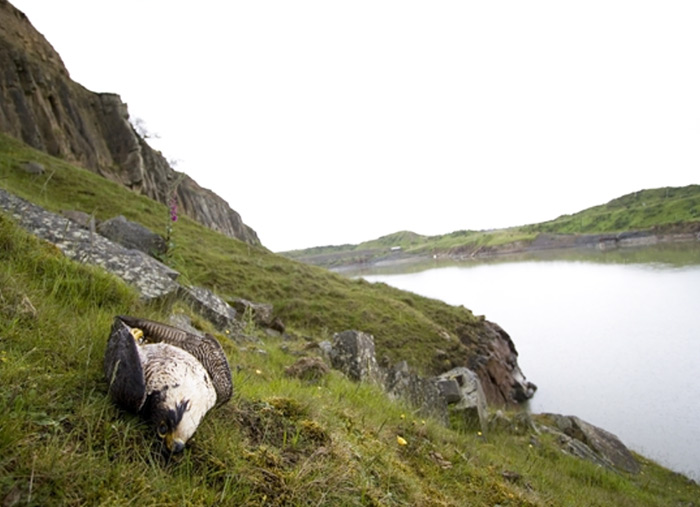
On the morning of Saturday 1 May, officers received information that a female peregrine had been found dead on the hillside below the nest near to Clee Hill Quarry.
PC Grant said: “The body was recovered together with a pigeon that had been used as bait. The male bird has not been found, but is also believed to have been killed. The baited pigeon at the scene indicates that poison was used to kill both birds. The incident is currently under investigation by both West Mercia Police and RSPB Investigations.
Peregrine Falcons are specifically protected under the Wildlife & Countryside Act 1981, and the maximum penalty for killing or deliberately injuring a protected species is a fine of £5,000 and six months imprisonment.
We are asking members of the public walking on Clee Hill common with children and pets to be aware and to take care that poison bait may still be around and not to touch any dead animals that they may come across if they do see any such animals or anything suspicious, to please call police.
If anyone has any information regarding this incident please contact the police on 101 and quote incident number 258i of 1 May 2021 or contact us via our ‘Tell us about’ section on our website.”
If you do have information but don’t feel comfortable speaking to police, you can speak to the independent charity Crimestoppers. It is 100% anonymous, they never ask your name and they cannot trace your call or I.P address. You can contact them online or by calling 0800 555 111.
11 May 2021
Share this story