How Northern Gannets brace for impact
CT scans reveal reinforced neck vertebrae that help plunge-diving seabirds withstand high-speed entry into the sea.
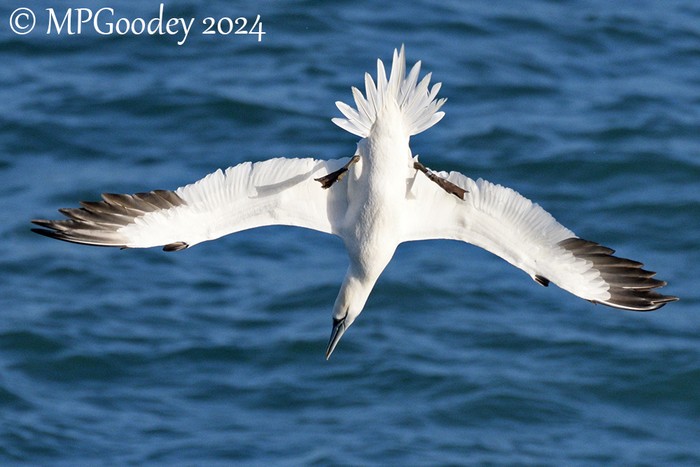

Northern Gannets survive repeated high-speed impacts with the sea partly because their neck vertebrae are shaped and connected differently from those of birds that do not plunge-dive, according to a new anatomical study.
The research in The Anatomical Record compared the necks of gannets, boobies and smaller plunge-divers with cormorants and darters. It found that the most extreme divers possess short, wide vertebrae and, in the front of the neck, an extra articulating surface that limits potentially damaging movement.
A Northern Gannet may strike the surface at about 110 km/h after folding its wings and pointing its bill into the water. The impact compresses a long, S-shaped neck containing 15 vertebrae, a structure that appears poorly suited to resisting the sort of loads that would make a slender column buckle.
Researchers from the University of Washington and collaborating institutions used micro-CT scans to build detailed three-dimensional models. They measured adult skeletons from Northern and Australasian Gannets, Red-footed Boobies, Belted Kingfishers, Green Kingfishers, Double-crested Cormorants and Anhingas, then added comparative measurements from other birds.
The scans showed that plunge-diving species shared more block-like vertebrae than the non-plunge-divers. Thicker arches, expanded joints and shorter, wider bodies should help spread compressive and bending loads through the neck rather than concentrating stress at one point.
We wanted to figure out what makes gannets so special, so good at diving.
Bart Boom, University of Washington
Gannets and boobies also had an additional articular facet on the dorsal arch of the second to sixth cervical vertebrae. The authors propose that this extra contact acts as a brace, restricting backward bending when a bird enters the water at an imperfect angle and transferring force down the cervical column.
Kingfishers had robust vertebrae too, but lacked the extra facet. Their separate evolutionary history and much smaller size suggest that a similar mechanical problem can produce some of the same broad solutions without reproducing the complete sulid arrangement.
The team also examined scaling. Although larger birds experience greater total force, the force relative to neck area was similar across the diving species. Peak loading occurred about five milliseconds after impact in both the small kingfishers and the larger sulids.
Neck muscles remain part of the explanation. Earlier work indicates that gannets contract their muscles before entry, stiffening the cervical column. The new results show how the bones and joints complement that active control rather than replacing it.
The sample was necessarily limited by museum material: 15 adult skeletons represented the seven focal species, and some species were represented by only one specimen. The study compared shape and inferred mechanical function; it did not film living birds while simultaneously measuring forces within their necks.
Even so, the distinctive combination of robust vertebrae and the extra anterior facet offers a possible anatomical signature of plunge-diving. The authors suggest it may eventually help palaeontologists recognise the feeding behaviour of fossil birds from neck bones that have survived long after soft tissues disappeared.
13 Oct 2026
Get Breaking Birdnews First
Get all the latest breaking bird news as it happens, download BirdAlertPRO for a 30-day free trial. No payment details required and get exclusive first-time subscriber offers.