2020 - A huge success for seabirds on England’s south coast
Last year saw a huge number of threatened seabirds successfully breed along England’s south coast.
RSPB Pagham Harbour, in west Sussex, saw a record 164 Sandwich Tern chicks last year. Sandwich terns breed around the UK coast in summer, but they nest directly on the ground which puts them at a higher risk of predation, human disturbance and flooding. Because of this they rely almost entirely on nature reserves. In 2012 the RSPB took on the management of West Sussex County Council’s Pagham Harbour nature reserve and have been carrying out work to protect these birds ever since. Creation of shingle habitat and protective fencing on ‘tern island’, made for the ideal nesting sites for these seabirds and led to a boom in their numbers.
One of UK’s rarest breeding seabirds, the Little Tern, also had remarkable breeding success in the south last year. Little terns also nest on beaches and are recognised by their small size and distinctive black beak with a yellow tip. As last year saw some of the highest tides recorded, and with a spike in visitors after the easing of lockdown, the terns faced a series of challenges. A team of staff and volunteers installed fencing and signage, and patrolled the nesting sites, to make sure parents and chicks had the space they needed to thrive. Thanks to their efforts 15 Little Tern chicks arrived - the best result in over four years. This success continued along the coast at Chesil beach, in Dorset, where similar work (funded by Portland Court Leet, the Environment Agency and Dorset Council) led to the largest number of breeding pairs since work began in 2009, and resulted in the arrival of over 30 Little Tern chicks.
Sometimes called ‘sea swallows’, because of their long tails, Common Terns also thrived in the south of England last year. On Hayling Island, RSPB staff launched rafts into the lagoon at the West Hayling Local Nature Reserve to provide a safe haven for returning Common Terns. This resulted in 56 chicks taking to the skies. Tern breeding success in the eastern Solent has completely transformed since a project to protect these birds launched in 2017 after years of total failure. Similar work to carefully manage nesting habitats and protect nests led to the highest number of Common Tern chicks fledging in nearly a decade, at RSPB Lodmoor in Dorset, with a total of 90 new chicks. The success continued to the east as at least 90 additional chicks fledged at RSPB Dungeness, Kent.
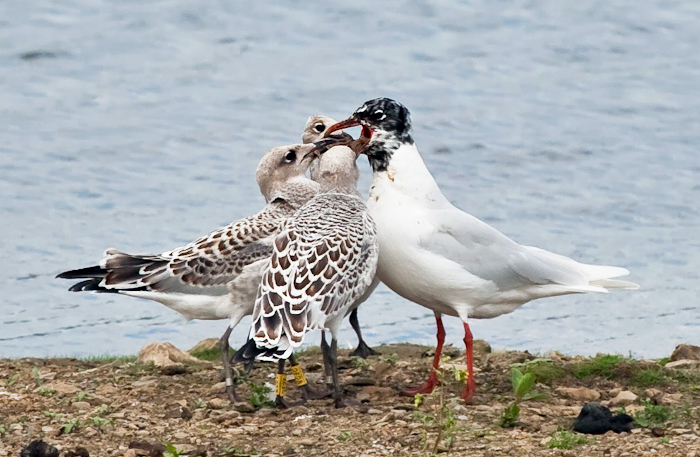
And it’s not just the terns which had an excellent year, at RSPB Langstone Harbour, in Hampshire, 1579 pairs of Mediterranean Gulls nested last year, the second highest total ever recorded. Mediterranean Gulls were once very rare but are now breeding around the UK coast in increasing numbers. Last year saw the first pair nest at RSPB Lodmoor and the first ever chick to fledge from there.
Richard Archer, RSPB Conservation Officer said, “The coastal habitats that these birds rely on are shrinking, so restoring and creating suitable habitat is vital to their survival. The success of our Little Tern numbers has led to the highest number of breeding Little Terns in over a decade and reflects a huge amount of planning, hard work and innovation. Our volunteers, operating under Covid-19 restrictions, have been fantastic. If they can breed successfully, Little Terns will often return to the same nesting beach every year, so it’s a really positive sign that the work we are doing here will support the future of these vulnerable birds.”
Wez Smith, RSPB Site Manager said, “The future of our coastal breeding birds remains in a perilous state here on the south coast of England but it’s reassuring to see our ongoing work bearing positive results. Once again, this shows that when our shore nesting birds are protected in suitable coastal habitat and given space, they can thrive. Taking action to allow increasingly rare birds like Little Terns to nest on beaches near populated areas along with creating new sites to replace those that have been lost is a real sign of progress. It’s vital that we can continue our ongoing work to protect wildlife and the habitats they require to thrive. The truly amazing success for breeding terns at RSPB Pagham Harbour is a particular moment to be treasured in our coastal conservation work and should see a newly invigorated population of young sandwich and Little Terns returning over the coming years.”
1 April 2021
Share this story