Weekly birding round-up: 23 - 29 May 2023
A largely rather quiet week was enlivened by the rediscovery of Britain’s latest first, now out on North Uist. It’s perhaps just as well it had already put in a good stint in the northeast of England earlier in the month. Spring’s now drawing to a close and we can, perhaps, expect some quieter times for a few weeks. All of which said, we all know the big one is said to travel late and alone…
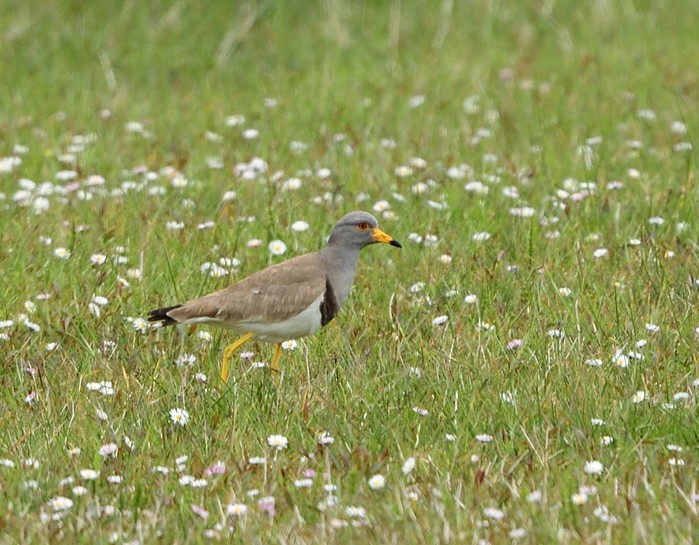
Last seen on the north Scottish coast making an all too brief pit-stop at Balormie Pig Farm (Moray) on 13th May, where was the Grey-headed Lapwing next going to be seen? Island birders in Orkney and Shetland could have been forgiven for entertaining hopes that they would be next in line to be blessed by this wandering British first but, as it transpired this week, the first in question was steadfastly heading west after all, and birders of another island group entirely were in for a treat.
Found at Balemore on North Uist (Western Isles) on 26th, it stayed put there until 29th. How much longer this residency can continue remains, at the time of writing, as much of an unknown quantity as what it might elect to do next. Surely not strike further west into the blue immensity of the Atlantic?
Potentially an augury for what’s to come again, for now the report of a Black-browed Albatross at Bempton Cliffs RSPB (East Yorkshire) on 27th remains tantalisingly unconfirmed.
Skua passage was quieter than ever this week. Two Pomarine Skuas were seen off Lewis (Western Isles) on 24th, coming after a singleton there the previous day. Other single birds were seen on 24th at Goring-on-Sea (West Sussex) and Saltcoats (Ayrshire); and on 26th at Girdle Ness (Aberdeenshire) and Eshaness (Shetland).
Two Long-tailed Skuas were also seen from Lewis (Western Isles) on 24th, and single birds were noted from Chanonry Point (Highland & Caithness) on 23rd, and Girdle Ness (Aberdeenshire) on 26th.
A Great Shearwater was seen from Lewis (Western Isles) on 23rd.
Three Balearic Shearwaters were seen from Portland (Dorset) on 23rd, with one off there on 24th, two on 28th, and a further individual on 29th.
Chief amongst the week’s long-legged beasties, Glossy Ibises were on the move once more, with some chunky flocks noted in England at various locales. 14 birds found in Norfolk at Cantley Marshes RSPB on 23rd toured the north of the county the following day; 15 were seen over Weybourne on 24th. 10 birds present at Alkborough Flats NR (Lincolnshire) on 25th rose to 11 birds there on 26th, but had dropped to four by 27th, and back to nine birds on 28th. Half a dozen were seen on 26th at Blacktoft Sands RSPB (East Yorkshire), while on 27th a flock of half a dozen birds were noted heading north over Gibraltar Point NNR (Lincolnshire), and at Budle Bay (Northumberland). On 28th flocks half a dozen strong were seen at Carlton Marshes SWT, Kessingland, and Minsmere RSPB (Suffolk), and Stoneybeck Lake (Co.Durham).
Amidst this flurry of activity smaller numbers were noted elsewhere – a single bird at Martham Broad (Norfolk) on 24th; one still in Suffolk at Aldeburgh on 23rd-27th, and Minsmere RSPB on 27th; a single bird in Northumberland at Druridge Pools NR on 26th, and one on 26th at Brundall (Norfolk); three at Idle Valley NR (Northamptonshire) on 27th; and singletons at Blacktoft Sands RSPB (East Yorkshire) and Dungness RSPB (Kent) again on 28th; and on 29th at Cantley Marshes RSPB (Norfolk), and Rainham Marshes RSPB (London). In Ireland two birds remained at Tacumshin (Co.Wexford) on 24th-27th, joined by a third bird on 28th-29th.
A possible Night Heron passed over Aston (West Midlands) on 23rd; confirmed birds were seen in recent days at Hickling Broad (Norfolk) on 24th, Riverside Valley Park (Devon) on 27th, Conna (Co.Cork) on 27th, over Wheatfen (Norfolk) on 27th, and near Earith (Cambridgeshire) on 29th.
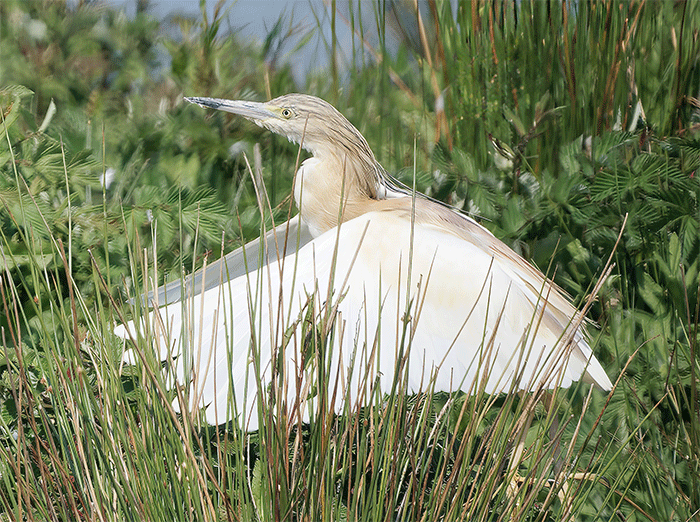
A Squacco Heron was found on 24th at Leighton Moss RSPB (Lancashire & North Merseyside), with another on 26th at Filey Dams YWT (North Yorkshire) on 26th, and a final sighting on 29th in North Yorkshire at Potteric Brompton Carr.
Norfolk accounted well for itself with Purple Herons this week, with sightings coming from Hickling Broad NWT on 25th-26th, Horsey Mere on 25th, and Potter Heigham Marshes on 25th. Elsewhere one settled at Minsmere RSPB (Suffolk) on 26th-29th; a bird was seen over Stoke Marshes (Kent) on 23rd; another at Hornsea Mere (East Yorkshire) on 27th; and a bird in off the sea at Teignmouth (Devon) on 26th.
A possible Little Bittern was heard at Martin Mere WWT (Lancashire & North Merseyside) in the evening of 29th.
A Corncrake was heard at Welney WWT (Norfolk) still on 23rd-26th, with two birds present there on 26th; while the recent singing Spotted Crake was still present at Otmoor RSPB (Oxfordshire) on 24th-25th, with two birds heard there on 25th.
Starting the week’s dabble on the rarity duckpond in Scotland, American Wigeons were noted at Wigtown Bay LNR (Dumfries & Galloway) on 23rd-25th; at Scatness (Shetland) again on 26th-29th; and on Lewis (Western Isles) on 26th-27th.

The Green-winged Teal remained at Alkborough Flats NR (Lincolnshire) on 26th; while a bird was found at Kilnsea Wetlands (East Yorkshire) on 28th.
In Ireland, the resident drake Black Duck was still present on Cross Lough (Co.Mayo) on 27th.
A female Ferruginous Duck remained on Hickling Broad NWT (Norfolk) on 24th-29th; on 28th two birds were present in Norfolk on Thrigby Hall Lake, and two on 29th back on Filby Broad; two were also found on 28th in West Sussex at Arundel WWT; and a female on 29th at Potteric Carr YWT (South Yorkshire).
Four drake Ring-necked Duck sightings came over the course of the week – one present at St Aidan’s RSPB (West Yorkshire) on 23rd-24th still; one still at Old Moor RSPB (South Yorkshire) on 24th-26th; one on South Uist (Western Isles) on 26th-28th; and one in West Yorkshire at Fairburn Ings RSPB on 28th-29th.
A drake Lesser Scaup was seen at Belvide reservoir (Staffordshire) on 26th.
The drake King Eider remained on the Ythan estuary (Aberdeenshire) on 23rd-27th.
Two Surf Scoters were again seen off Musselburgh (Lothian) on 26th; and, on 28th, single birds off Ruddons Point (Fife) and North Ronaldsay (Orkney), the latter bird at least remaining until week’s end on 29th.
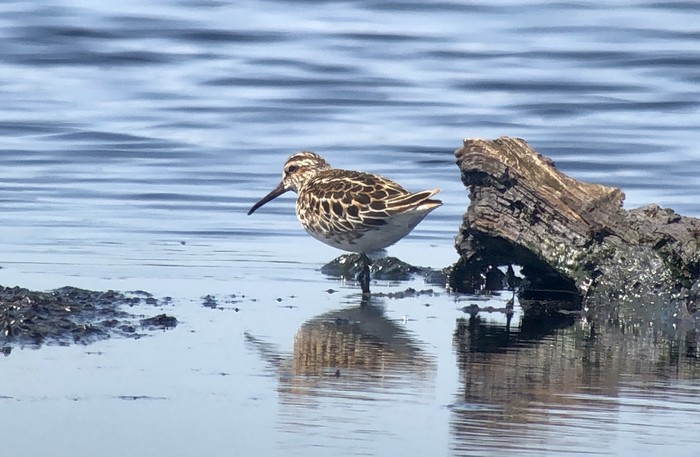
In the wake of a week that sported four Broad-billed Sandpipers, just one this week felt a little like short change – though welcome, nonetheless, at Hatfield Moors NNR (South Yorkshire) on 27th.
A Pectoral Sandpiper was found in Cumbria at Wedholme Flow on 28th; another was noted flying over North Ronaldsay (Orkney) on 29th.
Temminck’s Stints were certainly less numerous too, with a shade over 35 birds logged in the course of the week. No sizeable small flocks were seen – the best of them being trios noted at Newton Scrapes (Northumberland) on 24th, Stiffkey Fen (Norfolk) on 24th-25th, and at Loch of Strathbeg RSPB (Aberdeenshire) on 26th.
The week was however a lively one again for Black-winged Stilts. In Gloucestershire the male remained at Slimbridge WWT on 23rd-24th and again on 28th-29th, and Splatt Bridge on 27th. Duos were seen on 24th at Carlton Marshes SWT (Suffolk); on 25th at Baston Langtoft Pits (Lincolnshire); in Norfolk on 25th-26th at Hickling Broad NWT and on 25th-28th at Potter Heigham Marshes; and at Hollesely Marshes RSPB on 27th. Three were present in Norfolk at Welney WWT on 23rd still, with one still preent on 29th; a single bird at Summer Leys NR (Northamptonshire) on 26th-27th; and two again at Fairburn Ings RSPB (West Yorkshire) on 28th. On 29th two were present at Old Moor RSPB (South Yorkshire). One was seen on 23rd, 27th, and 29th at Tacumshin (Co.Wexford).

A handful of Dotterels continued to be seen far and wide. Two were on The Cheviot (Northumberland) on 23rd; and single birds seen on Papa Westray (Orkney) and Lundy (Devon) on 25th, and on Lewis (Western Isles) on 26th.
The adult American Golden Plover remained at Paull Holme Strays (East Yorkshire) on 23rd. Another was present at The Cull (Co.Wexford) on 25th.
In Norfolk the first-summer Long-billed Dowitcher was now to be found at Burnham Overy on 25th-26th.
Away from the usual Scottish locales, a Red-necked Phalarope was seen on 28th on Eyebrook reservoir (Leicestershire).
Terns finally get their moment as the lead item in the Gulls ‘n’ Terns section, not least courtesy of the Irish Elegant Tern now found this week at Inishroo (Co.Galway) on 24th-28th.
On 23rd Co.Galway also gave us its regular Forster’s Tern at Corranroo Bay, with it seen again at Inishroo on 28th.
In England, the recent Caspian Tern remained at Hickling Broad NWT (Norfolk) on 23rd.
A Gull-billed Tern put in a brief appearance at Grafham Water (Cambridgeshire) in the evening of 27th.
In East Yorkshire a White-winged Black Tern was seen on 27th at Welwick Saltmarsh YWT and Patrington Haven, with an unconfirmed report of another sighting coming late on 29th from Upton Warren NR (Worcestershire).
Pick of the week’s gulls was the reappearance of the adult Laughing Gull off Gugh (Scilly) on 24th and 25th again.
Eleven Iceland Gulls were seen this week nationwide, all in Scotland bar sightings on 26th at Farnley reservoir (West Yorkshire) and 27th at Bempton Cliffs RSPB (East Yorkshire). Glaucous Gulls meanwhile were in short supply too – one in Cornwall at Polgigga on 26th was followed by two seen on 27th on North Uist (Western Isles), and one on 27th-29th in Shetland at Dale of Walls; then, on 28th, one again on North Uist and another at Fanore (Co.Clare); and, on 29th, one still on Orkney Mainland at Stenness.
Following the prior week’s sighting of a northbound Short-toed Eagle in Cumbria, it’s tempting to speculate that the unconfirmed report of a bird seen in Perth & Kinross at Butterstone on 23rd may be the selfsame bird continuing its journey back to its Scottish summer quarters.
On the subject of speculation, where’s the recent Yellow-billed Kite got to? Sightings of Black Kite came again from Cornwall and nearby Scilly again this week on 27th – in Cornwall at Gwithian and St Ives; and possible birds in Cornwall at Hayle, and on Scilly on St Mary’s. Elsewhere, on 24th birds were seen at Stodmarsh NNR (Kent) and near Boarsgrove (Staffordshire).
A Pallid Harrier was seen on Westray (Orkney) on 24th; the juvenile female was again reported from Long Mynd (Shropshire) on 29th.
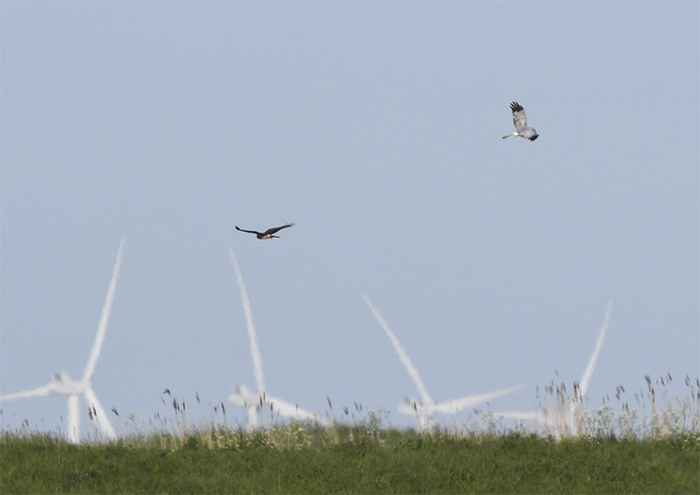
Montagu’s Harriers continued to be more or less daily sightings nationwide – at Abberton reservoir (Essex) on 23rd; at Welney WWT (Norfolk) on 24th; at Otmoor RSPB (Oxfordshire) on 23rd-25th; on 27th at Cley Marshes (Norfolk) and Easington (East Yorkshire); and on 28th at Gibraltar Point NNR (Lincolnshire).
The male Snowy Owl was once more seen on Fair Isle (Shetland) on 28th.
Definitely, and unsurprisingly, a bit of a late spring / early summer vibe starting to make itself felt amongst the passerines, not least with the first reports of Rose-coloured Starlings, including an adult at Trefasser (Pembrokeshire) on 26th. More of them to follow shortly, no doubt.
Similarly, amongst the warblers the traditional late-arriving Marsh Warblers began to make themselves known – one was heard in London at Wandle Meadows Nature Park on 26th, another was found on 27th at Filey (North Yorkshire); and another on 29th at Topham (South Yorkshire).
Still in a daze after finding this singing Marsh Warbler in the back garden - literally a childhood dream realised! Great to catch up with lots of local faces massive thanks to all who put into the donation bucket for @burnet_trust pic.twitter.com/8VDN8QDZGk
— Simon Mitchell (@perilsofbirding) May 29, 2023
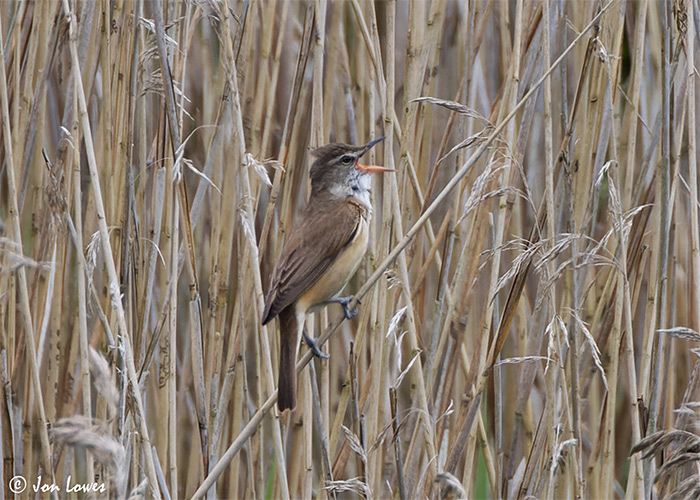
In Norfolk the Great Reed Warbler continued to belt it out at Pensthorpe Water Fowl Park on 23rd-29th; and another was seen at Strumpshaw Fen RSPB on 25th.
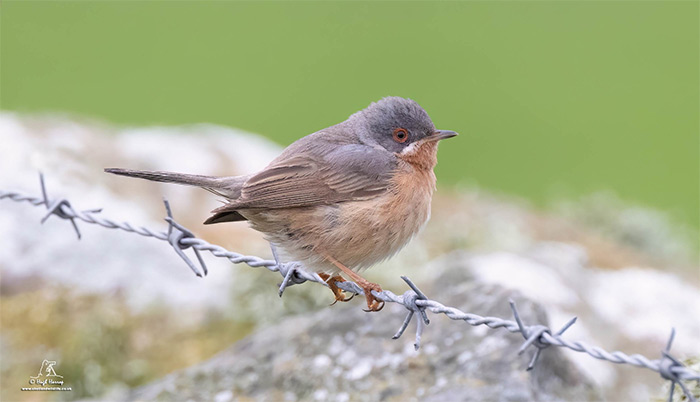
The male Western Subalpine Warbler remained on Fair Isle (Shetland) on 24th-29th; while the female Subalpine Warbler sp was still on Shetland on Out Skerries on 23rd, and a singing male was found on Dursey Island (Co.Cork) on 27th.
In Gloucestershire the Iberian Chiffchaff remained in song in Staple Edge Wood on 23rd-24th.
The Savi’s Warbler was again heard at Blacktoft Sands RSPB (East Yorkshire) on 26th.
A Woodchat Shrike was found on South Uist (Western Isles) on 27th-28th.
Another sign of late spring was the arrival of a fair haul of Red-backed Shrikes down the east coast, with some 20 birds in all seen over the course of the week. An inland bird was seen at Belvide reservoir (Staffordshire) on 28th, and a more westerly bird still was trapped and ringed on Skokholm (Pembrokeshire).
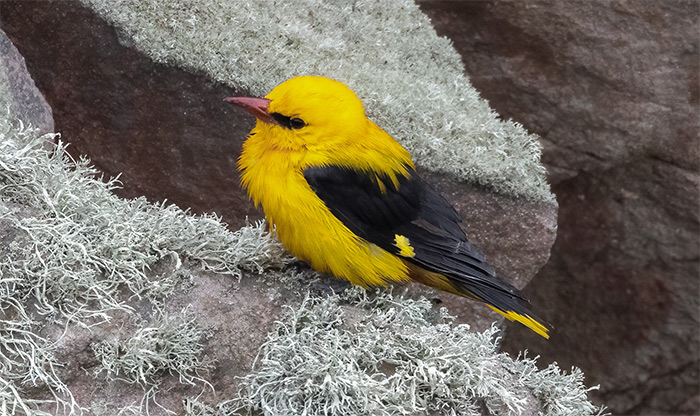
Some 15 Golden Oriole were also seen and heard in recent days, spread widely from Shetland to Scilly, and inland too.
A Hoopoe was seen on 23rd in Wiltshire at Martinslade.
Just shy of 20 Bee-eaters were noted this week, of which five birds in Suffolk at Beccles on 24th were the only confirmed flock.
A Red-rumped Swallow was reported from South Foreland (Kent) on 24th.
A Short-toed Lark was singing at Dale Airfield (Pembrokeshire) on 29th.
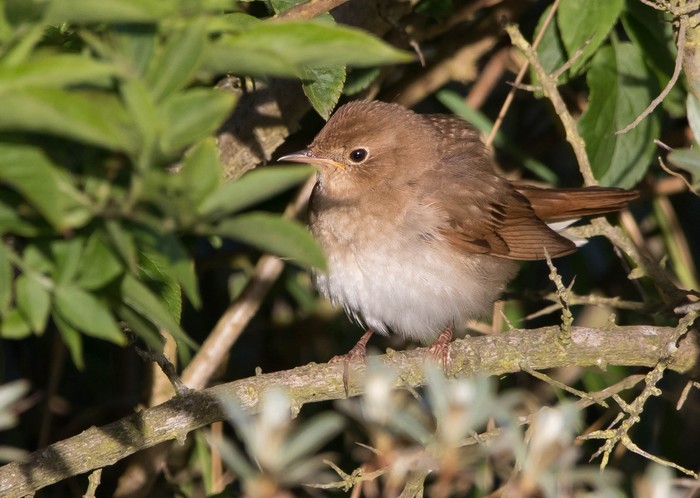
An unconfirmed report came of a singing Thrush Nightingale in Co.Tyrone some way out of Strabane on 26th.
The male Bluethroat remained at Slimbridge WWT (Gloucestershire) on 23rd-26th, occasionally deigning to be seen; another was present on Isle of May (Fife) on 23rd-24th; and a final bird found on St Kilda (Western Isles) on 29th.
A probable male Spanish Wagtail was seen at Balormie Pig Farm (Moray) on 24th; Grey-headed Wagtails were seen on Lundy (Devon) on 26th, Out Skerries (Shetland) on 27th, Fair Isle (Shetland) on 28th-29th and, on 29th, at Melby (Shetland) and Hickling Broad NWT (Norfolk); and a Blue-headed Wagtail on Portland (Dorset) on 23rd.
Lundy (Devon) also scored a Red-throated Pipit on 27th; this followed one passing through Papa Westray (Orkney) on 23rd.
A Tawny Pipit was seen on St Mary’s (Scilly) on 26th.
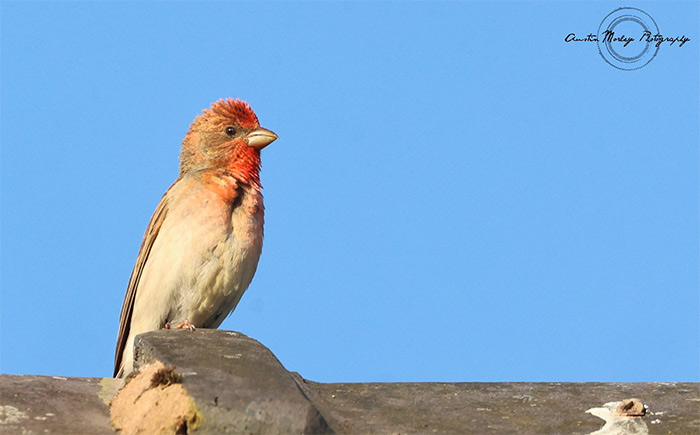
Back to Lundy (Devon) for the first of the week’s Common Rosefinches, a singing bird there on 24th, with two singing birds present on 27th and one still on 29th; another was found in song in a Kendal (Cumbria) garden on 26th-29th; and one in Bamburgh (Northumberland) on 29th.
Finally, a Serin was logged at South Stack RSPB (Anglesey) on 27th.
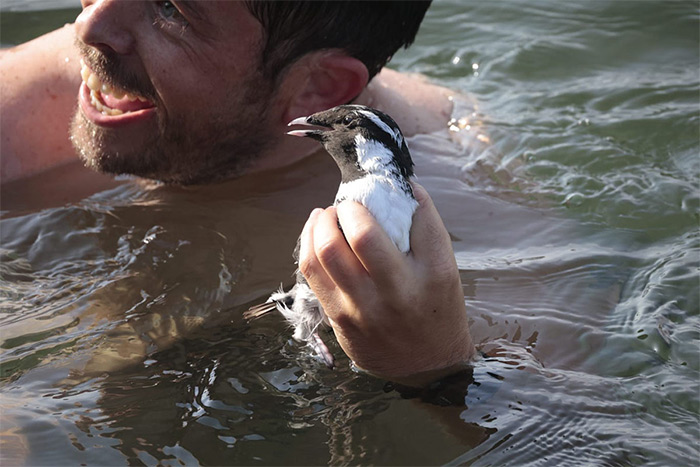
There’s absolutely no doubt what the best bird in the Western Palearctic was this week – this being the utterly unexpected discovery of an Ancient Murrelet in Spain in the mouth of the River Odiel near Huelva on 24th-29th. Only the third record for the region, it comes not that long after our last, the two-day bird in Finland off Porkkalan Iuotsiasema on 9th-10th November 2021. How long until the next, and where will it be seen? And until then, Spanish birders have what’s probably a once in a lifetime opportunity to add something special to their national list, not least thanks to the prompt actions of one local birder who swam out to free the bird from entanglement in a fishing line on 25th…
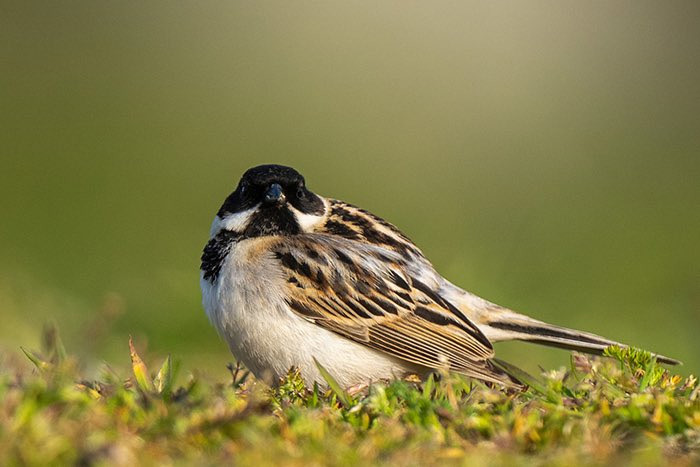
Speaking of national firsts, in Norway the male Pallas’s Reed Bunting remained on Utsira on 23rd.
A White-winged Scoter was seen off Reykjavik (Iceland) on 25th-26th.
Closer to home, a Spanish Wagtail was found on Jersey (Channel Islands) on 29th.
The first week of June looms on the near horizon in the coming days, and we’re moving into what might broadly be described as summer. That said, in an ideal world there are still passerines on the move and the week ahead is traditionally a strong one for the likes of Red-throated Pipit, Thrush Nightingale, Rustic and Black-headed Buntings.
All of which presupposes the weather plays ball. At the time of writing, it looks like we’ve a massive lump of high pressure anchored over us for the foreseeable future. Will much squeak through?
Jon Dunn
30 May 2023
Many thanks to all this week's contributors for your photos and videos
Share