Weekly birding round-up: 3 - 9 Apr
It was chalk and cheese on the weather front this week compared to the preceding week. Back then, it felt like spring had sprung, all balmy sunny days, lambs doing lamb stuff, primroses, and all those sorts of halcyon things.
And then, this being Britain, and it being April, it snowed.
While the wind was swirling around a low pressure system sitting bang over us, there was still the merest hint of a southerly airflow coming in off the continent. A lukewarm European gesture – about as enthusiastic as the EU probably feels at the prospect of seeing Theresa May marching back through their door muttering “strong and stable” to herself under her breath.
Did this bring us any birds? Let’s see…
Putting the latest wire-hopping Hooded Merganser swiftly to one side – found in Co.Wexford this week on 7th, it transpired to be wearing a yellow ring, adding a further burden of shame to this already tarnished quacker – we’ll move swiftly onto another American duck but of much better provenance all told: a drake American White-winged Scoter found at Fisherrow (Lothian) on 8th, still present the following day, and presumably the same bird last seen there back on 9th November 2018.
White-winged Scoters of any complexion remain startlingly rare beasts, for all some Scottish long-stayers may have bred a little complacency amongst us, and this is a cracking bird when all’s said and done. Was this the individual reported last week on 31st in Gruinard Bay (Highland) returning to Lothian for another sojourn?
While this bird isn’t likely to stir many but the most ardent year listers to make the long trek north to see it, a Stejneger’s Scoter would be a different kettle of fish altogether. There’s still a prize or two to be found in those Scottish scoter flocks yet…
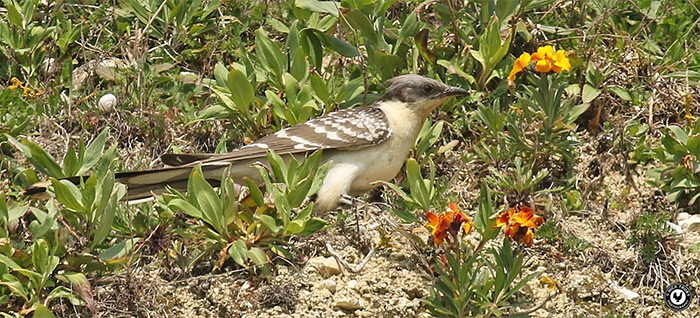
Still present on the Isle of Wight on 8th, the adult Great Spotted Cuckoo had racked up a stay of 18 days – the all-you-can-eat caterpillar buffet at Ventnor proving just too damn tasty to leave any time soon.
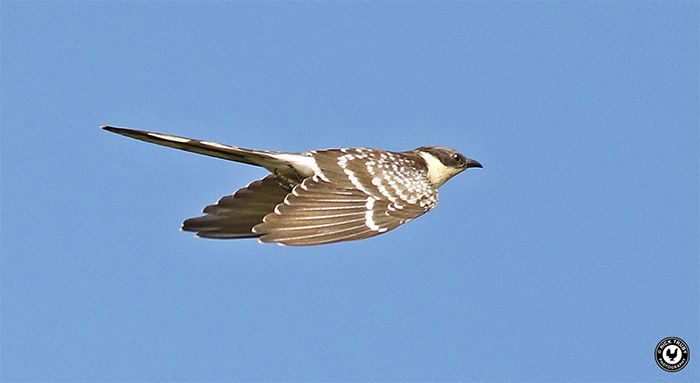
While the vast majority of Great Spotted Cuckoos in Britain and Ireland have been one day birds or, at best, short stayers, a few have shown some staying power in the past and clocked up stays in excess of a fortnight. They are, however, very much the exception rather than the rule, so we can consider ourselves lucky to have enjoyed such a prolonged opportunity to catch up with this funky Mediterranean species on our home turf.
I wonder when it’ll actually go? Presumably those caterpillars have to run out sometime…
Seabird news remained firmly on the peaceful side again this week – in fact, more so than ever of late. With no news of any Pacific Divers we turn to Portsoy in Aberdeenshire for two White-billed Divers again on 5th, and one off there on 8th.
And, with that, we move swiftly onwards…
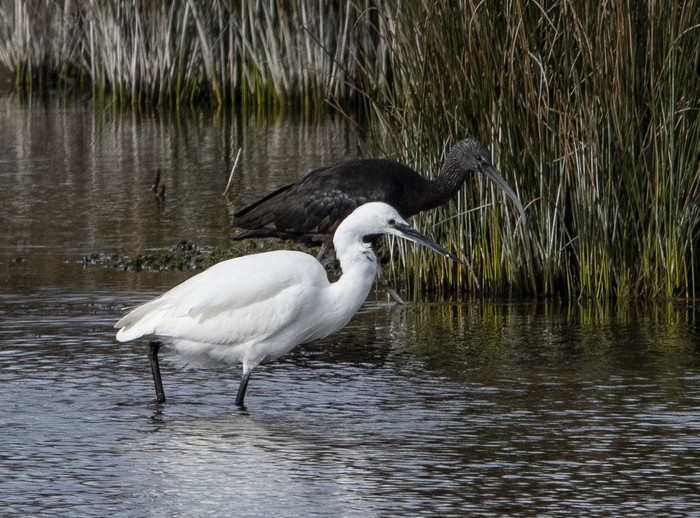
We’ll kick of the wade through the long-legged ones this week with Glossy Ibises, as we had a few new faces dropping in to join recent settled birds in Britain and Ireland. Starting in Cornwall, the bird remained at Marazion RSPB on 4th-9th; in Somerset the semi-regular bird on the Levels at Shapwick Heath NNR was joined by a second individual there on 3rd; and in Hampshire the recent bird remained at Fishlake Meadows HIWWT on 3rd-9th.
Moving east, one at Litlington (East Sussex) was followed the next day by a sighting at Cuckmere Haven again; and in Suffolk a bird was present at Westwood Marshes on 5th-8th. Into Wales, the long-stayer remained at Newport Wetlands NNR (Gwent) on 6th-7th. Finally, to Ireland – in Co.Cork one remained at Clonakilty on 5th, while in Co.Wexford sightings came from Rosslare on 4th-7th and, on 6th, Tacumshin and Rathangan.
On now to the mild headache that’s White Storks… Things were a little calmer this week, with a handful of mobile sightings to report upon. On 4th one was seen in Norfolk over Hickling Broad NWT; on 6th one was above Wem (Shropshire); on 7th one was seen in Oxfordshire over Otmoor RSPB and Tackley; and on 7th another was seen in Hampshire over Fishlake Meadows HIWWT and then on the Isle of Wight at East Cowes in the evening. On 8th one was proving mobile in the Dungeness area of Kent, and another was seen in Berkshire over Thatcham reedbeds; on 9th one spent the day around Worth Marsh (Kent), while back in Oxfordshire a Polish-ringed bird was at Benson (Oxfordshire) – an escapee from a free-flying group of birds at a collection in Norfolk, and a salutary tale that all is far from as it seems with this species at any time of year, let alone in the promising weeks of spring migration.
On Scilly, the Night Heron remained on St Mary’s on 4th-5th; a probable Purple Heron was seen in the morning of 8th at Pegwell Bay (Kent).
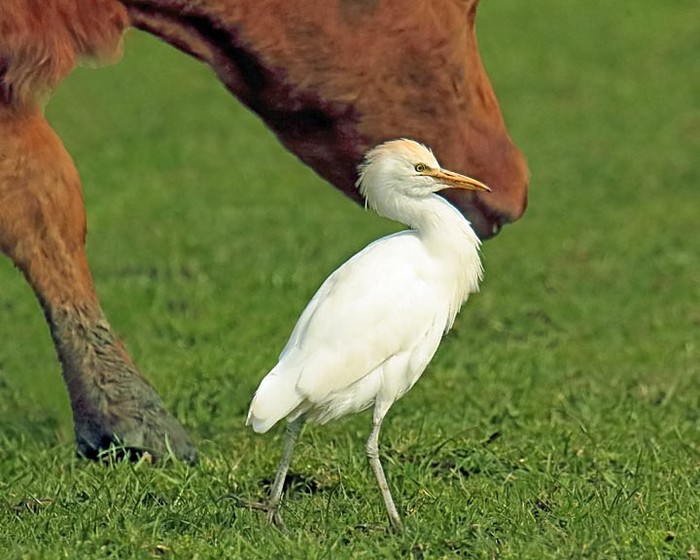
Cattle Egrets? Yes, there were still absolutely tons of them reported, though the approximately 300 birds logged represents something of a drop on recent weeks. Our peak count this week came from Sharpham Park (Somerset) on 6th where 61 birds were noted.
Small numbers of itinerant Common Cranes continued to be seen this week as far north as Aberdeenshire, where three birds were seen at Loch of Strathbeg RSPB on 5th, and Orkney where one was seen on Mainland on 8th. Outside of the usual haunts, the highest count this week was a quartet noted over Salisbury (Wiltshire) on 3rd.
Ifs, ducks and maybes again this week on the RBA village duckpond; first and foremost of which has to be the putative Lesser White-fronted Goose logged moving along the Norfolk coast on 6th. Reported as a possible from first Sheringham and then Mundesley, by the time it was last seen a little while later heading south-east over the dunes at Eccles it had elevated to a probable… but that was the last sight of it until 8th-9th when it had settled at Potter Heigham and had changed, in the news feeds, to ‘escaped’. Wildfowl. Don’t you just love ‘em.
Staying with possibilities theme, the possible Grey-bellied Brant was still to be seen at Banks Marsh NNR (Lancashire) on 5th-7th, sharing the area with the canadensis Atlantic Canada Goose on 5th-6th.

Our sole other representative of The Goose Formerly Known As Canada was the small Canada-type still present on Barra (Western Isles) on 3rd-6th.
In Co.Wexford the white Snow Goose remained at Tacumshin on 7th.
Away from the obvious distraction in Scotland, our ducks this week delivered a fairly unchanged profile to the preceding week.
We’ll start in Highland where the drake Blue-winged Teal was still present at Mellon Charles on 3rd-8th, and the drake Black Duck was hanging around Strontian again on 6th-7th. In Nairn the drake King Eider remained present on 3rd-8th.
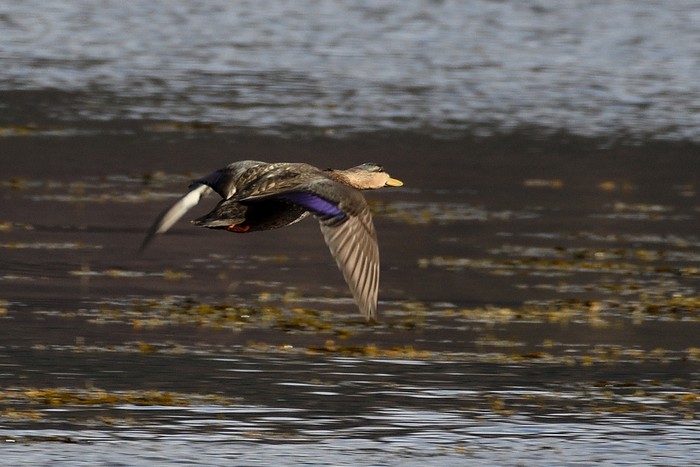
The reliable drake Surf Scoter was still present off Musselburgh (Lothian) on 4th-9th but by then had acquired a lady friend of his own kind.
Remaining in Scotland a while yet, the drake American Wigeon was still on Highland’s Loch Watten on 3rd, while the drake at Rutland Water (Leicestershire) was still present on 4th-8th.
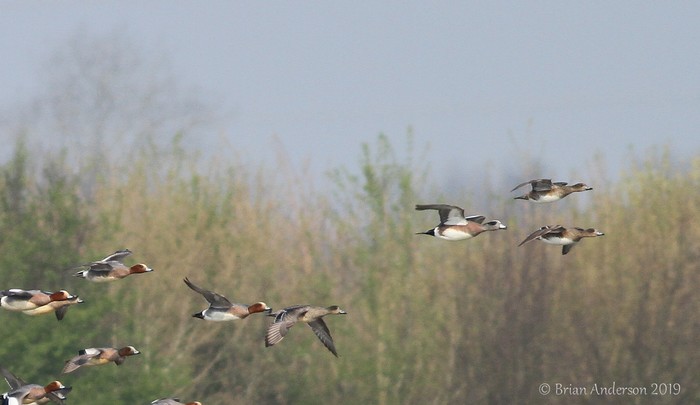
Numbers of Green-winged Teals remained unchanged this week with some 10 birds again reported nationwide, from North Ronaldsay (Orkney) in the north to Herringfleet Marshes (Suffolk) in the south.
The first-winter drake Lesser Scaup remained in Somerset on Blagdon Lake on 3rd-8th. Ring-necked Ducks meanwhile were more or less unchanged nationally with the three birds on Devon’s Slapton Ley still on 3rd-8th comprising a third of the Britain and Ireland’s overall tally.
We finish once more with our regular honorary waterfowl, the adult Pied-billed Grebes both still present in Scotland for another week, on Loch of Spiggie (Shetland) again on 7th and Loch Feorlin (Argyll & Bute) on 3rd-7th.
Well, there we go – spring is officially here, in the form of the first couple of Dotterels, present at Cheesefoot Head (Hampshire) on 6th-8th. The first of many small trips that will be picked out on higher ground in the weeks to come, I’m sure.

I can’t be quite as confident about Kentish Plovers - they feel like an increasingly scarce commodity these days. One at Pegwell Bay (Kent) on 3rd didn’t linger, unfortunately.
Meanwhile, one of our lingering, wintering rare shorebirds had either done a flit or wasn’t being actively looked for this week; only one of the recent Irish Spotted Sandpipers was reported, at Ferrybank (Co.Wexford) again on 4th.
Both the wintering Lesser Yellowlegs remained into another week – one still at Devoran Quay (Cornwall) on 5th, and the other in Dorset at Lodmoor RSPB still on 3rd-8th.
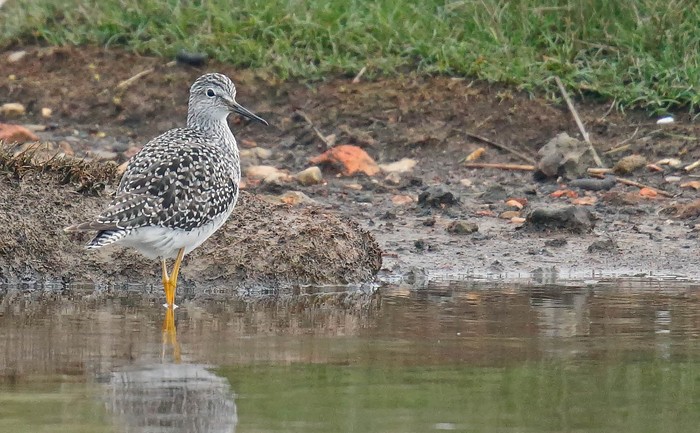
Finally, in Lincolnshire, the adult Long-billed Dowitcher remained at Frampton Marsh RSPB on 4th-9th, getting rosier by the day.
Funny I should have finished last week’s Round Up with a prediction of a Ross’s Gull - as it turned out, in belated news this week, that there had already been one that preceding week in Aberdeenshire, an adult bird present at Cairnbulg on 31st. Had it only done the decent thing and turned up this week it would be sitting pretty in the top headline slot; but as it is, here it is leading off our Gulls and Terns section, and relegating the Bonaparte’s Gull seen on 7th-8th on the Taw Estuary (Devon) to a (very creditable) second place in our attentions. Another probable Bonaparte’s Gull was seen briefly in the evening of 8th at Vange Marsh (Essex).
Ring-billed Gulls were still adding a little late winter flavour to proceedings this week. In Ireland, the second-winter bird remained at Tralee Bay Wetlands Centre (Co.Kerry) on 3rd, while in Belfast (Co.Antrim) on 6th and adult and a second-winter were to be seen; and on 8th one was present back in Co.Kerry at Blennerville. That brings us then to Dorset where an adult was present at Abbotsbury on 3rd, and a bird was seen passing Hengistbury Head on 6th; and on 8th one was reported from Cotswold Water Park (Wiltshire) in the evening.

White-wingers remained a modest thing for a while yet, with around 25 Iceland and 20 Glaucous Gulls logged this week nationally. Kumlien’s Gulls were doing well then, with three birds noted – in the Western Isles on North Uist, an adult on 5th was followed the next day by a third-winter individual; and an adult was again seen in Cornwall at Drift reservoir on 7th-8th.
We conclude with another near-miss – an orange-billed tern sp reported heading west past Mousehole (Cornwall) in the evening of 4th. Was it a coincidence that the American Royal Tern reappeared in the Channel Islands on Guernsey on 6th?
Pegwell Bay in Kent was having a good week this week. We’ve already heard about its Kentish Plover, and there’s a decent warbler to come shortly too, but it also enjoyed a Black Kite on 4th; further sightings had a distinctly Welsh bias, with birds noted at Holyhead Mountain on 6th and Carmel Head on 7th (Anglesey), Dinas Dinlle (Gwynedd) on 7th also. And back on Anglesey at South Stack RSPB on 9th; with a further possible bird much further south at Hartland Point (Devon) on 7th.
Way north, an adult White-tailed Eagle was seen on Shetland at Tresta on 3rd. Safe to bet it will be many, many years before these magnificent birds recolonize, without human assistance, islands that commemorate their former presence in many ‘erne’ place names throughout the archipelago.
In Norfolk, the juvenile Rough-legged Buzzard remained at Weeting Heath NWT on 3rd-6th; further Norfolk sightings came from Salthouse Heath on 4th and Sculthorpe Moor NR on 7th. One was seen in Orkney at Birsay Moors on 5th; on 6th Cornwall got a look in with sightings from first Porthtowan and, latterly, Newquay; and on 6th one was again seen on Scilly on Tresco this time, and back on St Martins again on 9th.
Given the time of year, we perhaps shouldn’t expect too much of our passerines just yet… but as we’re birders, and impatient for the good stuff to start coming through, maybe we did just a little in another fairly peaceful week…
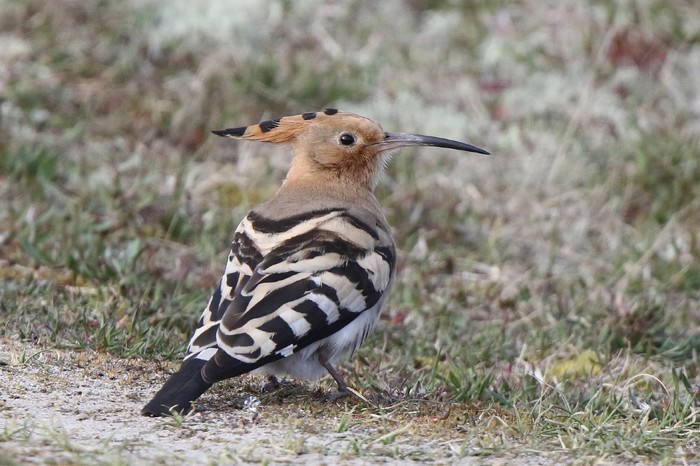
Hoopoes provide the main jolt of spring colour again this week, with birds seen at Winterton-on-Sea (Norfolk) on 4th-9th; Pegwell Bay (Kent) on 5th-6th (yet another good bird in Pegwell’s mini purple patch); Stanpit Marsh (Dorset) on 5th; and final possible birds over Darley Dale (Derbyshire) on 6th and at Polperro (Cornwall) on 7th.
Tantalising possibilities were about the sum of it for Red-rumped Swallows this week, in the form of a possible at Slapton Ley (Devon) on 3rd and an unconfirmed report of a bird at Titchfield Haven NNR (Hampshire) on 5th.; happily a definite bird was seen at Kenfig (Glamorgan) on 5th.
Much more tangible in every possible way was the male Bluethroat in Suffolk at Herringfleet Marshes on 6th-7th; a deservedly popular bird.
A Blue-headed Wagtail was noted at Abberton reservoir (Essex) on 4th; on 8th one was seen at Walthamstow Reservoirs (London); and on 9th another male was seen on The Lizard (Cornwall).
In Cornwall, going up Camborne Hill (or Carn Brea, if you prefer not to follow the famous folk song) paid off on 7th for the finder of a Wryneck. One was reported as heard on 8th on Rame Head.
The male Pallas’s Warbler at Coverack (Cornwall) was still present on 4th, but not reported thereafter. Yellow-browed Warblers meanwhile fared a little better – two birds remained in song at Yeovil’s Pen Mill (Somerset) until 7th; another songster was in Helston (Cornwall) until 6th; one was heard at the back of Snaresbrook Crown Court (London) on 5th; and lingerers remained at Sidmouth (Devon) on 7th and in Ireland at Dungarvan (Co.Waterford) on 6th.
Minsmere RSPB (Suffolk) was still playing host to a singing Savi’s Warbler on 4th-7th; and where else this week but Pegwell Bay (Kent) to score another bird on 3rd?
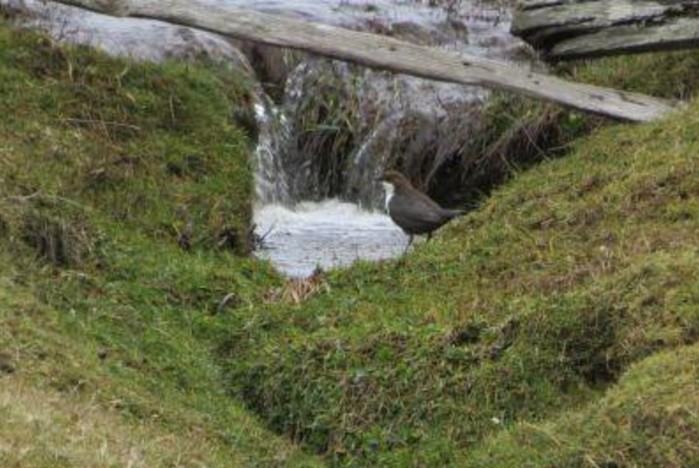
Fair Isle landed a Black-bellied Dipper on 4th-7th.
Wales dominated sightings of Great Grey Shrikes this week – four records came in from, respectively, Plumstone Mountain (Pembrokeshire) again on 6th-8th; Cors Caron NNR (Ceredigion) on 6th still; and on 6th from Twmbarlwn (Gwent) and Llanychaer (Pembrokeshire). Elsewhere one remained at Hanging Houghton (Northamptonshire) on 3rd-9th, another was seen at Emsworthy Mire DWT (Devon) on 7th-9th, and on 9th one made it onto Fair Isle (Shetland), with further birds seen in Norfolk at Morston and in Lancashire at Chorley.
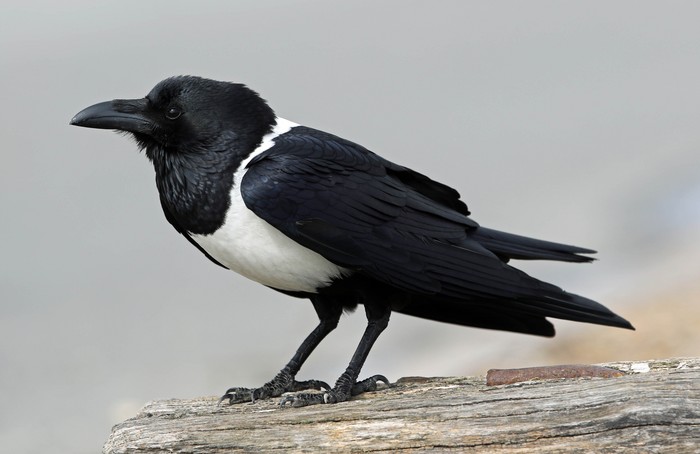
The Pied Crow remained around Seaford (East Sussex) on 3rd-6th.
Waxwings numbers, as expected, started to drop off this week, down to around 100 only nationwide. Double figures next week then…
The exilipes Coue’s Arctic Redpoll was still to be be seen this week at Sculthorpe Moor NR (Norfolk) on 4th-5th, while a further possible bird was seen in the county in a Cockley Cley garden on 7th.
Unst landed the second Common Rosefinch of the year so far for Shetland on 8th, following in the wake of the unprecedented wintering bird on Mainland at Cunningsburgh earlier on.
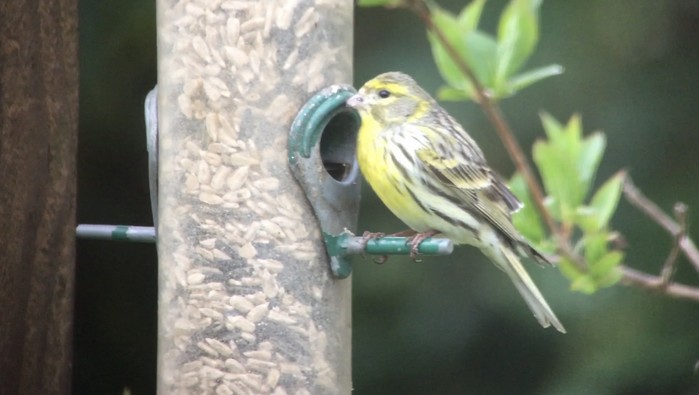
We finish with Serins - one was seen in Cornwall’s lovely Kenidjack valley on 7th, following another noted in a garden at Clacton-on-Sea (Essex) on 5th-6th, and bookended by one singing in a garden on Portland (Dorset) on 9th.
There’s going to come a time when we don’t start the further afield news with Holland, but that time isn’t now. The Dutch run of tremendous birding form this past winter and into the start of spring continued this week, with the Wageningen Nutcracker still present on 3rd-8th and joined in the country by a Pygmy Cormorant at Gouda on 7th.
A welcome return in Germany this week at Sylt where the Black-browed Albatross was back again on 4th-9th for, presumably, another summer, giving hope to seawatchers on both sides of the North Sea for a chance showing.
Before we leave the North Sea and English Channel, we need to look to Guernsey where the American Royal Tern was back again on 6th.
To Sweden next, where an orientalis Oriental Turtle Dove was present on 4th at Hudiksvall.
It’s already been a good spell lately for records of Black-shouldered Kite in northern Europe, and another was seen this week – at Vistula Lagoon in Poland. Surely one of these years one is going to finally cross the Channel?
Moving south, the male Ruppell’s Warbler remained at Saint-Maries-de-la-Mer on 5th-7th, while the Green Heron was still present on 4th at Quinta do Lago (Portugal).
And finally to the Canary Islands where the resident Dwarf Bittern was still present on Fuerteventura on 7th-9th and the Semipalmated Plover was again seen on Tenerife on 7th.
At the risk of sounding like a stuck record, so much hinges upon the wind direction at the moment – doesn’t it always, of course, but during migration periods perhaps more than ever.
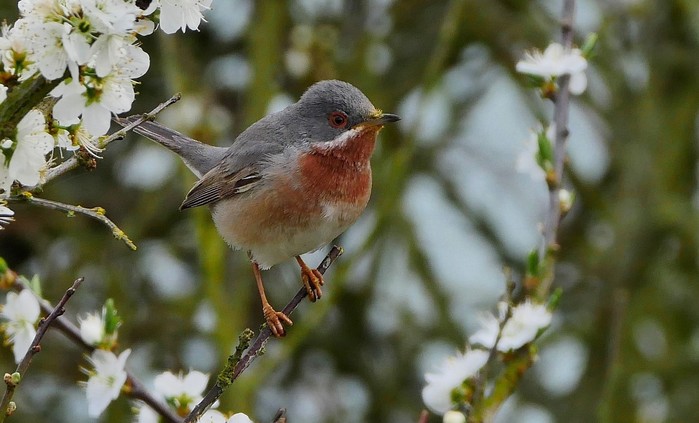
A glance at past records for the coming week shows two sides of the same coin. On the one hand, it’s cracking week for Gyrs, with 20 past records of this frosty assassin. Then again, it’s all of a sudden a great time to find a Subalpine Warbler of one flavour or another.
And that’s to say nothing of an array of scarce and rare shorebirds of one shape, size or mega stature or another – last week’s Kentish Plover hints at waders on the move, and past records suggest decent Palearctic or Nearctic waders heading north are all a possibility.
One way or another, it might be a decent weekend to head to the coast…
Jon Dunn
10 April 2019
Share this story