Police investigate deaths of three kestrels
Police and the RSPB are appealing for information about three potentially shot kestrels (two confirmed), which have come to light since Christmas.
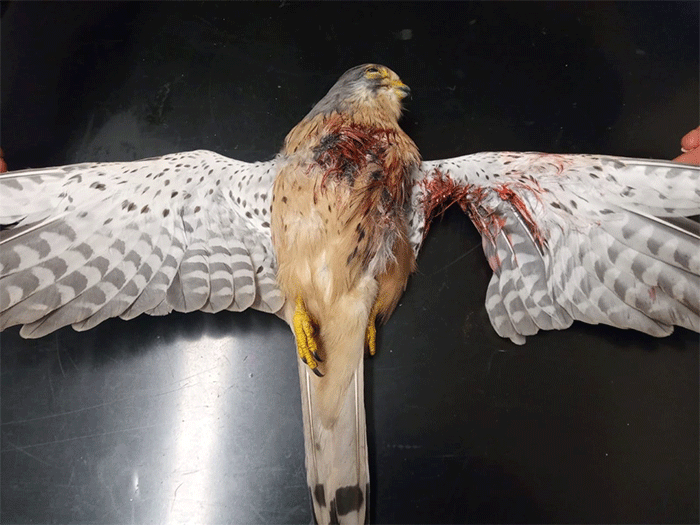
The most recent was found in Newent, Gloucestershire. Two members of the public heard a shot and saw the bird fall from the sky at the junction of Strawberry Hill, Tewkesbury Road and Ford House Lane, by the entrance to a caravan/camping site, on 12 January 2020 around 4pm. One of the finders, a jogger, described hearing a shot like a 'crack', watching the bird fall then seeing it flapping around on the ground.
The kestrel was taken to Vale Wildlife Rescue. The extent of the damage caused is clear in this picture. No shot was found inside the bird, but you can see a huge chunk of the wing is missing. Sadly, due to the extent of these injuries, the bird had to be humanely euthanised.
Birds of prey including kestrels are protected by the Wildlife and Countryside Act 1981. To kill or injure one is a criminal offence and could result in an unlimited fine or up to six months in jail.
Rural and Wildlife Crime officer PC Cath McDay said: “Someone has broken the law in shooting this protected bird of prey, which sadly could not be saved. This is unacceptable behaviour and I’m asking for anyone with information to call Gloucestershire Constabulary on 101 and reference incident 193 of 13 January.”
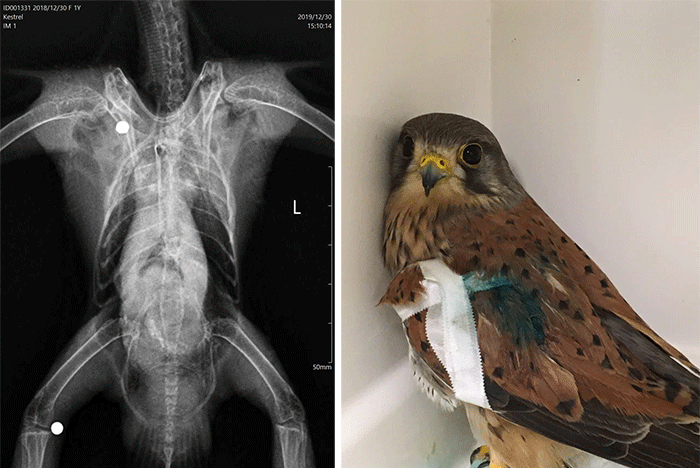
On 30 December 2019, a kestrel was found shot near Harrogate, North Yorkshire. Its body contained two shotgun pellets and it too had to be euthanised. Another has been picked up with a broken wing near Huddersfield. West Yorkshire Police are investigating, concerned that it too has been shot.
News like this is always frustrating and saddening. Kestrels are glorious birds and a familiar sight hovering above our road verges: little still points of absolute concentration in our fast-paced world. It’s outrageous to think that someone has deliberately shot this bird. Nature is facing many challenges at the moment, and the UK’s kestrel population has halved in the last 50 years.
28 January 2020
Share this story