White-tailed Eagles Breed Successfully in Southern England
Two pairs of White-tailed Eagles have reared chicks in Dorset and Sussex, marking another milestone in the species’ return to England after more than two centuries of absence.
Record year for breeding success
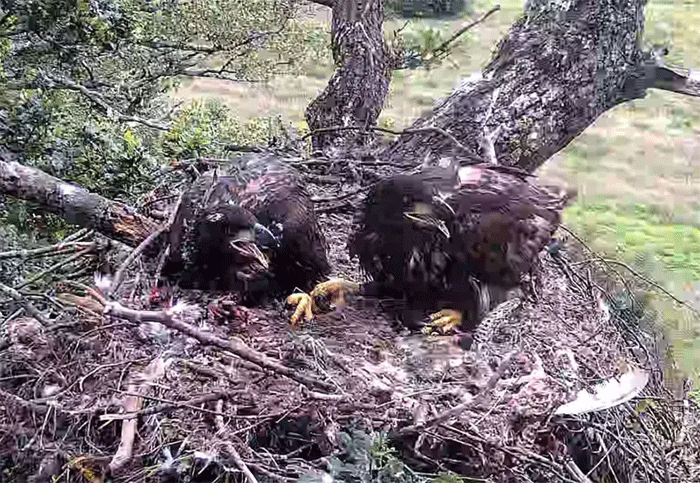
This summer has seen the most successful breeding season so far for the White-tailed Eagle reintroduction project. Two different pairs raised three chicks between them – the first ever for Dorset in over 240 years, and a further two in Sussex.
The Dorset pair, released on the Isle of Wight in 2020, reared a single male chick, known as G834. The achievement is especially striking because the male adult bird, G463, has only one leg, having lost the other four years ago. In Sussex, the same pair that bred successfully in 2023 and 2024 once again raised two healthy female chicks, G841 and G842.
Conservationists hail a turning point
The Roy Dennis Wildlife Foundation, which leads the project alongside Forestry England, said the results highlight steady progress towards restoring this lost species. Roy Dennis OBE, Founder of the Foundation, commented: “We are delighted to see another year of successful breeding and that two pairs have now reached this key stage. This is a long-term project, and it will take some years before the population is fully restored but the progress made over the last year has been incredibly encouraging. We have some well-established pairs and two that are actively breeding. We hope to build on this progress, and I’m really pleased that we have been able to release an additional eight birds this year to further boost the population.”
He added: “I always find it particularly rewarding to see so much support for these magnificent birds and the positive impact they are having on so many people’s relationship with the natural world.”
Careful monitoring and long-term hopes
All three chicks fledged this summer have been fitted with satellite tags so the project team can track their dispersal. Previous young have been followed across wide areas of the UK, giving valuable insights into their movements. White-tailed Eagles typically breed from four or five years of age, and to date three pairs from the reintroduction have now reached this stage. In the long term, the Foundation hopes to see 6–10 breeding pairs become established within 60 kilometres of the Isle of Wight release site.
A species restored to the landscape
White-tailed Eagles are Britain’s largest bird of prey, with a wingspan of up to 2.5 metres. Once widespread, they were driven to extinction by persecution, with the last southern English breeding record in 1780. Since 2019, 45 young eagles have been released on the Isle of Wight under the joint programme. This includes eight new releases this summer, all sourced under licence from nests in Scotland, with transport support from Civil Air Support. Birds are reared before release and tagged to help researchers follow their progress.
The Roy Dennis Wildlife Foundation stresses that White-tailed Eagles are fully protected under the Wildlife and Countryside Act (1981) and urges people not to disturb them: “The welfare of the birds is our absolute priority. We do not disclose nest sites publicly, to ensure the eagles remain undisturbed and to give them the best chance of long-term success.”
For the Foundation, Forestry England, and the many supporters of the project, these latest chicks are not only a sign of progress, but also a symbol of how nature can be restored to the English countryside after centuries of absence.
August 2025
Share this story