White-backed Vultures tracked moving between Africa and Spain
Conservationists have revealed that White-backed Vultures tagged in Morocco have crossed into Spain, providing rare insight into the movements of one of Africa’s most threatened scavengers.
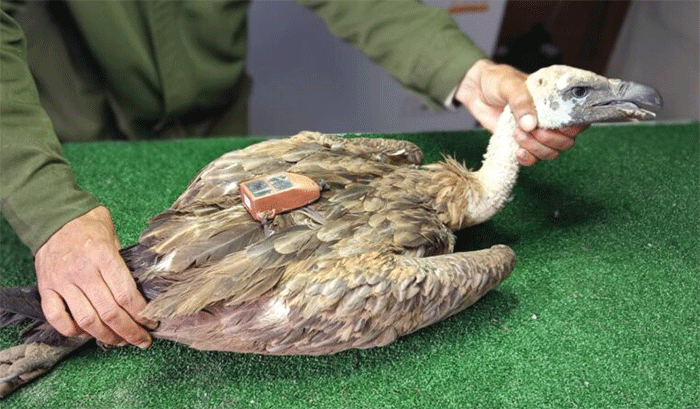
White-backed Vultures Gyps africanus fitted with satellite transmitters in Morocco have travelled across the Strait of Gibraltar into Spain, in what conservationists say is an important discovery for understanding the movements of the Critically Endangered species.
The birds were tagged as part of a collaboration involving the Vulture Conservation Foundation (VCF) and Moroccan conservation partners. Tracking data has now shown some individuals moving north into southern Spain, demonstrating a previously poorly documented connection between Africa and Europe.
White-backed Vultures are widespread across sub-Saharan Africa but have suffered catastrophic declines in recent decades because of poisoning, habitat loss, electrocution and illegal wildlife trade. The species is now classified as Critically Endangered.
Although vultures regularly cross between Africa and Europe at the Strait of Gibraltar, records of White-backed Vultures reaching Spain remain unusual, making the movements of the tagged birds particularly significant.
The tracking project aims to improve understanding of how the species moves across large distances and how vultures use habitats on both sides of the Mediterranean. Conservationists say this information is increasingly important because many threats facing vultures, including poisoning and dangerous infrastructure, occur across international borders.
The arrival of the tagged birds in Spain also highlights the importance of the Strait of Gibraltar as a major migration bottleneck for soaring birds moving between Africa and Europe.
Satellite tracking allows researchers to follow vultures in near real time, helping identify feeding areas, migration routes and potential danger zones. The data may also help conservationists better understand whether movements into Europe are becoming more regular than previously realised.
The Vulture Conservation Foundation said the project demonstrates the value of international cooperation in tracking and protecting migratory scavengers whose ranges span multiple continents.
Vultures play a crucial ecological role by rapidly consuming carcasses and helping reduce the spread of disease in the environment. Conservationists warn that continued declines in African vulture populations could have major ecological consequences.
Researchers hope further tracking work will reveal more about the movements of White-backed Vultures between North Africa and Europe and help guide future conservation efforts across the region.
May 2026
Get Breaking Birdnews First
Get all the latest breaking bird news as it happens, download BirdAlertPRO for a 30-day free trial. No payment details required and get exclusive first-time subscriber offers.
Share this story