Video shows sunbirds suck nectar while hummingbirds don’t
High-speed footage reveals a key difference in how two nectar-feeding bird groups extract food from flowers
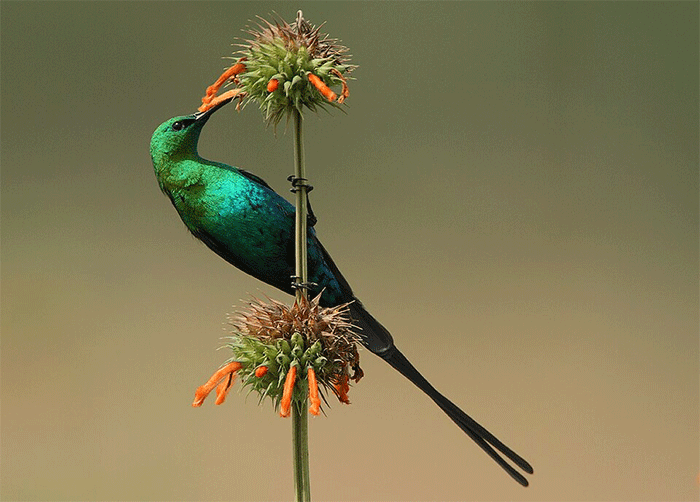
New insight captured on film
A new study, reported by Phys.org, has used high-speed video to reveal a fundamental difference between sunbirds and hummingbirds - how they actually take in nectar. While both groups feed on flowers and occupy a similar ecological niche, the footage shows that sunbirds use a suction-based method, whereas hummingbirds rely on a very different mechanism.
The research provides one of the clearest visual comparisons yet between the two groups, helping to explain how they have evolved different solutions to the same feeding challenge.
Using high-speed cameras, researchers filmed sunbirds feeding at flowers in fine detail. The recordings reveal that sunbirds draw nectar into their bills using a sucking action, rather than relying on rapid tongue movements alone.
By slowing the footage down, it becomes clear that the liquid is actively pulled into the bill, rather than simply being lapped up. This suction-based feeding allows sunbirds to take in nectar efficiently while remaining stationary.
In contrast, comparable footage of hummingbirds shows that they do not suck nectar in this way. Instead, their long, specialised tongues flick rapidly in and out of the flower, using a mechanism that traps and transports nectar without the need for suction.
Hummingbirds have evolved one of the most specialised feeding systems in the bird world. Their tongues are structured to exploit capillary action and fluid dynamics, allowing nectar to be drawn up extremely quickly as the tongue moves.
This system works in tandem with their ability to hover. By remaining suspended in front of a flower, hummingbirds can access nectar sources that lack any kind of perch, giving them access to a broader range of floral resources.
However, this approach is energetically demanding. Hovering flight requires rapid wingbeats and a constant supply of energy, meaning hummingbirds must feed frequently to sustain their metabolism.
Sunbirds, by contrast, avoid the energetic costs of hovering by feeding while perched. The study suggests that suction is an effective strategy in this context, allowing them to extract nectar without the need for highly specialised flight.
In many of the flowers they visit, perches are readily available, whether as part of the flower structure itself or on nearby stems. This reduces the need for aerial feeding and makes a lower-energy approach viable.
The combination of perching and suction feeding appears to be sufficient for sunbirds to exploit nectar resources successfully across their range.
The findings highlight a clear example of different evolutionary pathways leading to similar ecological roles. Both sunbirds and hummingbirds are important pollinators, yet they achieve this through contrasting feeding techniques.
These differences are likely reinforced by the plants they interact with. Flowers pollinated by hummingbirds often lack landing platforms, effectively favouring hovering visitors, while those visited by sunbirds more commonly provide places to perch.
By providing direct visual evidence of how nectar is taken up, the study adds to a growing understanding of bird–flower interactions. It shows that similar outcomes - efficient nectar feeding and pollination - can be achieved through very different biological mechanisms.
April 2026
Get Breaking Birdnews First
Get all the latest breaking bird news as it happens, download BirdAlertPRO for a 30-day free trial. No payment details required and get exclusive first-time subscriber offers.
Share this story