


Traffic noise makes rural robins more aggressive
Researchers have found that human-made noise pollution causes robins living in rural areas to become more physically aggressive.
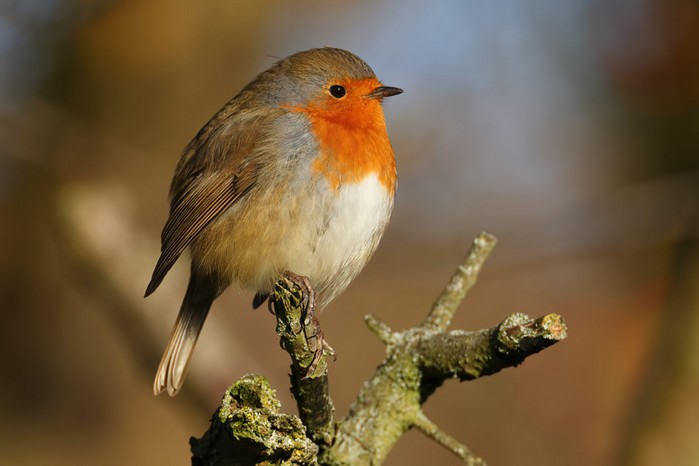
The study, published in the journal Behavioural Ecology and Sociobiology, investigated the behaviour of male European robins (Erithacus rubecula) living in both urban and rural areas.
Robins are fiercely territorial, and the scientists, from Anglia Ruskin University (ARU) in the U.K. and Koç University in Turkey, measured aggression towards an intruder by using a 3D model of a robin. The model was accompanied by recordings of robin songs, while additional traffic noise was added through a separate speaker nearby.
Robins rely on signals—both visual and acoustic—to indicate their territory and keep out other individuals, and they change their behaviour when threatened.
As well as adapting their songs to ward off intruders, robins adopt specific visual displays during territorial interactions. These include swaying and displaying the red feathers on their neck, as well as moving closer to their opponent and attempting to chase it away.
By recording the birds' behaviour during interactions with the simulated intruder, researchers found that urban robins typically displayed more physical aggression than rural robins. However, rural robins became more aggressive with the addition of traffic noise. The scientists believe that physical displays of territoriality increase because traffic noise interferes with robins' signalling behaviour using song.
During tests on urban robins, which are already living in noisier habitats, the simulated traffic noise did not affect levels of physical aggression, but they adapted to the additional noise by reducing their call rate.
The researchers suspect that urban robins have learned to "sit out" temporary increases in noise whereas rural robins have not, and rural robins instead compensate with increased physical aggression.
Dr. Caglar Akcay, senior lecturer in behavioural at Anglia Ruskin University (ARU) and the senior author of the study, said, "We know that human activity can have a significant impact on the long-term social behaviour of wildlife, and our results show that human-produced noise can have a range of effects on robins, depending on the habitat they live in.
"In normally quiet surroundings, we found that additional traffic noise leads to rural robins becoming more physically aggressive, for instance approaching the model bird more closely, and we believe this is because the noise is interfering with their communication.
"The chronic high levels of noise that exist day and night in urban habitats, such as from traffic or construction equipment, may permanently interfere with the efficient transmission of acoustic signals and this is likely to be the key reason why urban robins are typically more aggressive than rural birds. It should be stressed that physical aggression is a risky behaviour for small birds like robins and is likely to have health consequences."
Lead author Çagla Önsal, who carried out the research during her studies at Koç University, added, "Signals are extremely useful because they can deter an intruder without a fight that may be costly to both the territory owner and the intruder, but if the songs can't be heard by the intruder the robins may have to resort to physical aggression. However, this not only risks injury but displays of aggression can also draw attention to predators, such as sparrowhawks."
19 December 2022
Share this story






