Talking Birds - Mike Dilger
In the latest instalment of his interview series with some of the leading lights in birding and conservation, Mark talks to the effervescent TV presenter and passionate naturalist Mike Dilger about his love and birds and wildlife - from humble beginnings in a Stafford backyard to unforgettable adventures in Central American cloud forests and beyond.
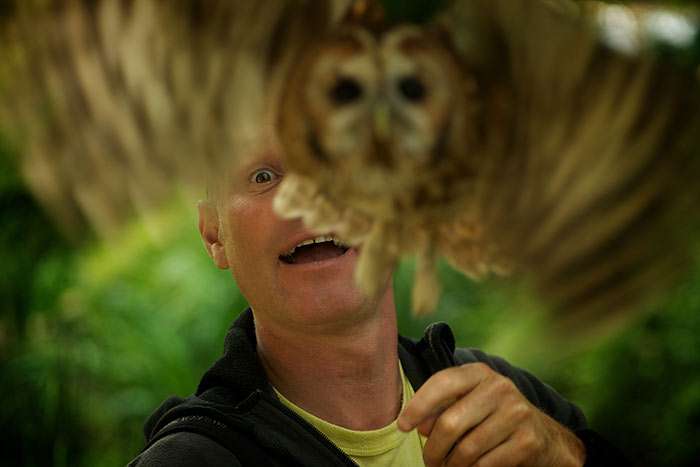
(MP) Far from paying just paying the obligatory TV presenter lip service to it, you're a genuine, passionate and knowledgable birder, and have been for many years. Where did it all start for you, and was there a flashpoint that sent you down the birding road?
(MD) It’s all about the wildlife… nature first and telly second. I guess I must have been interested from a very early age, as I have abiding memories of listening to Woodpigeons during the school holidays and being fascinated by butterflies on our neighbour’s Buddleia bush. But with no naturalist amongst either family or close friends my interest was always lacking in direction. It remained like this until my parents bought me a bird book for my eighth birthday - Bruce Campbell’s Guide to Birds in Colour. This book, which I still possess, lit a fire which is still burning brightly some four decades later.
(MP) Did you have a mentor when you were cutting your naturalist's teeth, and if so, what long term effect did they have on you? (MD) When I was birding in Stafford (my home town), I thought I was the only kid in the world with an interest in natural history. This meant it was essentially a solo pursuit, as I taught myself how to identify the birds with my Prinz 10x50 binoculars and learnt their calls. I only met other birders when I finally went to study Botany at Nottingham University, but the one person I would describe as my guiding light was a wonderfully modest and brilliant naturalist by the name of Nigel Brown. At the time, he was the Curator of the Treborth Botanic Gardens, in Gwynedd, North Wales, which is owned by Bangor University, where I studied for my Masters’ Degree in Ecology. His knowledge of plants, moths, fungi and birds is only surpassed by his generosity in sharing his passion with anyone keen to listen. He is a great man and truly adored by a whole generation of Biology graduates who have spent any time in his fine company.
(MP) Given the choice, would you prefer to find a) a Gray's Grasshopper Warbler at Spurn or b) a new species of slime mould in Brazil?
(MD) I know quite a lot about Slime Moulds actually as I helped collect them for a project when I was working in Ecuador. I adore birds, but being in the Tropics turns me on more… Don’t tell the Spurn lot though, they might ditch me as their Patron!
(MP) It seems birding is wheeled out as the new hipster pursuit by the media every couple of years these days. Would you like to qwell my cynicism or should I carry on quietly raging at the latest temporary-pop-star/actor-birder-slow-news-day-filler?
(MD) Birding is a broad church and I firmly believe the more people enthused by it, the better. Pop-stars and actors are in a great position to preach to a fan-base that will probably have little knowledge or appreciation of natural history. Without people caring about wildlife - be they hardcore birders or armchair supporters - then governments, companies and industries, who let’s not forget should all be answerable to us, will never be taken to task over decisions they make about our environment.
(MP) Ok, I'm suitably qwelled ..... and on the other hand, it's hard to be cynical about the 'Springwatch effect', and – as I know from working with kids on many projects – it genuinely seems to have moved the goalposts, inspiring them and giving them a kickstart to get into nature. Would you agree?
(MD) Some viewers can become anaesthetised to wildlife from far-flung places they will have little chance to ever see for themselves, but everyone can relate to wildlife on their own doorstep, such as the Blue Tits in their own boxes, for example. Wildlife and conservation start at home, which is why Springwatch is so important.
(MP) Do you think enough is being done to nurture and develop their passions beyond those first steps, or are we letting them down as they grow up?
(MD) We undoubtedly need more guiding lights at a local level to excite young minds about the wonder of wildlife. The children of today have so many more distractions than when I was a kid, such as computer games, social media and the internet, so watching wildlife has some stiff competition for their spare time. In my humble opinion, birding kicks the heck out of gaming and it is up to us prove it to a young audience, many of whom seem happier in a virtual world than the real one.
(MP) My old man is obsessed with wildlife documentaries, and one of his absolute favourites is White Falcon, White Wolf. Is it any good, do you know?
(MD) …It’s not bad if I seem to remember! I never forget what a wonderful job I have in telly. Before my presenting career properly kicked off I worked as a Researcher on the Natural World strand and was paid to spend 10 weeks watching a pair of Gyr Falcons raise their family in Arctic Canada. What… a… privilege…
(MP) Presenting is your main role these days – do you miss being behind the camera, and would you like to return to directing in the future?
(MD) It’s a precarious job being in front of the camera and highly competitive. I’ve had a good run though and to be honest would like to keep it going for as long as possible. If and when the cameras do point in the other direction, I’d like to think I’ll still be winging it as a freelancer taking TV opportunities when they come my way and mixing it up with directing, talks and writing.
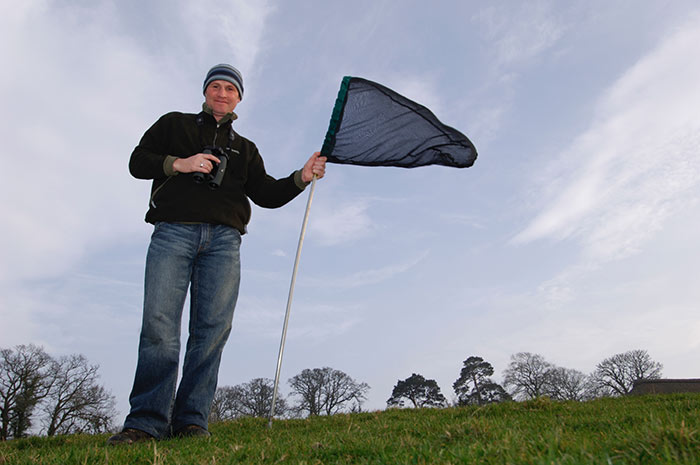
(MP) I’ve heard you speak passionately about how wildlife films and documentaries need to be more issue-focused. What issues do you think these programmes are not addressing, and how should they go about addressing them?
(MD) The BBC must of course remain apolitical, but we should still be free to make passionate, informed pieces about wildlife and conservation, without fear of censure. I’m excited that the words environment and conservation are now being used far more regularly in wildlife documentaries, without the worry that telling the viewers ‘how it really is', might in fact be ‘turn off television’. Habitats continue to be hammered and species are disappearing right in front of our eyes and I’m very aware of not creating a false idyll.
(MP) Presenters such as Chris Packham have seen serious and sustained campaigns to have him sacked for speaking out on conservation issues such as the illegal persecution of raptors. Have you had any similar campaigns towards you? Do you ever fear not getting work and not being able to ‘pay the bills’ because of a particular stance you take?
(MD) It is a delicate line we must tread. I’m employed as a knowledgeable naturalist, but on the other hand need to be objective at all times. I admire Chris’s bravery, but my own style is to tackle these difficult issues with positive engagement and ensure that it is the science that does the talking. However when it comes to the badger cull and raptor persecution, most people know where I stand.
(MP) Where is your local patch, and what's so special about it?
(MD) My own back garden, with Chew Valley Lake coming a distant second. I love the rhythms of my own green real estate and with a pond, small meadow, tiny patch of scrub and bank of trees I consider it less garden and more diminutive nature reserve that punches well above its weight. There was a Treecreeper on my Birch tree yesterday and the Siskin have just begun their passage. The great thing, is I have no idea where these Siskin have been for the winter, or where they’re returning too. With a subject as huge and all-encompassing as natural history, the more you learn about it the more you realise you know next to nothing.
(MP) You've visited some incredible places in your role as a field biologist – where was your absolute favourite, and where gives you PTSD when you hear its name?
(MD) The Andean Cloud forests in Ecuador are where my ashes will be spread. These highly threatened forests are the world epicentre for Hummingbirds, Tanagers and epiphytic orchids. I also adore the people and way of life in South America… Es uni a vida may hermosa. Nowhere sends shivers down my back, however I the next time I visit Arusha, in Tanzania, I’ll be a little bit more careful, as my last time there involved a mugging, a machete and six stitches.
(MP)Off the top of your head, would you share a particularly memorable personal birding experience with us that's stayed with you ever since?
(MD) Finding Long-wattled Umbrellabird in Los Cedros Cloud Forest Reserve in Ecuador. I was with other birders, and became so excited and agitated, I loudly blurted out my discovery, causing the bird to immediately fly off, never to be seen again. It was a new bird for the reserve and as such I was not very popular with my colleagues.
(MP) You have been known to twitch a few birds around Britain but what is the most common bird you still need and what is your most painful dip? The guys at RBA mentioned something about a Black-browed Albatross?
(MD) I have twitched a lot in the past, but with a family, a demanding job and a dog to walk, those days have gone I’m afraid. I still have plenty of sub-rarities that I need for my British list, but the one glaring omission is Quail. I have heard them a number of times and every spring I tell myself I’ll track one down, but this invariably tends to be my busiest season for work, so another year passes by. 2018 will be the one though! Dips are never painful, as I will always see something of interest to brighten the day, however fruitlessly looking for Lammergeier down on Dartmoor, with a film crew in tow, was a reasonably painful twitch I seem to recall.
(MP) I'll set this one up for you.... Let's say I don't have a telly but love reading (both true) – how would I go about, er, enjoying your work?
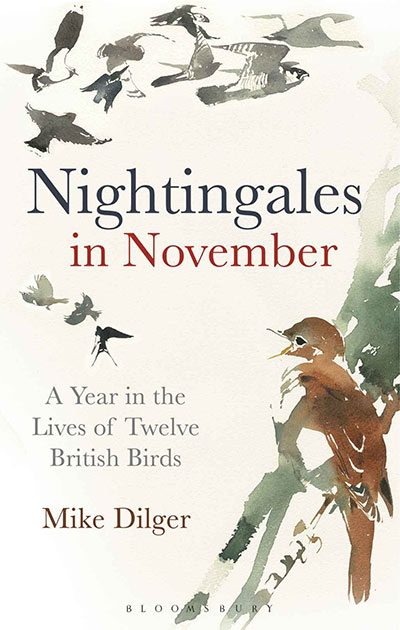
(MD) Since the turn of the year I’ve just started writing a column for BBC Wildlife Magazine to encourage families to get out nature spotting. Alternatively Nightingales in November is still in all good bookshops and purchasable through Amazon - you never know, you might even find an unsigned copy out there!
(MP) What are your remaining burning ambitions within the realms of natural history?
(MD) Easy - BIRDS OF PARADISE. David Attenborough shouldn’t have a monopoly on filming them you know!
(MP) Anything final thoughts?
(MD) My ambition is to carry on what I’m doing, which is to bang on about wildlife to anyone willing to listen, whilst providing for my family - that’s not too grand is it?
29 May 2018
Share this

Mark Pearson
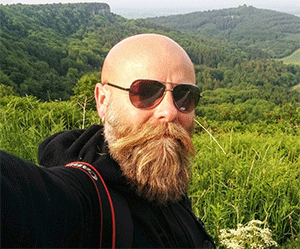
Mark is an obsessive birder, natural history writer, field ornithologist, speaker, guide and passionate conservationist. Originally from Flamborough, Mark recently returned to his beloved Yorkshire coast after many years elsewhere, and now calls Filey Bird Observatory home (where he juggles various roles for the Obs).
He has travelled extensively in pursuit of birds and wildlife but remains especially passionate about his native area. His writing is widely published, much of which is archived here, while his photographic nature journal Northern Rustic can be found here.
In Talking Birds Mark interviews some of the most well-known (and not so well known) birders from Britain and around the world. You can read previous interviews in the series here.
Other Talking Birds
 |
 |
 |
 |
|||
| Dawn Balmer | Kim Kaufmann | David Le Puma | Paul French | |||
 |
 |
 |
 |
|||
| Bob Flood | Jonathan Meyrav | Brett Richards | Jonny Rankin | |||
 |
||||||
| Andy Roadhouse | ||||||