Talking Birds: Mark Pearson interviews David La Puma
In the latest installment of his Talking Birds series, Mark James Pearson chats with David La Puma, an American ornithologist with many strings to his bow – from the sharp end of research to education and conservation, through to the small matter of running one the world's most celebrated Bird Observatories. With the second International Bird Observatories Conference (hosted by CMBO) just a couple of weeks away, Mark finds out how the plate-spinning is going....
Hi David, how are you, where are you and why?
I'm well, thanks Mark. I'm in Cape May, New Jersey, because it's the centre of the birding universe. I'm here because I'm the director of New Jersey Audubon's Cape May Bird Observatory.
Where did it all begin for you, and did you have a mentor who steered you onto your birding path?
On a whim, I took an ornithology course at Ithaca College, in Ithaca, New York, with Dr. John Confer. That semester he made us attend field trips every Saturday morning at 5:00am, returning around 4:00pm. Since I lived down the hill from the university I had to be ready around 4:30am. I think last-call at the bars (pubs?) was 1:00am? so precious little time to sober up. I was a miserable student...but somewhere in there I got bit by the birding bug and I've never been the same since. John has become a great friend and colleague (read: he's a saint) and I credit him with opening my eyes to the wonders of birds.
Your background is partly in ornithological research. Which have been the most fascinating projects you've worked on so far, and can you give us an example?
My PhD research was on the effects of fire on the Cape Sable Seaside Sparrow in Everglades National Park. Besides the great insight into the ecology of rare and elusive species, how fire can impact a bird despite how we might rationalize the expectation that "birds fly, so why would they perish in fire?", that research experience taught me that being able to effectively transduce scientific data to your intended audience is the key to successful conservation. More succinctly, data alone will not save a species.
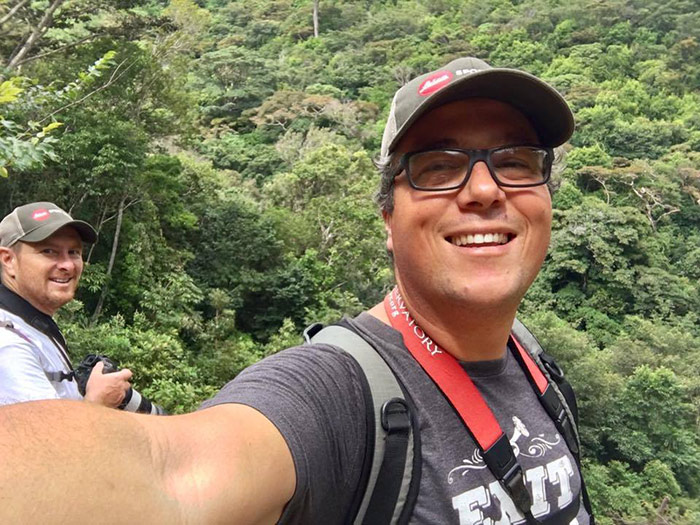
'Director of Cape May Bird Observatory' – that has an awfully nice ring to it as a job title. To paraphrase David Byrne, do you ever ask yourself, well, how did I get here?
Every day! I've always tried to live by a simple policy: do what you love, in the best place you can find to live. Of course, these are subjective ideas, and once you've decided to partner-up with someone, those bend and morph into something else, hopefully mutually negotiated and agreed upon! I originally decided to do my PhD because of an idea that I wanted to conduct research in the Neotropics (I had fallen in love with Costa Rica following Ithaca College) and felt that with a PhD I could write my own ticket in terms of winning grants, etc. During my PhD I fell in love with teaching, and learned more about my ability to convey information to different audiences. I began to see myself as someone who could translate scientific information in meaningful ways which would hopefully inspire a love for nature in others, and compel people to act for conservation of wildlife and wild places.
That said, I still very much enjoyed research, and pursued several postdocs on Radar Ornithology where I used radar to quantify nocturnal migration, stopover habitat for nocturnal migrants, and the conditions that drive nocturnal migration. I was fortunate to travel the world talking about radar and bird migration not just to academic audiences, but to many different groups of many different backgrounds. Again, this helped solidify my interest in connecting people to nature with the idea that by doing so I could help instill in them a conservation ethic. My first postdoc was with New Jersey Audubon here in Cape May, and at the time I worked only a few doors away from Pete Dunne, the founder, and then director, of the Cape May Bird Observatory. I saw many things about the bird observatory that I loved, and (like any young(er) upstart) many things that I thought could be done to grow it. Several years later, while doing a postdoc with University of Delaware, remotely from Madison, Wisconsin (where my wife had taken a two-year position), I heard that Pete had a stroke and was going to step down from the director position. I felt terrible for Pete, but also thought about how I could help the situation at CMBO if given the opportunity.
Of course, for someone who loves bird migration, there really are few places like Cape May throughout the world. Following my postdoc, I took a position with the German optics company, Leica, and travelled the various birding festivals throughout the US giving talks on radar ornithology, staffing the booth and showing off binoculars and spotting scopes, and building the Leica Birding Team which continues to grow today. For six months of that position, though, I was interviewing for Pete Dunne's director vacancy, and after several intense interviews, won the position. Today I'm doing what I love, in one of the best places to live, and I'm forwarding New Jersey Audubon's mission which aligns perfectly with my own personal belief system: Connecting People to Nature, and Stewarding the Nature of Today for the People of Tomorrow.
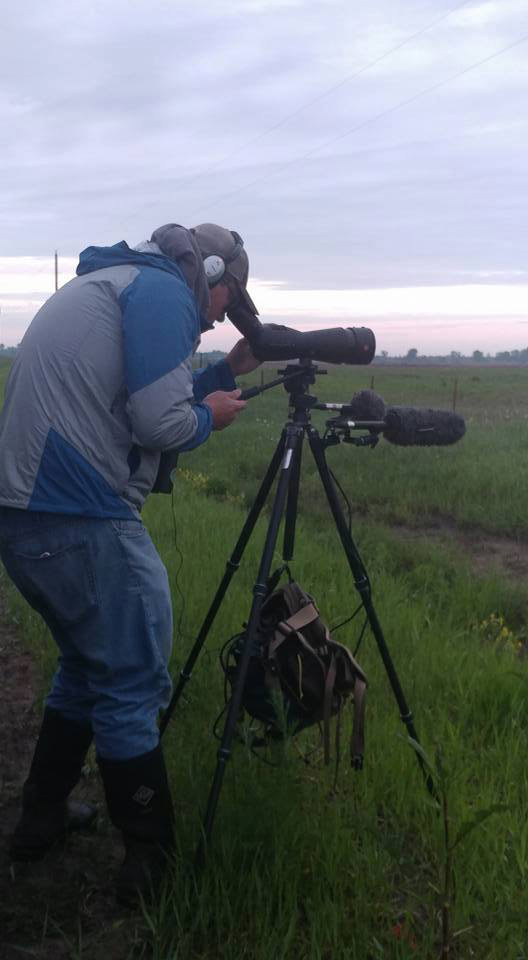
Having said that, it can be that earning your crust in the realm which puts the fire in your belly as a hobby / pastime can result in the dampening of that fire... have you suffered any such birder's-Busman's fatigue since taking on the role?
As I've begun to say recently when asked a similar question, on my worst days this job is work. On my best, I'm still pinching myself to make sure I'm not dreaming. I don't sweat the odd rarity that I miss, and I try to get out for a little time, at least, when a migration spectacle is unfolding. The beauty of living in Cape May is that whatever is happening is usually a short distance away. That said, I've missed several rarities over the years because of meetings I had to attend, or work that had to get done then...but I would have missed a whole lot more if I were somewhere else on a regular basis, that's for sure! I've also found that I get just as much enjoyment seeing members come into the bird observatory and telling me about some great experience they had with one of our associate naturalists, or how they ran into Pete Dunne on the hawkwatch platform and they've always wanted to meet him and he showed them how to identify Sharp-shinned from Cooper's Hawk, or how our seasonal interns are the best group in all the years they have been coming to Cape May, or how the habitat restoration we've done behind the bird observatory has inspired them to create their own native habitat in their yard at home. Each of these interactions tell me that we're doing the right thing, that together our staff has made the right decisions about how to move the mission forward. I get just as much, if not more, joy out of those interactions than I do seeing a rare bird...unless, of course, that rare bird shows up in our habitat restoration, that's just the pinnacle of success, don't you think?! ;)
The International Bird Observatories Conference 2017 is almost upon us, and kicks off at Cape May in just a few weeks. How are preparations going?
Preparations are going great, thanks to our local, program and steering committee’s collaborative efforts.
It's a hugely exciting event that brings together bird observatories from around the world. As coordinator, what are you hoping IBOC17 will achieve?
This conference is unique in that it attempts to encompass all the variation in bird observatories, which as you know can be quite variable! Some focus more on research, while others more on education. Many have a conservation goal, while some are more politically active than others. Some are on remote islands with little visitation, while others, like CMBO, are within a tank of gas (petrol?) of 60 million people. In the end, we have a few goals which include sharing our experiences so we can learn from one another, and to inspire collaboration so instead of being little islands of data, we can be a global information network which can then be used to answer the pressing questions of today and tomorrow to further the conservation of our wildlife and wild places. Interestingly, this idea is not new. The original premise for bird observatories, over 100 years ago, was for a network of observation points which could be used to understand the variable (both spatially and temporally) nature of bird migration. Today, more than ever (especially more than in the life of Linnea’s!) we have the technology to make that a reality. The IBOC is poised to be that catalyst for global networking and we're excited to be carrying the torch in Cape May in 2017.
It's only the second one ever (after Falsterbo 2014) – do you see the learning curve as still quite steep or is there an established format that works best?
At CMBO we've put on many birding festivals, and hosted several scientific meetings over the years, so we're familiar with conducting special events. The IBOC, because it is still so young, offers some great opportunities to experiment. The biggest challenge was the expectation of how many people would attend, and that meant that we had several contingencies planned in case of a large vs. small registration. This being the second year, it looks like we will have a similar registration number to 2014 (roughly 130 registrants) which means we can do everything under "one tent" so to speak. I personally like that idea because it means we all get exposed to everything, rather than running concurrent sessions where you must choose what to see and what to pass up. Given the diversity of bird observatories, and topics, this one-tent approach exposes us all to things we may not always think about, and hopefully leads to us each thinking differently and creatively about our own observatory when we return home.
Bird observatories face various challenges in the 21st century, and are adapting and innovating in various ways – a subject I'm particularly interested in researching, and an especially pertinent one for small, underfunded Obs. How do you see the future for our global Obs community?
That's an excellent question, and one we're always dealing with internally as well. I can speak for CMBO when I say that our two biggest assets are our long-term datasets, and our proximity to so many people. We have a great opportunity to connect many people to nature in meaningful ways, so for us, we can leverage that success for funding whether that's fee-for-service programs, or grants for supporting these nature-based experiences for various groups. It also presents opportunities for philanthropic support, since people like to support internships to train the conservation leaders of tomorrow, as well as programs that connect people to nature. Additionally, our datasets can form the foundation for research both internally (through NJ Audubon's research, stewardship and education departments), and externally as in partnerships with universities and other non-governmental conservation groups. For us, our biggest challenge was getting that data in a format that could be shared with collaborators, which we have now done over the last three years. So, while these are two mechanisms specific to CMBO, they are likely shared with many bird observatories around the world, and additionally many bird observatories will have their own niches, many of which I haven't even considered. This is one of the greatest advantages of the IBOC, as it will provide a venue for us to share what has worked, what has not, and new ideas for us to explore going forward. I think if an observatory can identify their niche(s), the future of that observatory is great.
CMBO forged a partnership agreement with Falsterbo and Spurn last year. What do you hope to achieve through this initiative?
Our Friendship Agreement, which you can view on our respective websites (ours is here) has been developed to inspire exchange between three bird observatories which share some similarities. We're all on south-facing peninsulas which concentrate migrant wildlife (mostly birds, but also insects), we all count migrating songbirds and waterbirds, and two of us monitor significant raptor migration. Two of three have ringing operations, and all of us are working in some capacity to connect people to nature. The idea then is simply to have an exchange of ideas, like the IBOC, but monthly instead of every few years, and design some projects to inspire collaboration. This fall we started with a "young professional exchange" whereby we are each sending a young professional to the respective bird observatories for 2-3 weeks. Each representative gets to learn about and participate in bird observatory operations at the respective observatory, and report back to their home observatory following the visit. The hope is that each return with a more expanded mind of what is possible at the home institution, but also through the exchange, they bring with them ideas to the observatory they are visiting. In the next year, we are discussing collaborative research projects we can carry out across all three observatories, including some thoughts on transmitters for certain species. At the very least, though, it provides us a chance each month to connect via Skype and talk about what's going on at each location, which helps broaden each of our visions about migration at a global scale.
Domestic cats are of course a huge problem for our bird populations here in the UK, but over there you have the considerably more complicated issue of feral cats and their impact on your avifauna. Where do you stand on this issue, and is neuter and release a viable solution?
The science is clear that TNR does not work. The only real way to combat the feral cat problem is to remove feral cats entirely. The issue, of course, is how you do this humanely, and the responsibility required of municipalities and ultimately the citizens, to do the right thing: keep cats indoors, adopt feral cats, euthanize unadoptable feral cats, pass legislation that criminalizes dumping and/or publically feeding feral cats, and enforcing said legislation. Sounds simple, right? Sadly, we still appear to be a long way off from these solutions.
Knowing that you get out of the office once in a while, what have been your most memorable birding experiences at Cape May?
I know it sounds like a cop-out, but there are too many to list. Twitching the Whiskered Tern in my first year as director, and then joining over 1000 people over the days following who also enjoyed the bird. High-fives and smiles were everywhere! The big flight of October 28-29, 2010, where tens of thousands of songbirds migrated over Cape May, many visibly lit from underneath by the lights on Beach Avenue, and some disoriented by the city lights, settling into planters and store displays along the promenade. In the morning, the Morning Flight Vismig count would tally 145,484 individuals including 63,640 Yellow-rumped Warblers, 73,570 American Robins, 3,397 Dark-eyed Juncos, 300 Sharp-shinned Hawks, 28 Ruby-crowned Singlets, and many more of 62 total species. But that was only the view from one location that day, and the entire island was covered with birds. I personally counted 100 Hermit Thrush feeding in a single bush. on September 20th of this year we tallied 2,682 Sharp Shinned Hawks in a single day, a modern-day record count, and on 9/26 we tallied 1,936 American Kestrel, again a modern-day high count for this declining species. A few days ago, I walked onto my porch with my morning coffee and had three Cape May Warblers feeding in the small tree alongside my house. Not the most common, nor the rarest, the species enchants me nonetheless, and getting to share a little time with them before they depart for more warmer climes simply made my day.
These are dark times for conservationists – and conservation - in a post-truth, defiantly gluttonous, anti-science USA right now, and at such a deeply critical time. How do feel about this, and is it possible to put any kind of positive spin on it?
You started this with Brexit, you know. ;)
Seriously though, I've never lived in a heyday for conservation. It simply hasn't existed. So, while this administration seems bent on undoing what I and other conservationists saw as some progress, the reality is we're always going to be working at a deficit. I still feel that if you plot progress across time, you will find a positive trend with lots of variability, meaning many ups and downs, but steadily positive. Human rights for all, regardless of race, religion (or lack thereof!), sexual orientation, etc., is becoming more mainstream, more globally accepted, and even embraced. I feel, personally, that the backlash we've seen in the last year is still the death rattle of something archaic. It's a louder death rattle than I expected, but it's something on the way out nonetheless. Ultimately, we cannot go back to the 1950s, nor do we have the national will to do so.
What concerns me most is that the impacts to nature that we're seeing through attempts to privatize our public lands, reducing regulation on the energy industry, reducing oversight of environmental impacts, these things can have lasting, and even irreversible impacts on our national natural heritage. When I think of the species we have driven to extinction, the Passenger Pigeon, the Carolina Parakeet...the wildlife we take for granted today are much less numerous than these birds once were at their peak. Nature is resilient, but it's also quite fragile when put up against unfettered human activities. We have an obligation to our natural heritage to steward it for generations to come. While I'm upset by what I see at the federal level, I know that meaningful change must come from the grassroots, and connecting people to nature so that they understand the true costs and consequences is the only way we're going to steward the nature of today for the people of tomorrow. So, in that sense, my job hasn't changed; It's only become that much more important.
17 October 2017
Share this story

Mark Pearson
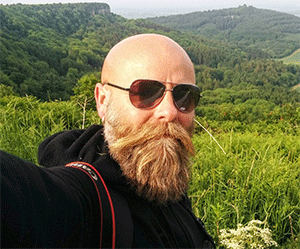
Mark is an obsessive birder, natural history writer, field ornithologist, speaker, guide and passionate conservationist. Originally from Flamborough, Mark recently returned to his beloved Yorkshire coast after many years elsewhere, and now calls Filey Bird Observatory home (where he juggles various roles for the Obs).
He has travelled extensively in pursuit of birds and wildlife but remains especially passionate about his native area. His writing is widely published, much of which is archived here, while his photographic nature journal Northern Rustic can be found here.
In Talking Birds Mark interviews some of the most well-known (and not so well known) birders from Britain and around the world. You can read previous interviews in the series here.
Other Talking Birds
 |
 |
 |
 |
|||
| Dawn Balmer | Kim Kaufmann | David Le Puma | Paul French | |||
 |
 |
 |
 |
|||
| Bob Flood | Jonathan Meyrav | Brett Richards | Jonny Rankin | |||
 |
||||||
| Andy Roadhouse | ||||||