Sparrows thriving in Scotland
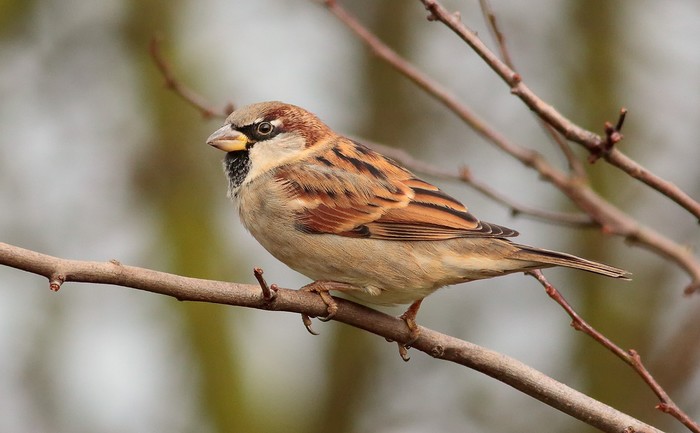
The latest report from Scottish Natural Heritage (SNH) shows that the House Sparrow is doing very well in Scotland.
Contrary to the perception that House Sparrow numbers are falling everywhere, the latest Scottish Biodiversity Indicator, abundance of terrestrial breeding birds, published today, shows that between 1994 and 2017 the breeding House Sparrow population in Scotland increased by almost 50%.
Compared with the House Sparrow population in England, that has fallen by a fifth over the same period, and the 6% decline for the UK as a whole, it looks like House Sparrows are thriving in Scotland.
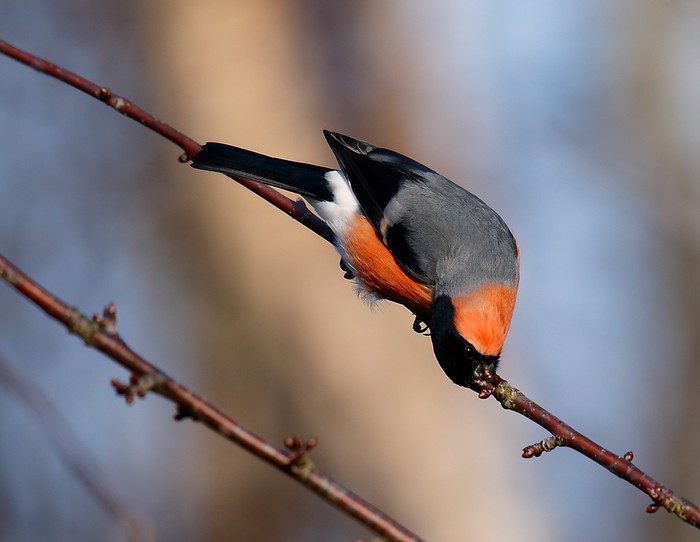
It doesn’t stop there; the beautiful Bullfinch has seen its population increase by a whopping 163% during the same period. The largest increase for any bird in Scotland is that seen by the Chiffchaff, its breeding population has grown ten-fold, up by 1007%. Even the tiny Goldcrest is doing well, experiencing a 79% increase.
Ben Darvill, from the British Trust for Ornithology (BTO), Scotland, said, “It is great to see some of our birds doing so well in Scotland, but it is thanks to the hundreds of volunteers that give up their time to take part in BTO surveys that we have such a clear picture of how our birds are doing. Scotland is a special place for birds and we must continue to keep an eye on them and keep reporting on their ups and downs.”
Whilst overall the report is looking pretty positive for Scotland, there are some birds that are doing less well. Golden Plover, Lapwing and Curlew have all seen their breeding populations fall between 1994 and 2017, down 14%, 57% and 60% respectively. Even here it is not all bad news as all three saw their numbers improve between 2016 and 2017, up by 50%, 14% and 4%.
The Kestrel and Swift are amongst those showing the largest declines, both down by over two-thirds, but bouncing back a little between 2016 and 2017, up by 104% and 32% respectively.
Ben Darvill, added, "There are likely to be considerable future changes in both land use and climate in Scotland. No-one is quite sure what Scotland will look like fifty years from now. Long-term monitoring helps us to understand the impact of historical changes on our wildlife and, through this, to predict the impact of future changes. Monitoring is therefore an important tool for conservation decision-making and for planning of landscape-scale habitat management."
5 Dec 2018
Share this story