


Spanish hunter fined €100,800 for shooting protected Iberian Lynx
The killing of a nursing female lynx and her dependent cubs in a Toledo hunting reserve highlights the ongoing threat posed by wildlife crime to Europe's most vulnerable species recovery programmes
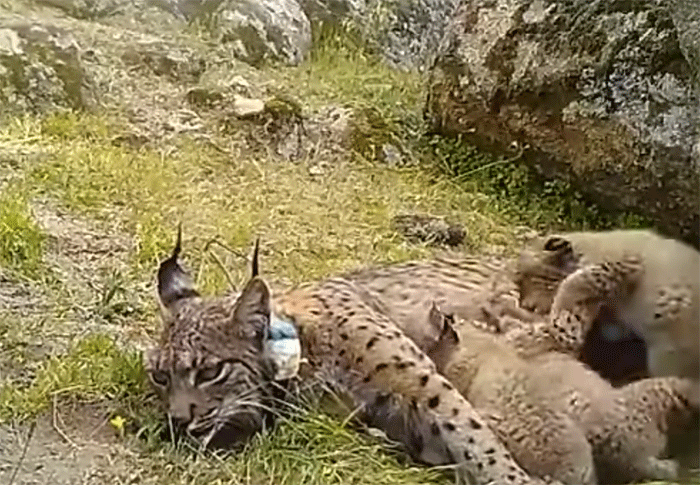
A Spanish court has convicted a hunter for shooting a female Iberian Lynx in a case that underlines both the fragility of wildlife recovery efforts and the growing willingness of European courts to impose meaningful penalties for wildlife crime.
Criminal Court No. 3 of Toledo ordered the man to pay €100,800 in compensation to the regional government of Castilla-La Mancha, and imposed a three-year hunting ban. The court found him guilty of a crime against wildlife due to gross negligence — the regional government had originally sought €500,000 in compensation.
The victim was a female lynx named Nenúfar, shot in June 2019 in the La Batinosa hunting reserve in Menasalbas, Toledo. The hunter was operating without a valid licence and outside the authorised hunting season. He claimed to have mistaken her for a fox. Nenúfar had been released into the Montes de Toledo in February 2017 as part of Spain's lynx reintroduction programme and was fitted with a radio transmitter to allow conservationists to monitor her progress.
What made her death particularly devastating was its timing. She was nursing a litter of four cubs, just two months old, when she was killed — an age at which they had no chance of surviving without her. One cub was discovered dead nearby, having starved to death. Her bullet-riddled body was found by an environmental agent two years after her release.
The case was cracked by the Guardia Civil's nature protection unit, Seprona, through a forensic investigation focusing on individuals known to frequent the hunting area. Spain's approach — combining thorough investigation, forensic evidence and judicial follow-through — has proven increasingly effective. In Andalusia, sustained prosecution efforts have contributed to a reduction of more than 90% in wildlife poisoning incidents over the past two decades, a model now being shared with conservation professionals across Europe through the WildLIFE Crime Academy initiative.
The broader context is one of hard-won recovery. At the turn of the century, fewer than 100 Iberian Lynx remained in the wild. By 2024 that figure had grown to 2,401 individuals — a 19% increase on the previous year — prompting the IUCN to upgrade the species' status from Endangered to Vulnerable. Castilla-La Mancha alone now holds 942 animals.
Yet as Nenúfar's story shows, individual animals — particularly breeding females — remain critically important to the trajectory of small, recovering populations. The Toledo conviction serves as a reminder that effective conservation depends not only on habitat restoration and captive breeding programmes, but on wildlife law being robustly enforced when it is broken.
April 2026
Get Breaking Birdnews First
Get all the latest breaking bird news as it happens, download BirdAlertPRO for a 30-day free trial. No payment details required and get exclusive first-time subscriber offers.
Share this story





