South Polar Skua added the British List
The British Ornithologists’ Union Records Committee (BOURC) has announced that South Polar Skua has been added to the British List.
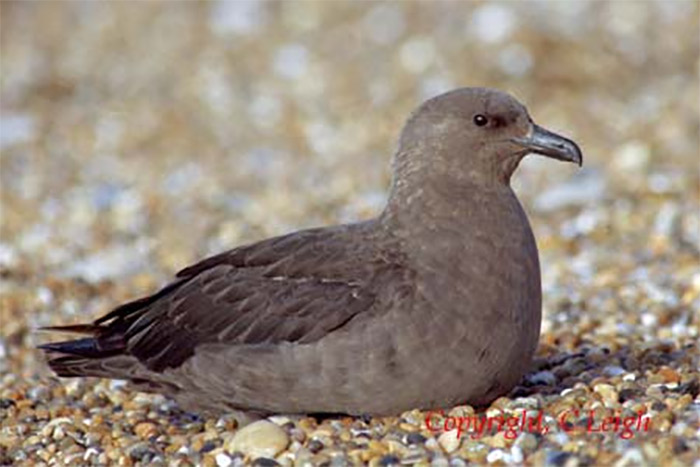
A second-calendar-year bird at West Bexington, Dorset, present between 27 January and 4 February 1996, becomes the first British record.
This Antarctic species is a predicted vagrant to British waters as dataloggers have demonstrated that significant numbers migrate annually to the northern hemisphere, with regular sight records elsewhere in the eastern and western North Atlantic. However, despite several claims, the status of this species, and its austral sister species Brown Skua, as a vagrant to Britain has been problematic, as they are difficult to separate, having very similar plumage to each other and Great Skua S. skua, and as mitochondrial DNA does not distinguish between the taxa.
This individual was assessed solely on a series of photographs taken throughout its extended stay, often sitting on a beach. These images allowed the bird to be aged as second-calendar-year on a basis of moult, plumage state and bare part colouration, crucial for its identification.
It should be placed after Black Tern on the British List.
South Polar Skua is widespread in the Southern Oceans where it nests on the Antarctic continent and disperses large distances during the non-breeding season, as far as the northern oceans.
This change will be published as part of the BOURC’s 53rd report due to be published in IBIS in October 2021.
Upon publication of this change, the British List stands at 627 species (Category A = 609; Category B = 8; Category C = 10).
16 August 2021
Share this story