Review: Opticron Imagic IS 10x30 & 12x30
Image stabilized binoculars are something I have rarely used and having them over a weekend to review was a perfect amount of time to get used to them and understand the intricacies that they have over conventional binoculars. On introducing them to me, the Opticron representative briefed me on holding them and gave me the most useful advice of ‘focus first and then stabilise’! Indeed when looking at a binocular of this shape it does come into your head as to the best way to handle them but in a short space of time you naturally grip them to suit yourself and be able to operate both the focus and stabilisation. In my case it was as the rep had showed me! The other point that I don’t really think about when reviewing binoculars is their use outside of birdwatching but after using these I could see major benefits for professions such as surveying of external facades of buildings or reading signage on high level pylons or the like in high winds.
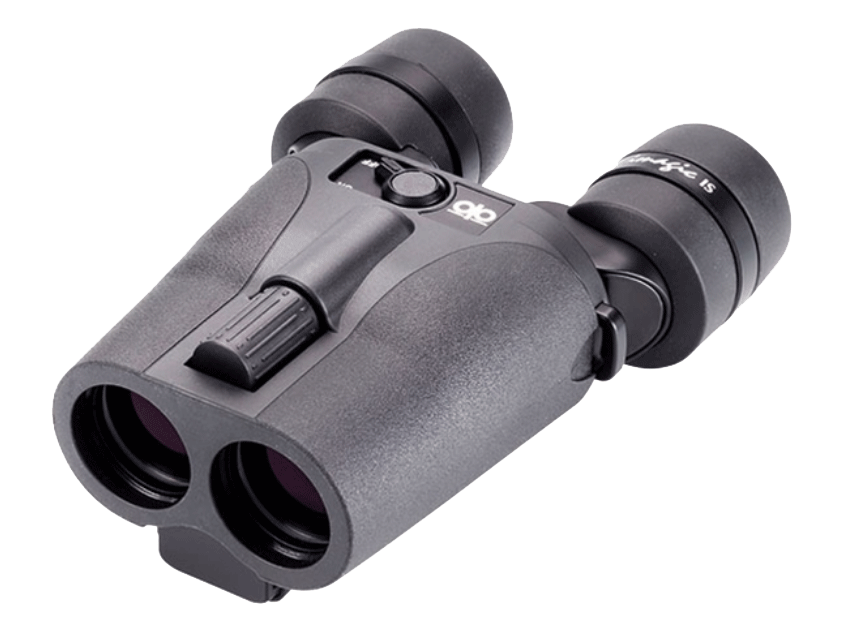
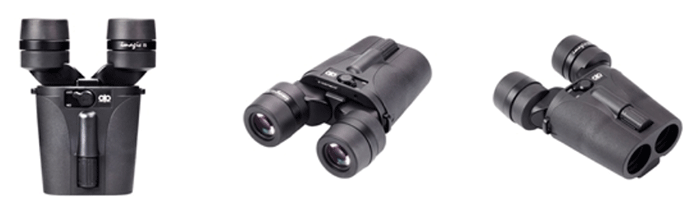
The compact size and general feel and build quality of the binoculars is to a very high standard. In the hand they give a very robust feeling with good quality tightly fitted matt textured rubber armour, good quality click stop eyecups, comfortable size and weight for a binocular that contains mechanics. The binoculars are very ergonomic considering their appearance. In relation to the visible materials used, the only ‘plasticy’ parts I could see was the battery housing on the underside.
The compact form and balance of the binocular made finding a comfortable grip easy to achieve within the first few minutes of using them. The rubber armouring has a matt non slippery feel and the focus wheel size and position is perfectly positioned for dual operation when using the image stabilisation switch.
The eyecups are comfortable on the eye socket with click stops to allow differing positions. The adjustment of the eyepieces either side of my nose and adjusting the eyecups as to the most comfortable click stop position was probably the longest task, over an hour or so of using but obviously only needed to be done once! I tried both the 10x30 and 12x30 version of the binoculars and found the 12x to be the best for an image stabilised binocular. Being relatively fit and not suffering from too much shake I personally wouldn’t need a 10x IS binocular and would stick to a conventional type for this power.
The focus is very smooth and precise with no hunting required and a surprisingly good depth of field. The dioptre adjustment is housed on the right eyepiece like many conventional binoculars. I could immediately tell on my first views through the binoculars that these were not an ED glass but the optical quality is sharp with excellent colour saturation and pleasing on the eye. It is not artificial in anyway and very neutral. I used the binoculars in low afternoon sun in windy conditions and early morning darkness and the binoculars were surprisingly good in both conditions particularly viewing into shadowed areas under bushes etc.
When viewing branches against the sky chromatic aberration was minimal and didn’t affect my use of the binoculars. I used the binoculars in most lights and found the light gathering superb, from early morning to low sun evening light. In rainy dull conditions the binoculars didn’t let me down, the sharp image was very good indeed.
I was particularly fortunate to be using the binoculars on a viewing platform in high wind on the first day of use, this is where the image stabilisation really showed its benefits. When viewing distant Starlings on a wire it was virtually impossible to avoid shake, even with my 8x comparison binocular but it was amazing when the IS mode was utilised, the view was steady and sharp, panning birds in flight was a dream and following a flock of pigeons and locking on with the IS allowed me to see details I would have been hard pressed to see with conventional binoculars or this binocular in its standard setting.
I cannot comment on the accessories as I only received the binoculars. I found it relatively easy to see the benefits of these binoculars, the IS would be required for anybody using the 12x regardless of how well they can keep steady but it only takes a light breeze to introduce shake and trying to keep up with a fast moving bird in a bush would be impossible without the IS, for anybody a bit frail or elderly and preferring the lesser power the 10x would be ideal. Other than the prefix 10x or 12x I could not discern another difference in appearance between both sets of binoculars.
Conclusion:
Pro’s - The weight, size and considering they have an incorporated IS system is light, weighing in at 540g approx. The IS system is very affective and the build quality of the binoculars is very high end.
Con’s – Not a lot, in extreme low level evening sun there was a degree of light arcing and black out but I managed to limit this by readjusting the eyecup and eyepiece positions eliminating 80% of this. This was only in this extreme condition of looking adjacent to low sun, normally it was not present or very limited. A close focus of 2.9m approx. maybe a limiting factor for those who would also wish to use them for insects, dragonflies etc.
Ray Scally
15 October 2019
Ray Scally is a birdwatcher and international bird artist widely published in ornithological journals and books and is well known for his work illustrating the two Birding Frontiers Challenge Series bestselling identification books, Autumn and Winter. Other publications include The Birds of Spurn by Andy Roadhouse, The Ultimate Site Guide to Scarcer British Birds by L G R Evans, Rare Birds Where and When Vol. 1 by Russell Slack and British Birds Magazine amongst many others. Ray exhibits annually at the Spurn Migration Festival and is currently working on illustrations for Cape May Bird Observatory in the US. When he’s not at Spurn, Ray can be found birding in his East Cheshire square/ Peak District Hills.
Share this story