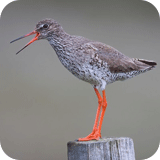
Reckless beach drivers put vulnerable Norfolk birds in peril
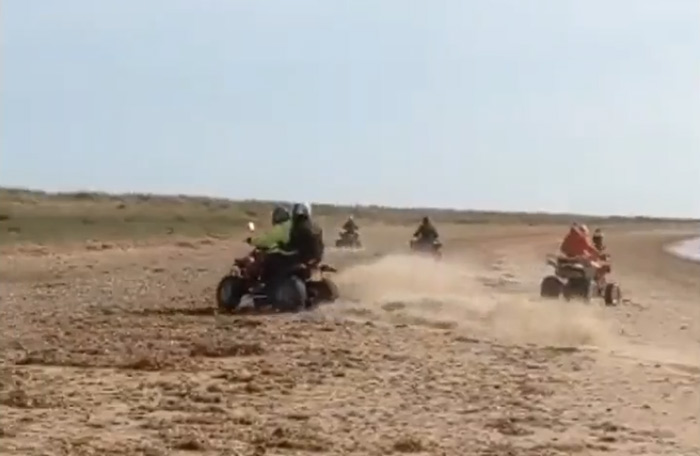
Heart-breaking footage has been released by the RSPB which shows quad bikers driving recklessly on Snettisham Beach, one of Norfolk’s strongholds for vulnerable breeding birds including ringed plovers.
The clip, filmed by the RSPB, shows five quadbikes driving at speed across both Snettisham Beach and the RSPB’s Snettisham nature reserve, over several miles of vital nesting habitat for the fast-declining species as well as other birds such as oystercatchers.
The events come at the start of the breeding season after the birds have spent months displaying courtship rituals, pair bonding and in the lead up to egg-laying. Ringed plovers create scrapes, shallow holes in the sand/shingle to lay their eggs, some of which were flattened by the tyres of these quad bikes.
Working with Norfolk Police, the charity is urging visitors to be mindful of wildlife in the countryside, with over half of England’s most threatened breeding bird species nesting on or near to the ground.
The ringed plover is one of these birds, with its severe decline in part a result of increased visitor pressure on beaches where they nest close to the ground and remain well camouflaged. South Heacham beach, having been designated for their internationally significant wildlife and are a key habitat for these birds. Therefore, disturbance such as this can have a substantial impact, particularly as the Norfolk ringed plover breeding population has declined by 79 per cent in the last 35 years.
To help aid the fortunes of ringed plovers, who are suffering from global decline, “Plovers in Peril”, a partnership project funded by has been working to educate beach users on the fragility of the species, while also monitoring the bird’s behaviours and habitats.
??Heartbreaking footage of reckless quad bike drivers at #RSPBSnettisham nature reserve! This behaviour endangers people and can be catastrophic for vulnerable nesting ringed-plovers #SnettishamBeach??
— RSPB Titchwell Marsh (@RSPBTitchwell) May 26, 2021
Find out more about #ploversinperil?? https://t.co/kLXW5suxqN#WatchYourStep pic.twitter.com/D8hGUBreP0
Talking about the project, Wynona Legg, Ringed Plover Project Officer, said: “As a team we watch the birds at every step of their journey whilst working hard to give them the space and protection they
"The RSPB is working collaboratively with Ken Hill Estate and Norfolk Coast AONB to raise awareness of beach nesting birds on the site, and we hope to demonstrate that by watching your step and giving breeding birds space, together we can ensure their presence here is safeguarded long into the future.”
This recent behaviour from quad-bikers, as witnessed by the project team and of the public, comes as a heart-breaking blow to the project. While thankfully, no eggs had been observed by RSPB staff and volunteers at the time of the incident, had active nests with birds incubating eggs been destroyed, the damage to the birds’ breeding efforts could have been much more severe, and the offences punishable by law.
Speaking about Norfolk Police’s efforts to tackle wildlife crime on Norfolk’s beaches, PC Chris Shelley said: “We work closely with conservation charities, local councils and other key partners right along Norfolk’s coastline to identify areas of concern, such as marine life disturbance, to try to protect and preserve our rich wildlife habitats.
"This summer we’re also proud to be part of the national initiative Operation Seabird. Our focus is on protecting our vulnerable ground nesting sea birds, like little terns and ringed plover, ensuring the seals on our beaches are not disturbed, and educating and encouraging visitors to be responsible and always consider how their actions may affect our wildlife and, when necessary, take action against those who wilfully and intentionally destruct our wildlife and their habitats.”
Working with the RSPB, Norfolk Police are encouraging members of the public to report any incidences of suspected damage or disturbance to wildlife, eggs or nests at these sites in addition to matters of public safety.
All wild birds and their nests are protected by law under the Wildlife and Countryside Act 1981. For some beach-nesting species, including little terns, this legal protection is even stronger as population numbers are so low. It is vital that anyone witnessing disturbance to breeding birds or their nests reports this to the police as soon as possible, either on 999 if the event is occurring, or on 101 if the event has passed.
28 May 2021
Share this story