National Park grouse moors are a black hole for birds of prey
Populations of Goshawk and Peregrine Falcon are considerably lower in areas of the Peak District managed for driven grouse shooting in comparison to the rest of the National Park according to a new study.
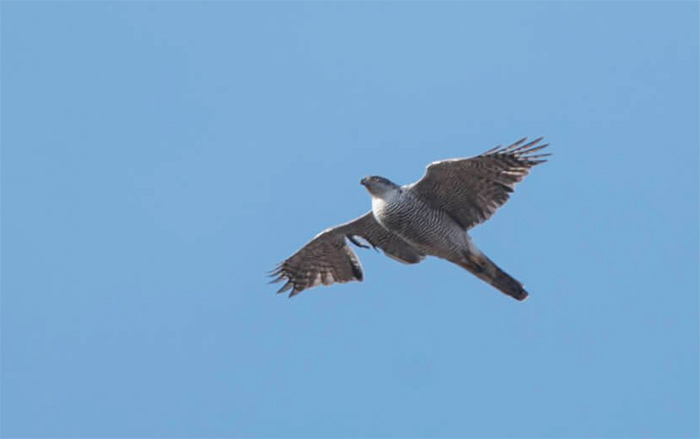
The paper, published in the journal British Birds, found a significant association between confirmed raptor persecution incidents and moorland burning – a practice associated with the management of driven grouse moors. It revealed that populations of Goshawk and Peregrine Falcons were in catastrophic decline in northern Dark Peak and yet increasing in the nearby southern White Peak, were virtually no driven grouse moors are present.
This is the first time the association has been shown between declining Goshawk populations and moorland burning, confirming fears that driven grouse shooting and its associated raptor persecution is leading to the demise of this species in the park.
The RSPB’s Tim Melling, one of the authors of the paper, said: “In the Dark Peak, birds of prey are notable by their absence. This should be a stronghold for Goshawks and Peregrines, but sadly our data shows this area to be a bird crime hotspot leading to almost local extinctions of these species.
“Birds like Peregrines and Goshawk are not only a vital part of the ecosystem but are a joy to behold. They should be in abundance here but sadly the Dark Peak is now proving a black hole for these birds of prey.”
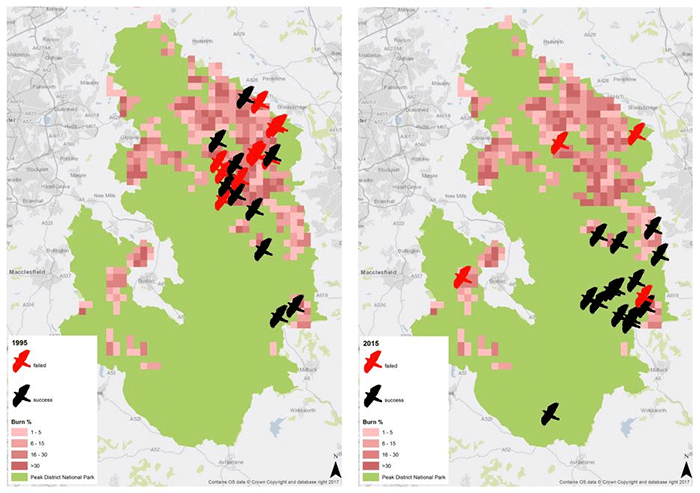
The Peak District National Park was once renowned as THE place to see goshawks with up to 17 pairs in the Dark Peak as recently as 1995 but by 2015 this number had plummeted to just two, neither of which successfully bred. Goshawk were found to be twice as likely to successfully breed in the White Peak as the Dark Peak, and Peregrines three times more likely.
The illegal persecution of birds of prey is a persistent problem throughout the UK. The RSPB is calling for the government to introduce a system of licensing for driven grouse shooting, and regionally the inclusion of practical measures in the Peak District National Park Management Plan to address this issue.
TV Broadcaster and Vice President of the RSPB, Chris Packham said, “Our national parks should be awe inspiring places filled with nature and beauty, providing a connection for people to the natural world. This isn’t the case in the parts of the Peak District National Park where driven grouse shooting predominates. We are being robbed of the magnificence of birds of prey by an industry out of time and out of touch with the majority of the British people. It is time to make the changes that are needed to return our National Parks to what they were meant to be”
Angela Smith MP for Penistone and Stockbridge and Species Champion for the Hen Harrier said “It is more than ten years since the issue of bird of prey persecution was brought to my attention and it seems that the situation has not improved with the elimination of both Goshawks and Peregrines from my own parliamentary constituency. Regulation of driven grouse shooting is inevitable unless those who engage in the sport are prepared to tackle effectively law-breaking within its ranks.”
1 May 2018
Share this story