Great Yarmouth Air Show poses threat to Litte Terns
Fears that rare Little Terns breeding on the east Norfolk coast might abandon nests if disturbed by Great Yarmouth Air Show remain three weeks before event, despite RSPB raising concerns repeatedly since October 2016.
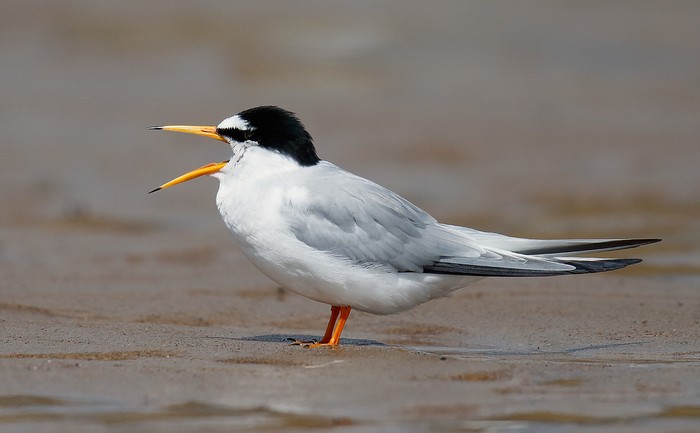
Little Terns have once again returned to our shores after a 6,000 mile round-trip to West Africa and back. The birds are settling on east Norfolk beaches ready for this year’s breeding season. Each year, they face the annual challenge of finding safe beaches, free from predators and human disturbance, to nest and feed their young. However, this year they are faced with a potentially even bigger threat from Great Yarmouth Air Show.
Over 25 years, Little Terns have suffered chronic declines making them a legally protected species. The east Norfolk coast is pivotal to the species’ success, supporting 20 per cent of the UK population during the May – August breeding season. On these beaches, the birds are easily disturbed by people and are vulnerable to predators such as crows and foxes. This makes suitable off-shore areas, like Scroby Sands off the coast of Great Yarmouth, are increasingly important to the success of these birds, as well others like the common tern.
However, this summer, even the sanctuary of Scroby Sands won’t remain untouched from human disturbance, as Great Yarmouth Air Show looks set to go ahead despite concerns about the impact of planes on the terns and lack of information to demonstrate that impacts can be safely managed.
The Air Show, scheduled for 16-17 June 2018, takes place during a crucial time in the bird’s breeding season, when eggs and chicks must be kept warm by parent birds. The RSPB has concerns that as aircraft passes close to-and-over Scroby Sands, this will cause the adult birds to fly up from the nests, potentially leaving eggs and chicks exposed for an hour or longer depending on the level of disturbance and response of individual birds. Chicks also need plenty of food to grow as quickly as possible, but the parents may choose to not bring food to the chicks if the disturbance is too great. Ultimately, this could cause the adult birds to abandon their nests and chicks.
Ben McFarland, RSPB Conservation Manager, said: “We are very lucky in east Norfolk to host such an important population of Little Terns, which rely on our hospitality over the summer months. It is very disappointing that the organisers are proposing to hold the Air Show at this time of year, despite our concerns being raised since October 2016.
“Scroby Sands is a legally protected site of global importance for wildlife and Little Terns are a protected species. We are also concerned the Natural England, Greater Yarmouth Borough Council, and the Civil Aviation Authority will allow Great Yarmouth Air Show to proceed despite these legal protections. We recognise the value of the air show and the economic benefit it will bring to the area, but it should be held in September, after the Little Terns have nested.
“While we’re pleased to hear that Air Show organisers are finally taking our concerns on board and are even discussing re-routing flight paths for the Red Arrows, we are still worried that any new flight lines of the aircraft will be too close to the birds’ nesting colonies and pose a significant rick of disturbance. We could have avoided arriving at this situation with three weeks to go before the Air Show if our concerns had been recognised when they were first raised in October 2016.”
Natural England’s approach follows a shift in emphasis as an organisation away from regulation and towards enabling and facilitation.
The RSPB believes that in this instance there are serious consequences for wildlife, and is calling on Natural England, Great Yarmouth Borough Council, and the Civil Aviation Authority to ensure that:
- Thorough assessments have been undertaken to understand noise and visual effects on the terns to identify, if possible, appropriate flight lines and location of the display area.
- The offshore tern colony is closely monitored to identify if the birds are showing signs of disturbance during the display, with options to stop the display in place.
- Sufficient resources are provided to other Little Tern colonies on the coast to ensure that they have the best chance of success, especially to manage the influx of visitors that could use the wider coast outside of the display times.
- In future years, Great Yarmouth Air Show takes place outside the breeding season.
- Ongoing funding will be provided to support the maintenance of Scroby Sands and associated sites important for wildlife into the future.
6 June 2018
Share this story