Cattle Egrets breed at RSPB Ham Wall
Cattle Egrets have bred successfully for only the second time ever in the UK and the first on an RSPB reserve at Ham Wall in Somerset.
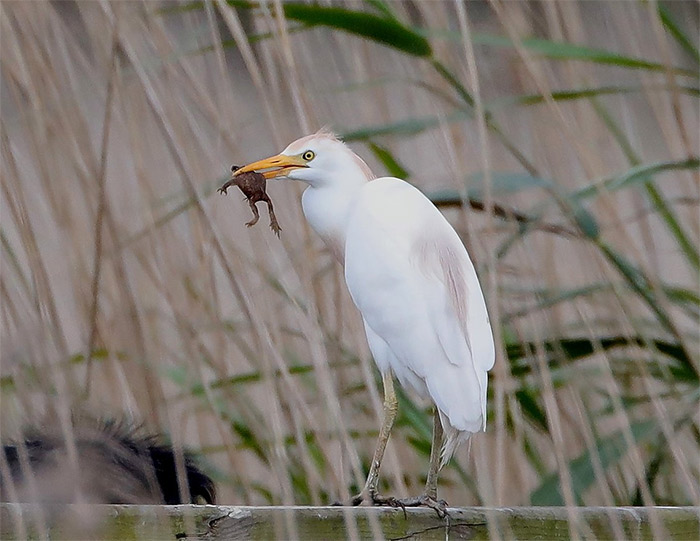
The birds have adopted a 70-acre wetland recently purchased by us next to Ham Wall. The site is also home the majority of the UK’s breeding Great White Egrets, another bird that has colonised the UK in the past five years.
There have been five nests of Cattle Egrets on site, producing 9 youngsters. Alongside these, seven Great White Egret nests have produced 17 young. Steve Hughes, RSPB Ham Wall Site Manger, said; “We are delighted to provide these wonderful birds a new wetland home. A lot of the heron species seem to be moving north in Europe, and it’s vital that they have suitable places breed. Here at Ham Wall the work the RSPB does to provide the right conditions is really paying off. Who knows what will colonise the site next.”
Two GWE chicks being fed by a adult GWE at RSPB HamWall.@RSPBHamWall @AvalonMarshes pic.twitter.com/h9EKMXZa2c
— Andrew Kirby (@AndrewKirby18) July 17, 2017
Slightly smaller but much rarer than the Little Egret, Cattle Egrets have been visiting the UK in increasing numbers. They often spend time close to livestock and grab insects and worms that their hooves disturb. Cattle Egrets have yellow or greyish legs and a yellow beak, compared to the black legs (with yellow feet) and black beak of the similar little egret.
Thanks to the specially trained volunteers who have been monitoring the newly colonising species in the Avalon Marshes who have monitored the birds during the breeding season using special equipment and training to not disturb the birds.
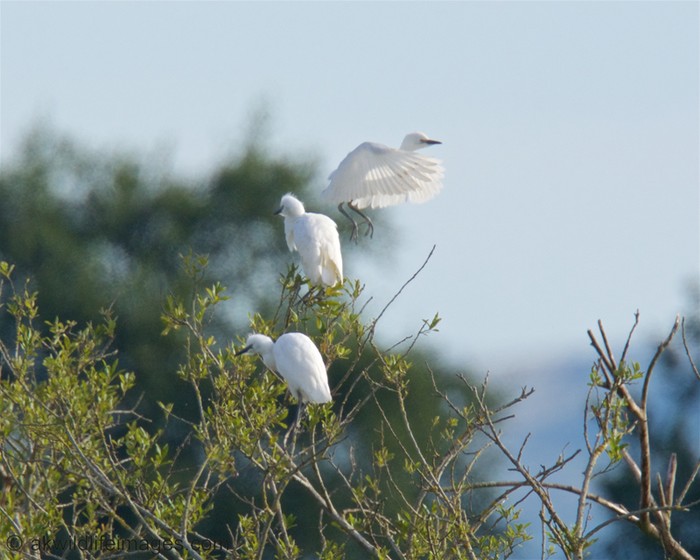
Look out for the adults and newly fledged young birds flying above the reserve or hanging out with the cattle near the Avalon Hide.
RSPB Ham Wall
19 July 2017
Share this story