Police investigation launched after two Ravens found poisoned in Newry
Police in Newry have commenced an investigation after two Ravens were confirmed to have been fatally poisoned in Poyntzpass.
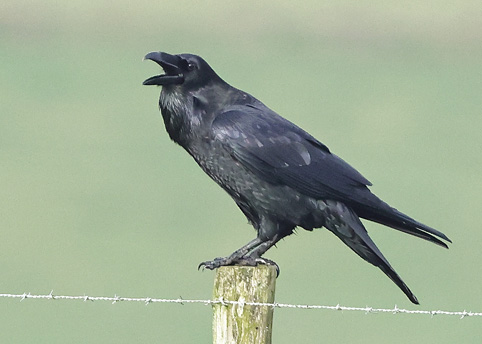
Testing determined that the birds, which were found in a field in the Drumbanagher Wall area in December, had consumed high levels of the rodenticide Chloralose, and Bendiocarb, an insecticide and concluded this was likely an abuse case, potentially causing their deaths.
Superintendent Johnston McDowell, the Police Service lead for Wildlife Crime and Animal Welfare, said: “These birds should have been safe in the wild and yet someone has sought to intentionally poison them. This is not the first time we have had reports of this nature in the area and it saddens me that our incredible wildlife and birds are being killed. They are a beautiful asset to our countryside that we should work to protect.
“It’s important that anyone who comes across dead birds, which they believe to have been poisoned, shot, illegally trapped or even taken to sell, that they report their find to PSNI immediately and do not handle them. The poisons being used are deadly not only to birds and wildlife but also to humans and chances should never be taken when potentially dealing with such chemicals.”
The Health and Safety Executive NI, one of the enforcing authorities responsible for Biocidal Product Regulations in Northern Ireland, said: “Where duty-holders are found to have incorrectly used or have misused biocidal products or continue to use or store biocidal products that have been withdrawn from the market, HSENI will take appropriate enforcement action to achieve compliance. This highlights the importance of responsible use of all chemicals including biocidal products.”
A spokesperson for the Department of Agriculture, Environment and Rural Affairs said: “Illegal poisoning of birds and wildlife is completely reprehensible. It is an offence to supply, store (be in possession of) and use a Plant Protection Product (PPP, or Pesticide), that has been banned or withdrawn. Further it is an offence to use an authorised PPP in contRavention of the conditions and the specific restrictions established by the authorisation and specified on the product label. The penalty, if convicted on summary conviction, is a fine not exceeding the statutory maximum or on conviction on indictment, to an unlimited fine.”
Superintendent McDowell added: “Along with our partners we will continue to investigate these crimes and seek to prevent further instances whilst bringing offenders to justice.”
4 Apr 2025
Share this story