Owls harmed by post-fire logging, not fire
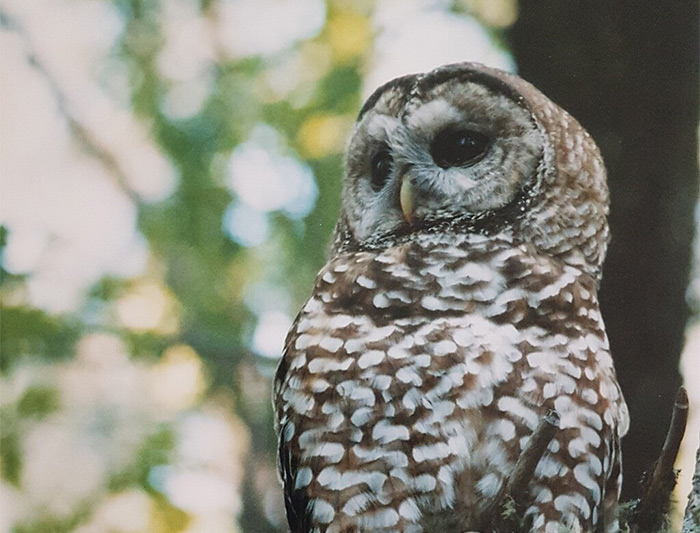
Are forest fires a threat to the imperilled Spotted Owl? For years, different groups of scientists assumed so, but a new study turns this assumption on its head. Researchers from the John Muir Project, Pennsylvania State University, and Wild Nature Institute found that these previous studies consistently had a serious methodological flaw: they failed to take into account the impact of post-fire logging on Spotted Owls.
"It turns out that the decline in Spotted Owl populations that sometimes occurs after forest fires is being driven by destructive post-fire logging practices, not by the fires themselves," said Dr. Chad Hanson, Research Ecologist with the John Muir Project.
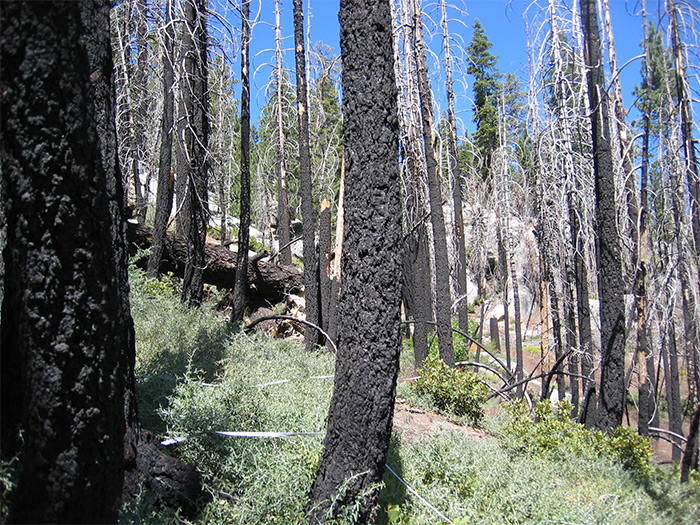
Interestingly, in the absence of post-fire logging, Spotted Owls benefit overall from large mixed-intensity forest fires, contrary to longstanding assumptions made by the U.S. Fish and Wildlife Service and the U.S. Forest Service.
"Federal wildlife and public land agencies have a serious misunderstanding of the science regarding wildfires and Spotted Owls," noted Dr. Derek Lee, Associate Research Professor at Pennsylvania State University. "This leads them to mistakenly label forest fires as a threat to the Owls, and ignore the real threat: logging."
Forest fires burn in a mosaic pattern. Typically, even the largest forest fires are dominated by lower-intensity effects, where most of the mature trees remain green and survive, and the remainder is comprised by higher-intensity fire patches where the fires create "snag forest habitat".
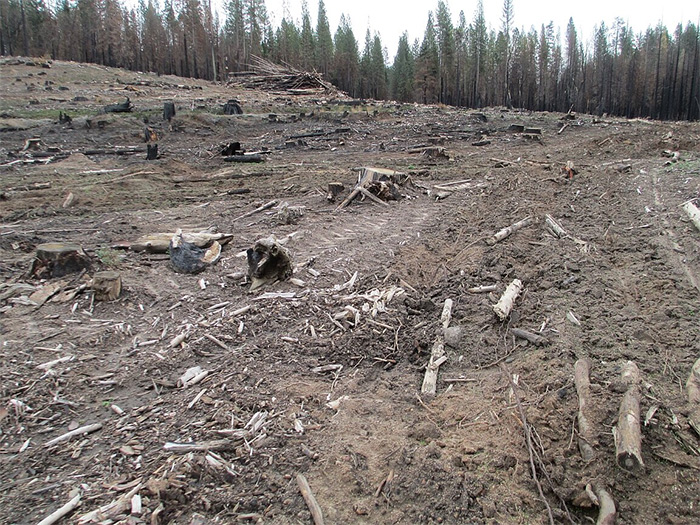
"These patches of snag forest habitat have high levels of the small mammal prey that Spotted Owls need to survive and reproduce," observed Dr. Monica Bond, Principal Scientist with the Wild Nature Institute. "But post-fire logging destroys and eliminates snag forest habitat, and that harms Spotted Owls," she added.
27 Apr
Share this story