Northern Irish tern colonies suffer catastrophic year in 2020
2020 produced a mixed bag for Northern Ireland’s seabirds but confirmed the importance of the country’s coastline for its 20 breeding seabird species.
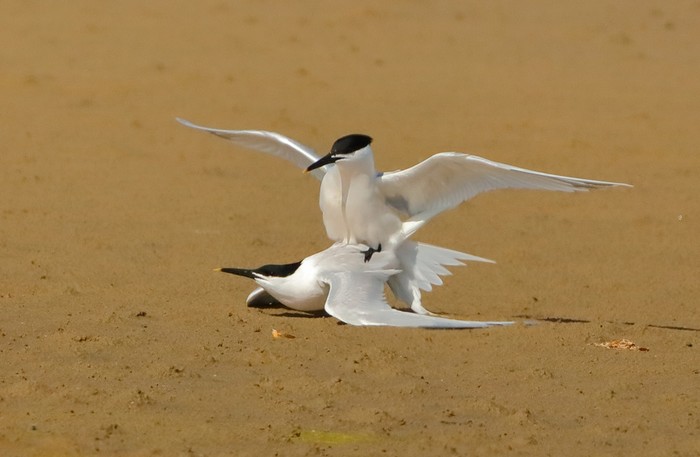
Volunteer-led monitoring of seabirds was severely impacted by COVID-19 restrictions in 2020, but surveys carried out by the National Trust and the Royal Society for the Protection of Birds revealed that tern colonies around Northern Ireland had a catastrophic year, with Sandwich and Common Terns experiencing some of their lowest numbers since records began.
However, despite declines in terns, many seabirds had a good breeding season. 2020 was a record year for Guillemots on Muck Island, with Ulster Wildlife recording 3,107 individuals present at the colony last summer, the highest number counted since the first record in 1987.
Despite Black-legged Kittiwake populations experiencing a long-term decline in the UK as a whole, in Northern Ireland the decline is at a much slower rate, with some colonies actually showing an increase. In particular, Kittiwakes are going from strength to strength in south Co. Down, with the colony there increasing in each year since 2015 (from 483 pairs to 717 pairs). Also in Co. Down, lucky volunteers were able to follow the breeding success of a colony of 22 pairs of Black Guillemots as they raised 11 young birds opposite their house during the lockdown. These good news stories for Northern Irish seabirds are only possible to report due to the dedicated efforts of our Seabird Network volunteers year after year.
Dr Katherine Booth Jones, Northern Ireland Seabird Coordinator for the BTO, says,
“The Northern Ireland Seabird Network is a special collaboration between volunteer seabird surveyors, the BTO, NIEA, RSPB and the National Trust, without whom we could not follow the fates of our seabirds in these changing times. While we have seen winners and losers in 2020, seabird counts at colonies can vary year-to-year depending on weather conditions and timings, which makes the annual recording of seabird numbers by our volunteers particularly valuable to capture long-term changes in Northern Ireland.”Dr Neil McCulloch, Ornithologist for the Northern Ireland Environment Agency, says, “Seabirds form an important component of Northern Ireland’s biodiversity. These species are currently under pressure throughout western Europe from a variety of threats, including the effects of climate change and pollution, and several are in decline. Up to date information on changes in seabird numbers and breeding success are essential for planning conservation action. We are therefore extremely fortunate in Northern Ireland that these data are available for so much of our coastline through the efforts of the many dedicated volunteers and partner organisations of the Northern Ireland Seabird Network. It is an outstanding example of the benefits of citizen science”.
The Northern Ireland Seabird Report 2020 carries the latest updates for all of the 20 seabirds that breed in Northern Ireland. To read the full report www.bto.org/seabird-report.
Share this story