New funding to help transform RSPB Titchwell
RSPB Titchwell Marsh has been given a funding boost which will trigger major change at the reserve in coming months.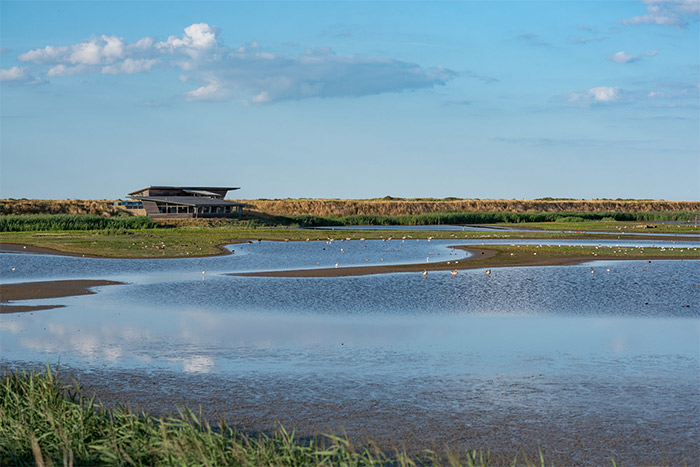
Life on the Edge, an exciting project to be delivered at the diverse nature reserve this autumn, aims to transform the freshwater habitats favoured by the scarce birds that visit and allow the human visitors to be closer to nature.
Home to the iconic avocet and acting as an important 'service station' for migrating waders, the freshwater marsh at Titchwell will face a transformation.
Using an amphibious excavator, the single freshwater marsh compartment will be split into three with new water control structures installed.
This will allow the freshwater marsh to be managed on a constant rotational basis ensuring a plentiful supply of food for breeding avocets, migrating waders and wintering wildfowl.
In addition, a series of new nesting islands will be created to improve the breeding success of avocets and common terns but could also attract new breeding birds for the reserve, including sandwich terns.
The second part of the project will be aimed at restoring the freshwater reedbed.
The reedbed at RSPB Titchwell Marsh was integral in ensuring the bittern didn’t become extinct in the UK when their population dropped to just 11 booming males in the 1990’s.
However, despite the overall conservation success of this species in the UK with more than 200 booming males today, RSPB Titchwell Marsh has not recorded a breeding pair for 10 years.
This project will restore the freshwater reedbed by repairing eroded banks, recreating a network of ditches and ponds, and installing new water control structures.
The restoration work will improve the habitat to not just benefit bitterns but enhance the wetland for other species such as bearded tits, water voles, eels and a variety of invertebrates.
An exciting element of the reedbed restoration will be one of the first of its kind in the UK; to create ‘Spoonbill Islands’ for the small but growing breeding population of spoonbills in the UK, and on the Norfolk coast.
Spoonbills were once a common sight in East Anglia featuring in medieval banquets. But as the Fenlands were drained, these distinctive birds lost their home and became a desirable species for egg collectors and hunters, resulting in them becoming extinct in 1668.
As the Dutch population rapidly grew, in 1999 the first pair for 300 years bred in the UK, but it took a further 11 years for a colony to form at Holkham National Nature Reserve in Norfolk. They have since become a regular site on the Norfolk coast including at Titchwell Marsh.
This project starts this month on the freshwater marsh, after four weeks it is anticipated the work will move in the freshwater reedbed with the project being completed by the end of October, in readiness for the arrival of the wintering wildfowl.
Throughout the project the reserve will remain fully open for visitors to explore. Some of the birdlife will move elsewhere during the works, however they will quickly return and hopefully in greater numbers and more diverse than before.
10 August 2021
Share this story