New Penguin Colony Discovered
Researchers from Wildlife Conservation Society (WCS) have announced the discovery of a new colony of Magellanic Penguins on a remote island in Argentina.
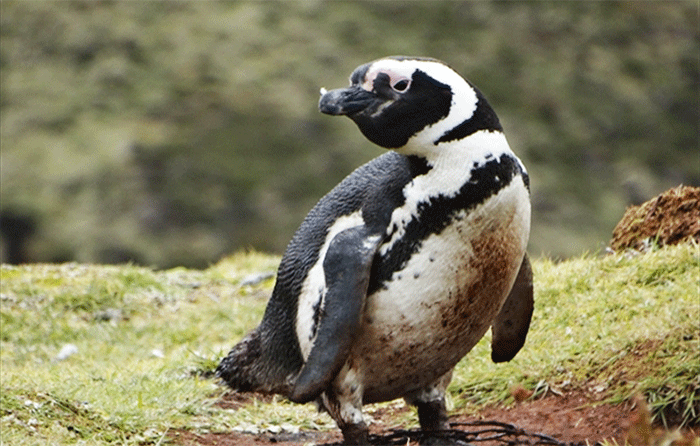
The penguins were found on the eastern side of Isla de los Estados off the eastern tip of Tierra del Fuego at the southernmost end of the South American continent.
Researchers made the discovery while surveying a known colony of rockhopper penguins – a different species – which they had been tracking by remote cameras for two years.
When the researchers eventually accessed an unexplored area of the rockhopper colony, they discovered the telltale nesting burrows of Magellanic Penguins hidden in tall grasses.
The exact number of penguins remains unknown, but the perimeter of the new colony was defined, a census was conducted to estimate population size, and some blood samples have been taken from individuals to determine their health and diet.
Said Andrea Raya Rey, WCS associate researcher and staff at CADIC - CONICET: “Our team was incredibly excited to discover this new penguin colony. The more colonies we know exist, the more we can advocate for their protection.”
The discovery adds to the growing list of 50-plus known colonies of Magellanic Penguins. The largest colony is in the Punta Tombo Provincial Reserve, a protected area created in Argentina with the help of WCS more than 50 years ago. WCS has been supporting long-term research and monitoring of the Magellanic Penguin and works to conserve them by helping improve the management of commercial fisheries and of offshore drilling and the transport of oil in the Southeast Atlantic. WCS also works to protect core reproductive sites for the species in coastal Patagonia in order to ensure their long-term survival.
The Magellanic Penguin is listed as “Near Threatened” on IUCN’s Red List, and the global population - estimated to be between 1.1 and 1.6 million pairs - is decreasing. The main threats to the species are climate change, mortality from fishing gear entanglement, overfishing of prey species, petroleum pollution, egg collection, and unregulated ecotourism.
28 January
Share this story