Nearly 600 Duke of Burgundy butterflies counted in Kent
Decades of work by Butterfly Conservation, Natural England, farmers, landowners and volunteers have helped the endangered species increase dramatically across the county.
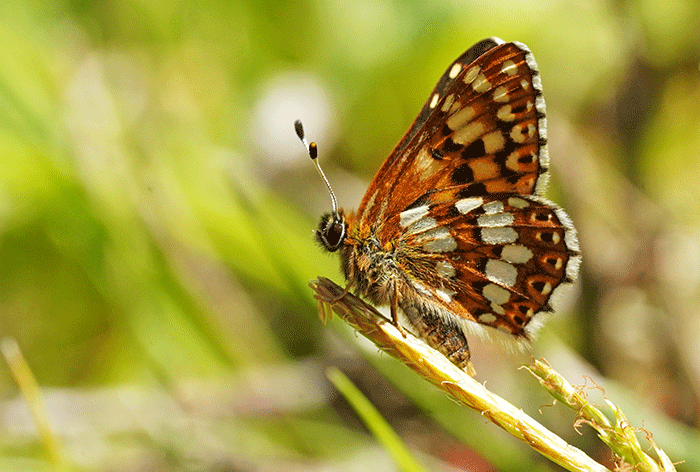
A rare butterfly has had its best year on record in Kent following decades of conservation work to restore and reconnect its habitat.
Butterfly Conservation and Natural England say nearly 600 Duke of Burgundy butterflies were counted in the county in 2025, an increase of more than 9,000 per cent compared with 2005.
The Duke of Burgundy is a small, distinctive butterfly with orange-patterned wings and striped antennae. It is one of the UK’s most threatened butterflies, having suffered an 89 per cent fall in distribution since 1982.
Its decline has been closely linked to the loss of unimproved grassland and woodland clearings. The species depends on cowslips and primroses, which are the only foodplants used by its caterpillars.
Butterfly Conservation ecologist Rebecca Levey said the charity was “absolutely overjoyed” by the results.
“When we first started counting the Duke of Burgundy in the 1990s we usually counted fewer than 50 butterflies all year,” she said.
“This incredible increase in recent years is entirely down to our fantastic partnership work with Natural England, farmers and volunteers to create high-quality habitat, and it absolutely proves that good conservation work can save rare species.”
Butterfly Conservation began its South East Woodlands project in 2007, with local volunteers planting primroses and cowslips at known Duke of Burgundy sites to help stabilise the population.
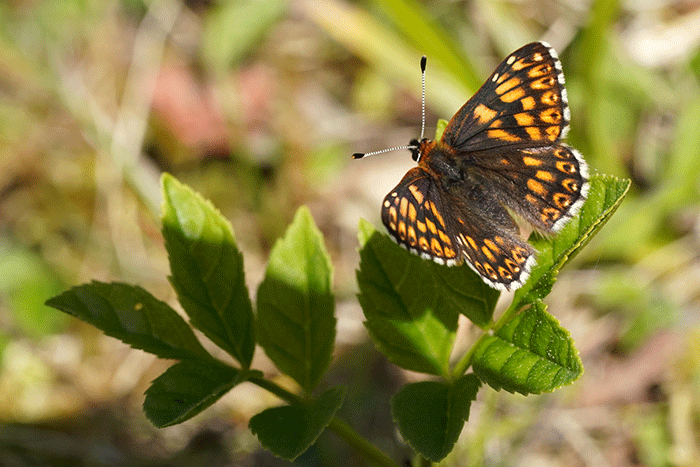
However, the charity says the main driver of the recent increase has been a wider landscape-scale approach in east Kent, led by Natural England and supported by farmers and landowners.
Since the 1990s, Natural England farm conservation advisor Dan Tuson has worked with landowners to create a network of wildflower-rich grasslands. Some have developed from natural seed banks, while others have been helped by native seed and by the use of “green hay” taken from established meadows.
Green hay involves cutting grass and flowers from a species-rich meadow and moving the cuttings directly to another site. This helps transfer not only seeds, but also microbes, fungi and other living material that can help new grasslands establish.
Rebecca said the success had come from creating a connected network of suitable habitats, rather than focusing only on isolated butterfly colonies.
“If a population is completely isolated, then the ones who have that ‘adventurous gene’ and go exploring for new territory will just starve and die - but if they are successful and find new habitat then that effect can be repeated and multiplied which is exactly what we’ve seen,” she said.
“Since Dan started leading this fantastic work with farmers, the butterflies have almost spread quicker than we can keep up with.”
The number of Duke of Burgundy counted in Kent rose from 182 in 2021 to 536 in 2022. Counts have remained above 400 every year since, with 591 recorded in 2025.
Dan Tuson said the results had only been possible because of long-term support from farmers, landowners and volunteers.
“This fantastic success has only come about because of the dedication and commitment of farmers and landowners to nature-friendly farming, working with us to create a different type of landscape,” he said.
“As a result we now have some 2,000 hectares of new wildflower grasslands across east Kent, which hopefully in time will allow the Duke of Burgundy to re-colonise its former range in this part of the county.”
Forestry England has also been involved at sites including Denge Wood, where long-term management has helped create suitable conditions for the species.
Kate Harris, Forestry England forester, said the work showed what could be achieved when organisations worked together over many years.
“Our long partnership with Butterfly Conservation, alongside the dedication of volunteers and years of hands on management by Forestry England staff on the ground, has allowed us to manage Denge Wood in a way that creates the right conditions for this species to survive and expand,” she said.
“This collaborative, long-term approach is key to restoring connected habitats across the wider landscape.”
Butterfly Conservation says the Kent results show that threatened species can recover when habitat is restored at scale and when conservationists, farmers, landowners and volunteers work together over the long term.
June 2026
Get Breaking Birdnews First
Get all the latest breaking bird news as it happens, download BirdAlertPRO for a 30-day free trial. No payment details required and get exclusive first-time subscriber offers.
Share this story