NatureScot premises vandalised as anti-guga hunt petition nears 100k signatures
Graffiti opposing Western Isles tradition appears at Inverness HQ as Scottish Parliament petition calling for an end to the hunt gathers momentum
Graffiti at NatureScot headquarters
Police are investigating vandalism at NatureScot’s headquarters in Inverness after anti-guga hunt slogans were sprayed on the building. The graffiti targeted Great Glen House, the base of Scotland’s nature agency, which is responsible for issuing licences for the annual hunt.
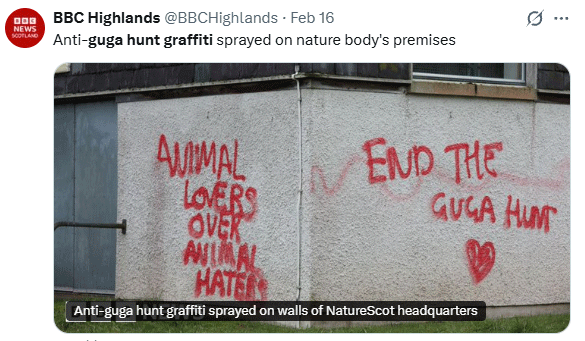
NatureScot confirmed it was aware of the criminal damage but said, as the matter is now with Police Scotland, it could not comment further.
A tradition under scrutiny
The guga hunt takes place each summer on Sula Sgeir, a remote rocky island about 40 miles north of Ness on the Isle of Lewis. For centuries, men from the Ness district have travelled there to harvest young Northern Gannets – known locally as guga – for food.
Supporters argue the hunt dates back to at least the 15th Century and remains an important part of local heritage and identity. The practice is conducted under licence, with a fixed quota agreed each year.
However, animal welfare campaigners say the hunt is outdated and unnecessary, arguing that killing seabird chicks for meat is no longer justified.
Petition approaches 100,000
The controversy has intensified as a petition lodged with the Scottish Parliament continues to gather support. Petition PE2202, which calls for an end to the guga hunt, is nearing 100,000 signatures – already the highest total of any petition in the current parliamentary session.
MSPs agreed last month to keep the petition open pending a decision on whether it should move forward for further consideration after May’s Scottish elections. The growing number of signatories reflects the strength of feeling among opponents of the hunt.
Balancing heritage and conservation
NatureScot issues annual licences for the hunt, assessing it within Scotland’s wider seabird conservation framework. The number of birds taken each year is limited and monitored.
Critics question whether any level of harvest is appropriate given wider concerns about seabird declines linked to climate change, food shortages and avian influenza. Proponents counter that the numbers involved are small relative to the size of the wider gannet population and that the hunt has been sustained for generations.
Tensions spill over
The vandalism at NatureScot’s premises underlines how emotive the issue has become. While campaigners have focused on democratic routes such as the parliamentary petition, the graffiti represents a more confrontational expression of opposition.
With the petition approaching a symbolic 100,000 signatures and MSPs yet to determine its next stage, the debate over the future of the guga hunt shows no sign of fading. For some, it is a vital cultural tradition; for others, it is a practice that belongs firmly in the past.
February 2026
Get Breaking Birdnews First
Get all the latest breaking bird news as it happens, download BirdAlertPRO for a 30-day free trial. No payment details required and get exclusive first-time subscriber offers.
Share this story