


Migrating birds attracted by light pollution face higher toxic chemical exposure
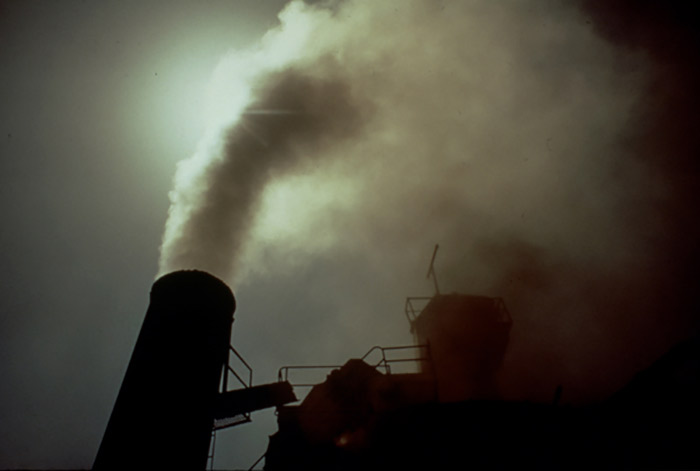
The journeys of night-migrating birds are already fraught with danger. Light pollution adds yet another hazard beyond the increased risk of collisions with buildings or communication towers. According to a new study, birds attracted by the glow of artificial light at night are drawn into areas where they are also exposed to higher concentrations of airborne toxic chemicals. The study has just been published in the journal Global Change Biology.
"We examined the correlation between the concentration of airborne toxic chemicals, artificial light at night, and the weekly abundance of 165 nocturnally migrating songbird species," said lead author Frank La Sorte at the Cornell Lab of Ornithology. "What we found is that light pollution does indeed increase exposure to toxic chemicals when birds stop to rest during spring and fall migration. Surprisingly, we also found that exposure to toxic chemicals is high during the non-breeding season, a time when birds typically avoid light pollution."
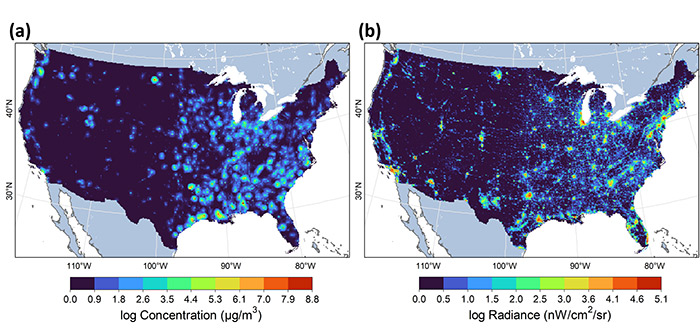
The researchers first compared levels of artificial light at night with the presence of 479 toxic chemicals from 15,743 releasing facilities across the continental United States. They found that higher light pollution did correlate with higher levels of airborne toxic chemicals. The scientists then cross-referenced these data with the weekly abundance of 165 night migrating songbird species throughout their annual life cycles, using data from the Cornell Lab's eBird program.
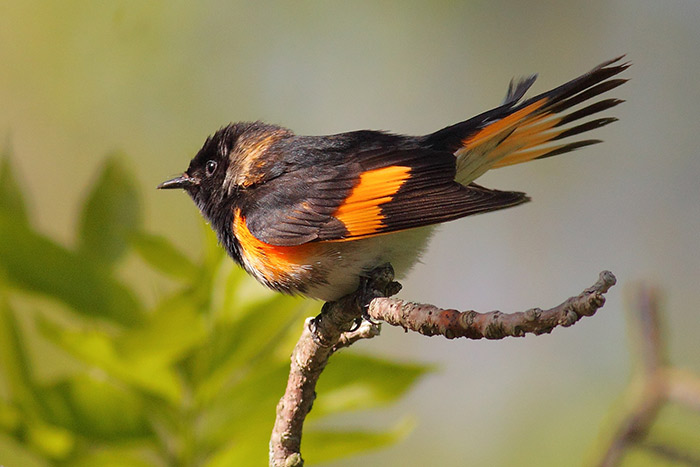
The only time that did not reveal increased exposure to toxic chemicals was during the breeding season when songbirds typically nest in habitats away from areas of intense human activity.
"One region of special concern is along the Gulf of Mexico, especially in Texas and Louisiana," said La Sorte. "Migratory birds that spend the winter in this region are being exposed to higher concentrations of airborne toxic chemicals for a longer period -- the non-breeding season makes up the largest portion of these species' annual life cycles."
Studies have shown that air pollution has caused some species to stop migrating, change migration altitude, or alter their course. Long-term exposure to toxic chemicals can interfere with cell and organ function, and contamination can carry over to young through the transfer of chemicals from a nesting female to her eggs.
In total, the study shows that observations provided by volunteer eBird participants are allowing scientists to better understand the full range of implications of light pollution for night migrating birds.
"Efforts to reduce light pollution during the spring and autumn would reduce the chances of toxic chemical contamination during migration stopovers, which would improve survival and reproductive success," La Sorte said. "However, this would have no effect on the long-term exposure occurring along the U.S. Gulf Coast, a region that could be a significant source of toxic chemical contamination for North American birds."
15 November 2022
Share this story






