Mandt’s’ Black Guillemot added to the British List
The British Ornithologists’ Union Records Committee (BOURC) has added the subspecies to the British List
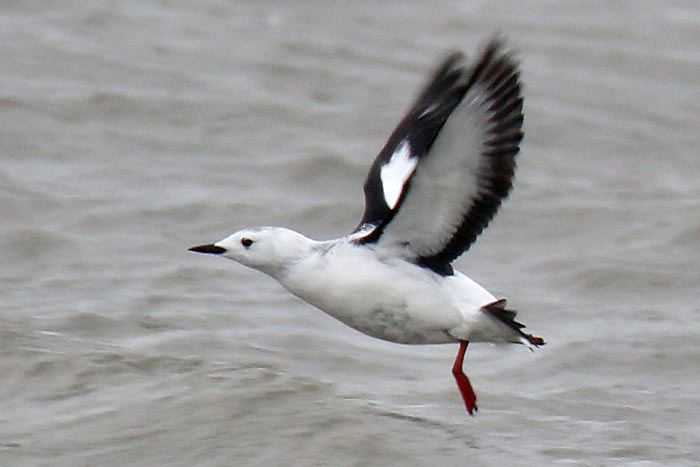
Published material indicates that Cepphus grylle mandtii can be distinguished from other subspecies of Black Guillemot. In non-breeding plumage the taxon is generally very much paler having a largely white head, lacking both a dark loral spot and dark ear-coverts, and having an all white rump, scapulars and wing coverts. The Cut End bird showed all of these features.
The probability of this individual being an escape from captivity was judged to be minimal. Individuals resembling this taxon have been observed in Iceland, the Faroe Islands and the Netherlands.
Thus the subspecies was accepted to Category A.
Black Guillemot is polytypic, breeding in the North Atlantic and Arctic regions to eastern Russia and west to Alaska. Though sedentary in much of its range, birds nesting in higher Arctic latitudes move to ice-free seas further south in winter.
This change will published as part of the BOURC’s 52nd report due to be published in Ibis in October 2020. Upon publication of this change, the British List remains at 621 species (Category A = 603; Category B = 8; Category C = 10).
10 March 2020
Share this story