Lanzarote Pelagics and the Cadiz to Lanzarote Ferry. September 2018
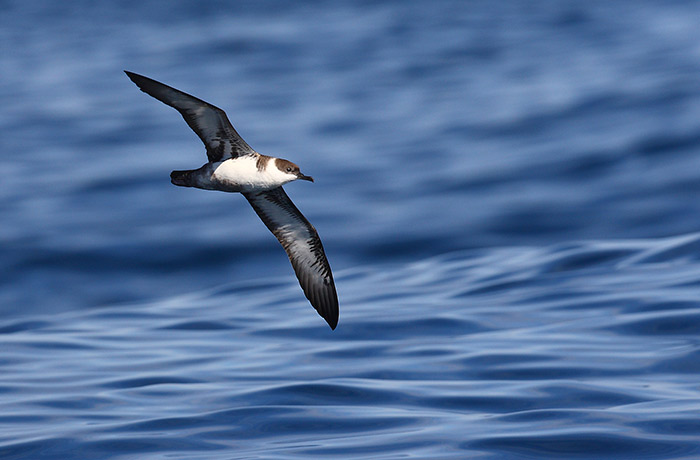
What to do after the vintage Scilly Pelagics 2018 season? Lanzarote Pelagics of course. We planned a route to Lanzarote by sea and train, starting with the crossing to Penzance on Scillonian III and fabulous views of Great, Sooty, Balearic, and Manx Shearwaters.
Fast forward the train journey…
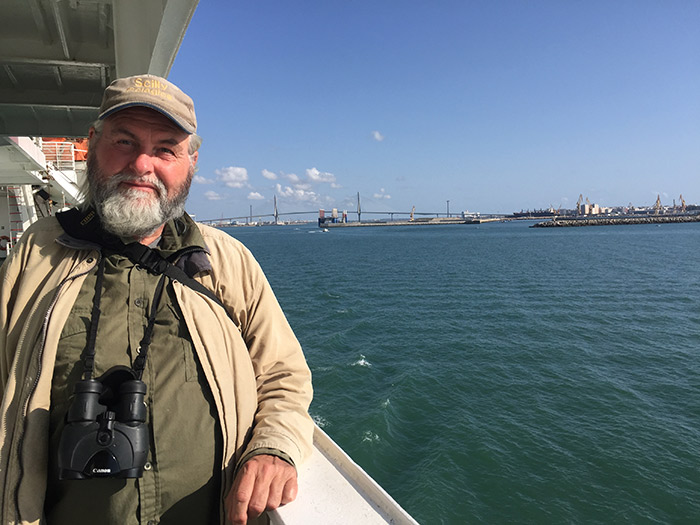
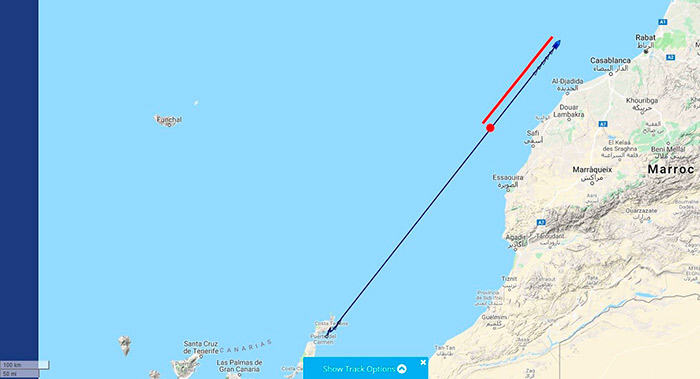
Arrvied in Cadiz, Spain in good shape, ready for the 32-hour sea crossing to Lanzarote departing 4th September. The ferry sails southward offshore Morocco, over Banco Concepcion (made famous in seabirding by Lanzarote Pelagics), into Arrecife, Lanzarote. We calculated high potential for pelagic birds in this stretch of sea, especially the southern half, even though we drew a Google-search blank for previous reports.
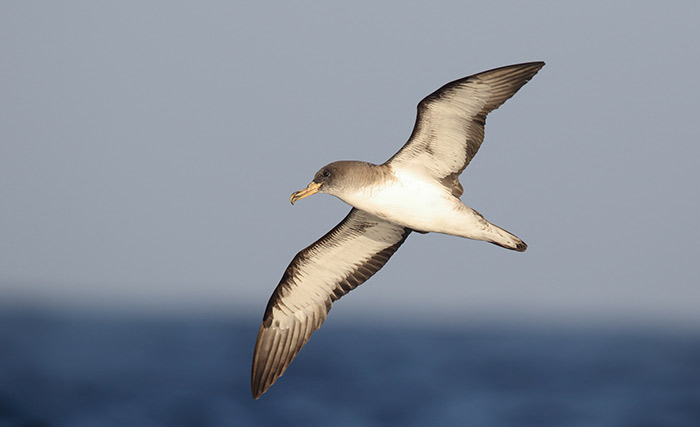
Departure at 17.00 gave 3 hours ‘till dark. We scouted the boat and found good observation points on Deck 5 about 12 meters above sea level, toward the bow, on both port side and starboard side. As we departed the harbour we observed plenty of Little and Sandwich Terns. Coastal waters held Northern Gannets and shearwaters; mainly Cory’s and Balearic with a few Scopoli’s mixed in. The light became rather dim by 20.00 and so we returned to our cabin pumped up for the following full day at sea.
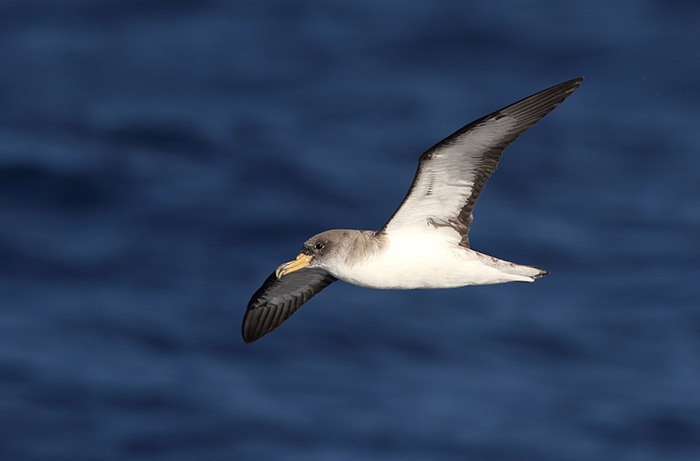
The first few hours after sunrise delivered numerous Cory’s and a handful of Manxies (similar numbers were seen throughout the day). Several flocks of Grey Phalarope lifted off the sea surface and scattered in numerous directions (total 25 birds). A fair few land bird migrants sought refuge on the ferry and several shorebirds briefly visited the boat.
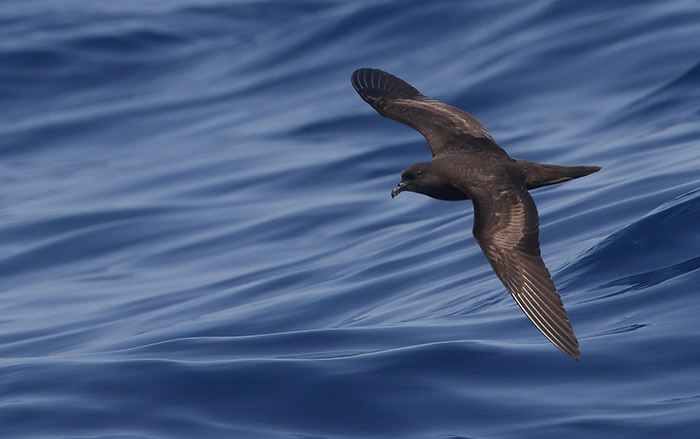
The first of the target seabirds Bulwer’s Petrel was seen about mid-morning and with increasing frequency as the day progressed (total 34 birds). Very close views were attained of Bulwer’s in travelling flight, cutting across the bow, or passing alongside the ferry. Their unique appearance among seabirds suggests something prehistoric, like a miniature Pteradactyl.
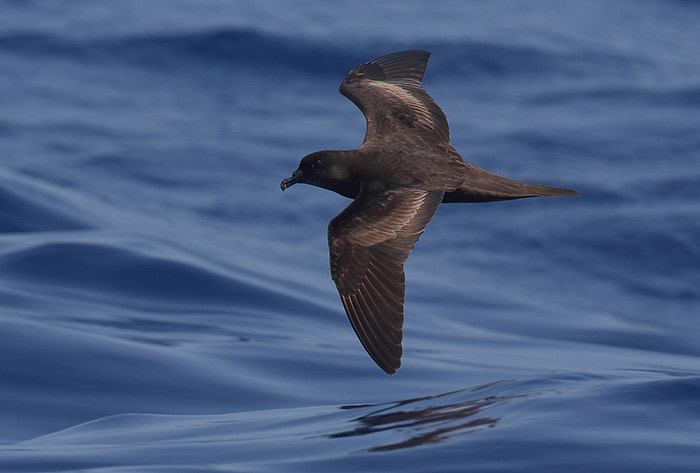
The sleepy post-lunch watch was interrupted by a small shearwater, whey-hey, the hoped for BAROLO SHEARWATER! Barolo numbers in the region are in decline and the species is difficult to find at sea. We gave ourselves a slim chance of encountering one, on either the ferry crossings or on Lanzarote Pelagics. Coming across one on the outward ferry leg was a huge bonus. A second bird in the evening doubled the bonus. Data logger results show breeding Barolos forage north of Lanzarote and our sightings suggest that this is the case for at least some individuals in the non-breeding season. Certainly worth considering the Cadiz to Lanzarote ferry for Barolo.
One rather special animal more than compensated for an otherwise complete lack of cetacean sightings (despite good spotting conditions over a calm sea). We saw a large splash in the corner of our eyes. Binoculars were quickly trained on the spot hoping for a second breach. Fingers were crossed that this was a beaked whale of some sort and it would breach again. As hoped for, the animal launched itself out of the water and to our surprise we saw a dog-like face, dark upperside, and a warm-washed silvery underside. It was a DWARF or the very similar-looking PYGMY SPERM WHALE!
The whale breached three more times so Bob fired up his camcorder and captured another 10 or so breaches documenting this spectacular encounter. Cetacean expert Vidal Martin Martel confirmed Pygmy Sperm Whale after consulting Bob’s video recording and informed us of a few sightings of Dwarf and Pygmy Sperm Whales in the waters around Lanzarote. It was a huge thrill to enjoy such good views of a species so rarely seen alive at sea (records largely tideline corpses).
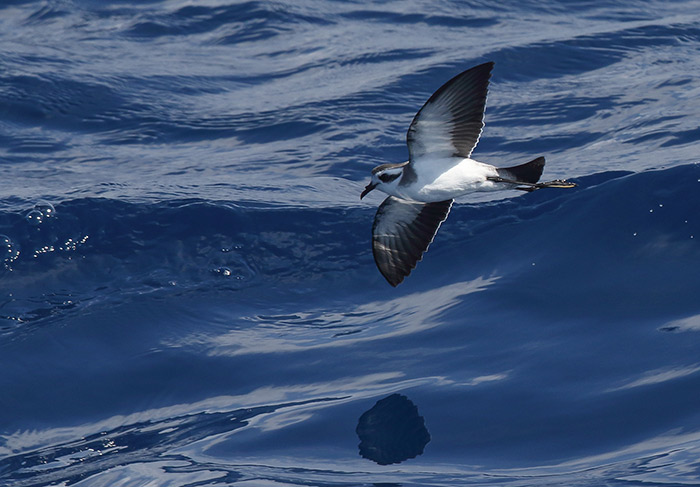
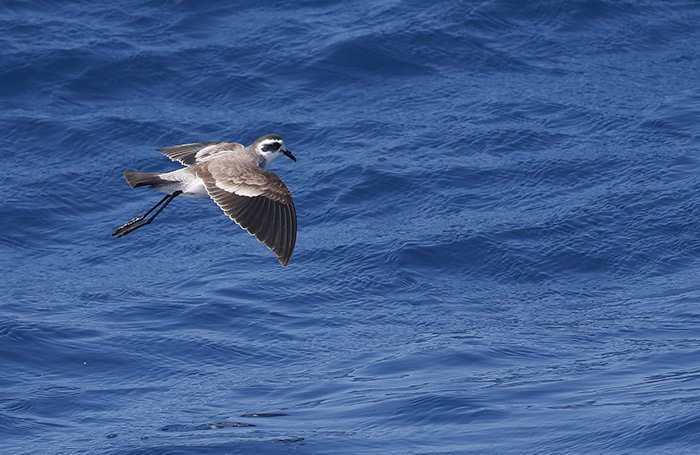
A rough reckoning predicted arrival of the ferry in the region of Banco Concepcion at about 17.00. Numbers of seabirds increased dramatically around this time. At 18.10 we picked up a White-faced Storm-petrel and a second bird was seen shortly after. Later we passed exceptionally close to a group of five White-faced, virtually alongside the hull, including a pristine juvenile ‘fresh out of its wrapper’. One bird performed the species’ crazed feeding movements. Things were starting to cook.
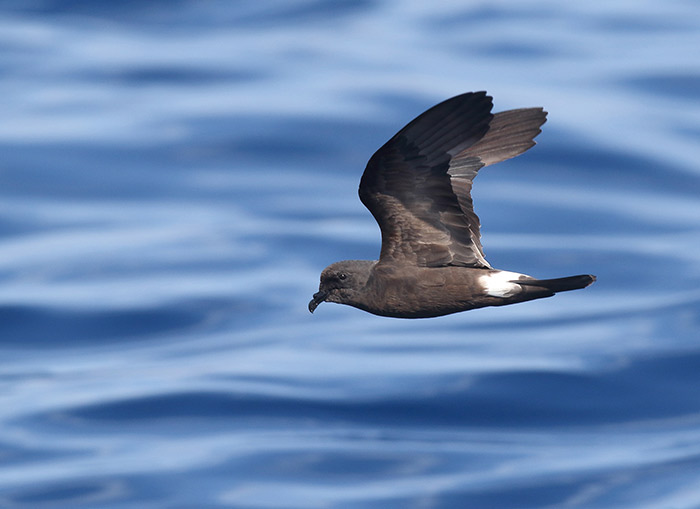
The first of six Band-rumped Storm-petrels was seen at 18.50; two summer breeders (worn, in primary moult) and four winter breeders (slightly worn, not in primary moult). Again, views were often close and surprisingly good. A Wilson’s and three Europeans raised the cumulative total to five storm-petrel taxa, not at all bad for a ferry ride.
These sightings from the ferry exceeded expectations. The experience pumped us up big time for the main purpose of the trip; participating in two 2-day Lanzarote Pelagics to Banco Concepcion.
The ferry docked an hour late at Arrecife just after midnight 6th September. Lanzarote Pelagics hosts Juan Sagardia and Marcel Gil Velasco kindly met us at the quay and took us to our hotel. We were told that pick up for the first of our two Lanzarote Pelagic trips was 07.00 leaving us 6 hours to check-in, unpack suitcases, pack a rucksack, and sleep.
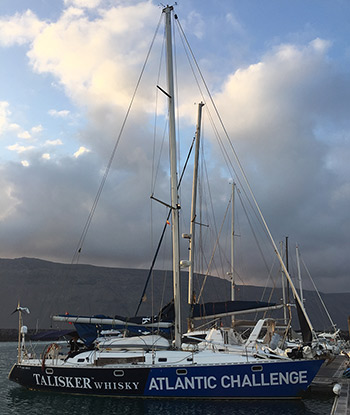
We made the 07.00 pick up and took the 15-minute ferry to Graciosa, the departure point. Some running repairs on the rigging delayed departure and we marvelled at Maria – our skipper – atop the tallest mast in last minute preparations. There was time to buy food but our hosts had kindly provisioned for us. We discovered once out at sea that provisions for 2 days at sea comprised various types of chocolate biscuit, croissants filled with chocolate, Juan’s favourite and hence bags of marshmello, liquorice shoe strings, and fruit jelly covered in hundreds-and-thousands. There was also a slab of cheese, a few loaves of bread, and odd meat-like stuff.
In the afternoon we made steady headway against prevailing northerlies. All trips to el Banco have to overcome this hurdle and movement of the yacht. Night fell and we hit the sack. In the night Maria decided to change to sail and to tack. Of course, with the first tack the yacht swung 90 degrees and took on a significant tilt, catapulting all of us on the starboard side to the port side, the reverse an hour later when Maria changed tack. Then there was the challenge of finding the toilet in the dark on a moving tilting yacht. Just about everybody ended up on their backside at some point, except Maria. Dawn came and we crawled up on deck and took our breakfast of water and chocolate biscuits.
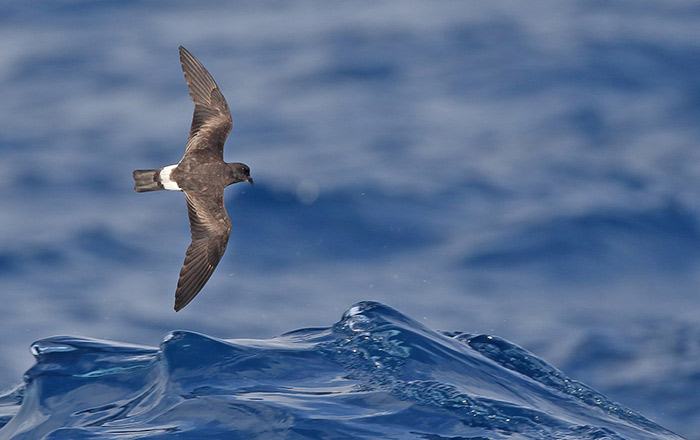
At last, the first chumming session. We scrambled onto one side of the yacht as a frozen chum block was deployed. First mate Georgie-Boy carefully manoeuvred the yacht around the chum block and along the ever-growing slick, back to the chum block and so on. The first chumming session was steady with lots of Cory’s Shearwater, Bulwer’s Petrel, Band-rumped (winter and summer) and Wilson’s Storm-petrels.
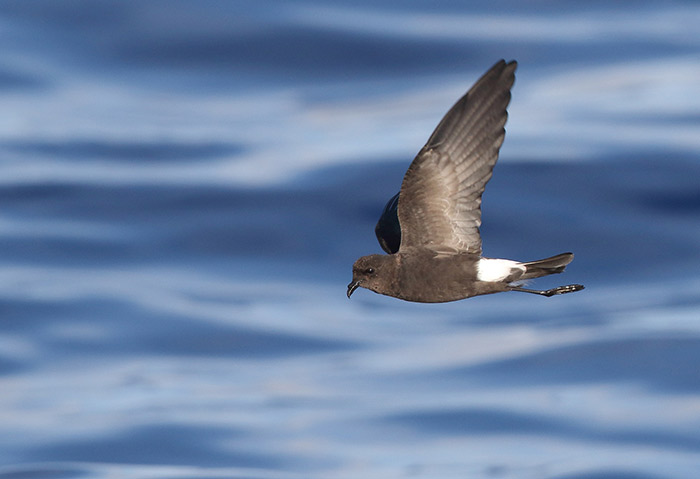
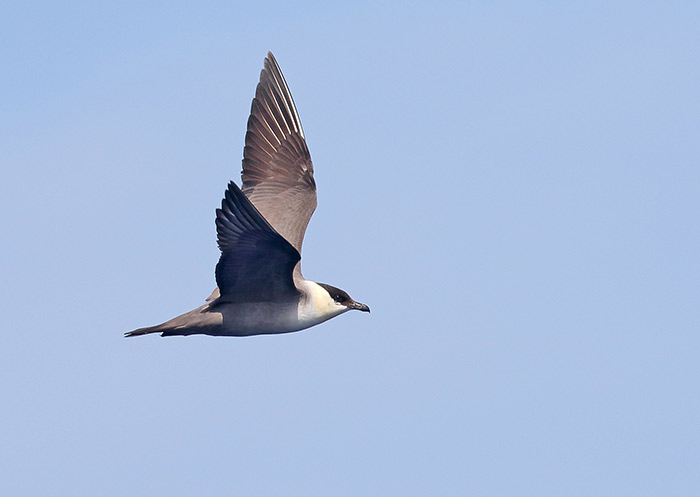
Our leader Juan moved us on to another chumming point. More of the same, in fact many more, plus European Storm-petrel and, whallop, White-faced Storm-petrels. The views were simply outstanding with birds performing their different feeding techniques at near-eye level just a few yards from the yacht. Several later chums followed the same pattern, but with even more birds. Bonuses included adult Long-tailed Jaeger, Bryde’s Whale, Atlantic Spotted Dolphin, and Bottlenose Dolphin.
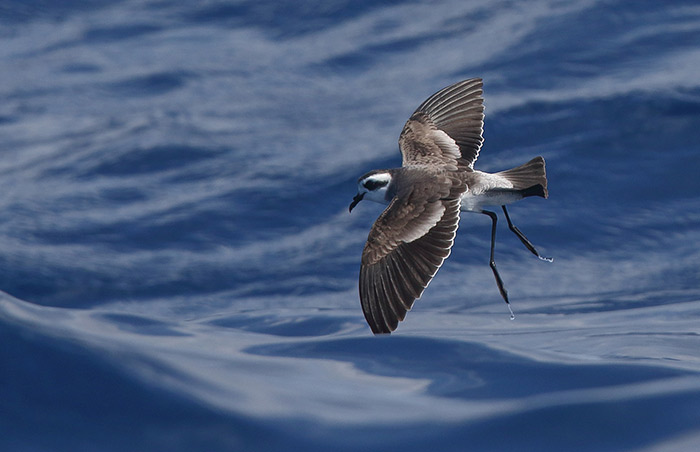
Moving from one chumming station to another, Juan from the front of the boat yelled ‘Fregetta’ and there was panic. Folk attempted to scramble onto the front of the yacht, while Bob and a lady tried to gain views from the deck. Those who scrambled missed the BLACK-BELLIED STORM-PETREL (6th for the Western Palearctic), including Ash, and those who looked from the deck saw the bird, including Bob. This was doubly unfortunate because Ash had to pull out of last year’s Lanzarote Pelagics due to work, Bob went and got fabulous views of a Black-bellied (5th for Western Palearctic see video here). So now Bob had seen 2, Ash nil. Even so, more chumming gave more sensational views of the other storm-petrels and the photos herein are a testament to the excellence of the seabird viewing that we enjoyed.
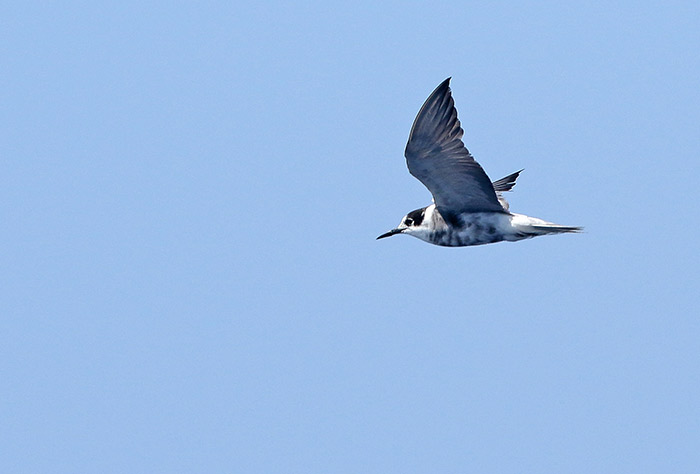
Dusk came and so we made the comfortable surf home overnight, arriving at Graciosa at 07.00. The next trip started in 12 hours, so Juan took us back to our hotel – via Houbara Bustard, Eleanora’s Falcon, Barbary Partridge, Laughing Dove, Trumpeter Finch, Berthelot’s Pipit, Lesser Short-toed Lark, African Blue Tit, Canary… We were in time for breakfast at our hotel and enjoyed as never before endless cups of tea, porridge, toast and marmalade, fruits and yoghurt, then a shower, all in preparation for the forthcoming 3 nights and 2 days of chocolate biscuits, water, and awesome seabirding.
Before we knew it we were sailing northward once more to el Banco. This time better prepared, we got the details of the tacking strategy and found where the light in the toilet was located. That made things easier, though the toilet’s ability to induce vomiting remained intact. Apart from Ash and I there were 2 top WP listers on board, Pierre-André Crochet who need one new species to be equal top-lister, and Christian Leth. Along with Pierre’s friend Paul, and Gorca Ocio, we had great crew. Pierre spent much of his time puking and I had the greatest admiration for his determination to be on board even though Black-bellied Storm-petrel was far from guaranteed.
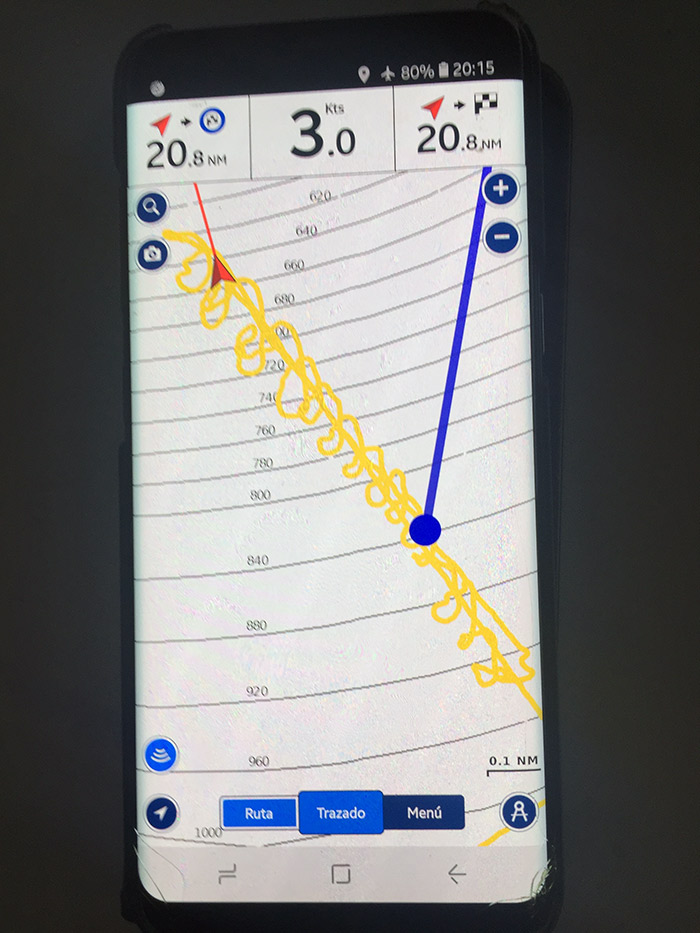
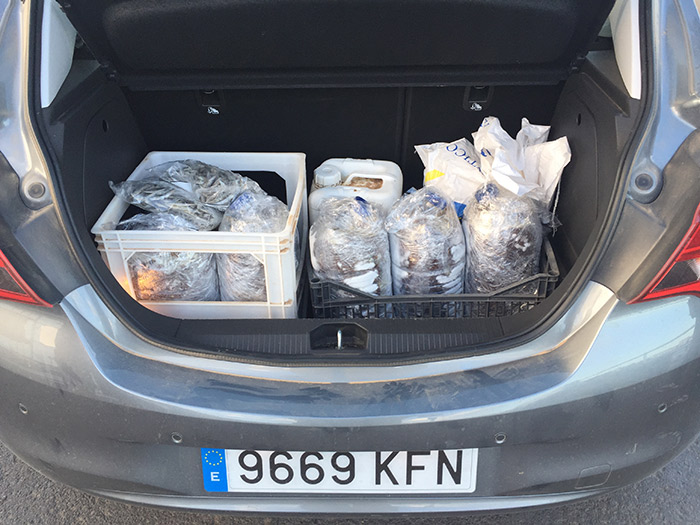
Chumming sessions drew in the usual suspects and the occasional villan - Blue Shark - which demolished chum blocks in no time and were a real nuisance. Loggerhead Turtles also enjoyed a nibble at the chum.
To the left is the pattern of typical chumming drift
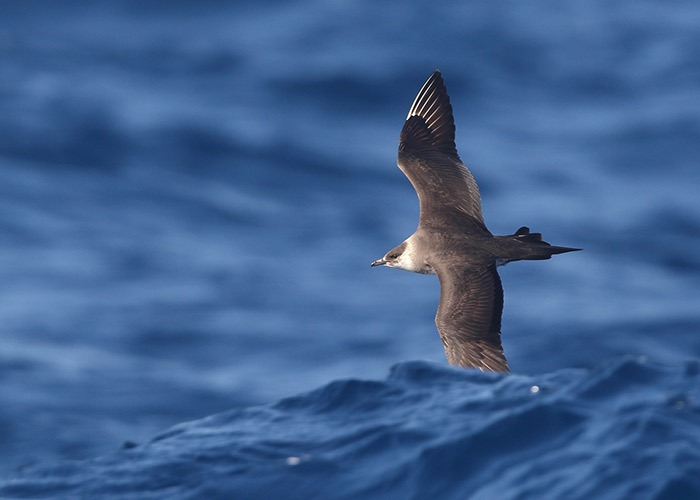
Anyway, we were sailing across el Banco and suddenly encountered large numbers of storm-petrels. Juan ordered the yacht to halt while preparations were made for chumming. As we were preparing ourselves for viewing we heard the almighty yell’ Swinhoe’s!’ and there it was, point-blank range, say 3 meters from the boat, a SWINHHOE’S STORM-PETREL flying steadily by. Even the white bases to the primary shafts were visible through binoculars. Sensational. Juan and Marcel said that we mustn’t panic and then they panicked, trying to deploy chum as quickly as possible, but alas the Swinhoe’s had moved on.More chumming, more sensational views of the stormies, now including several Leach’s. More jaegers, including Parasitic and Long-tailed. There was just the one bird missing that most folk were praying for – Black-bellied Storm-petrel. It came to the last chumming session, the chumming session drew on, and folk became resigned to dipping Black-bellied. Folk were quiet…
‘BLACK-BELLIED STORM-PETREL!!!’ Marcel screamed at the top of his voice. It was coming in toward the bow and soon we were all latched on to it. All sorts of demented noises came from Ash and Pierre at the front of the yacht, like cackling hyenas and whooping cranes. Cameras recorded the mighty midget as it flew in characteristic Fregetta style to delight all. Bob took a few clips of video to record the bird and the ecstatic birders.
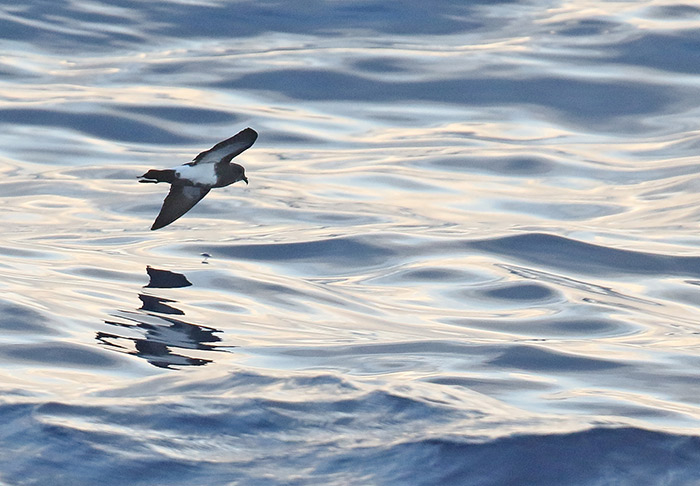
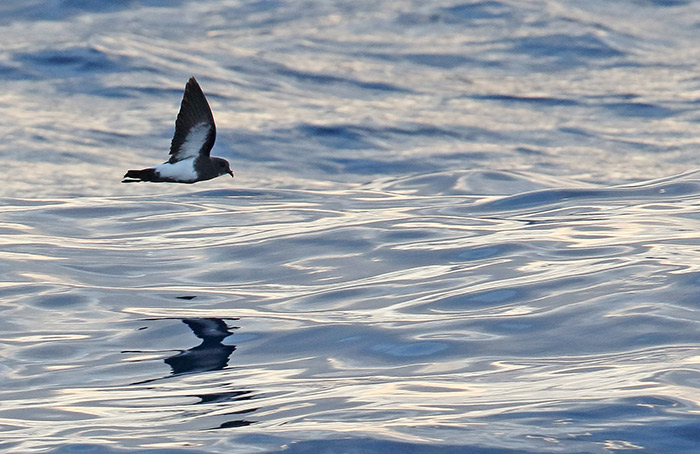
It was a wonderful moment to experience and the kind of moment that underlines why we are birders – every ounce of Pierre’s vomit was surely worth it for this given prize.
We totted up the number of storm-petrel taxa we had seen that day – an astonishing 8: White-faced, Wilson’s, BLACK-BELLIED, European, Leach’s, SWINHOE’S, winter Band-rumped, and summer Band-rumped! There is nowhere else in the world that can match this phenomenal count of storm-petrels in a single day, not even California and nearby waters.
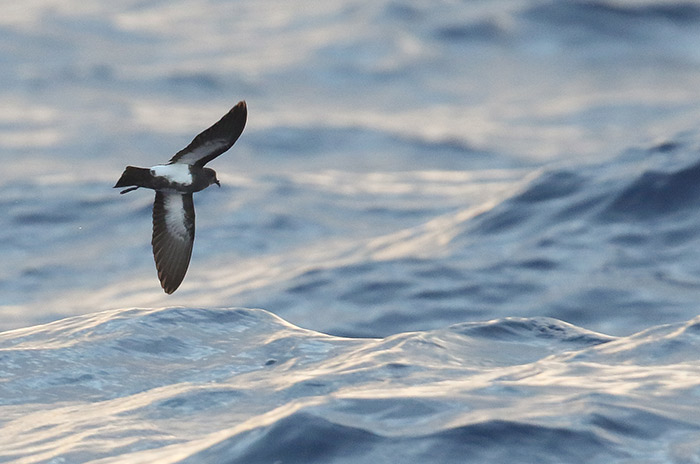
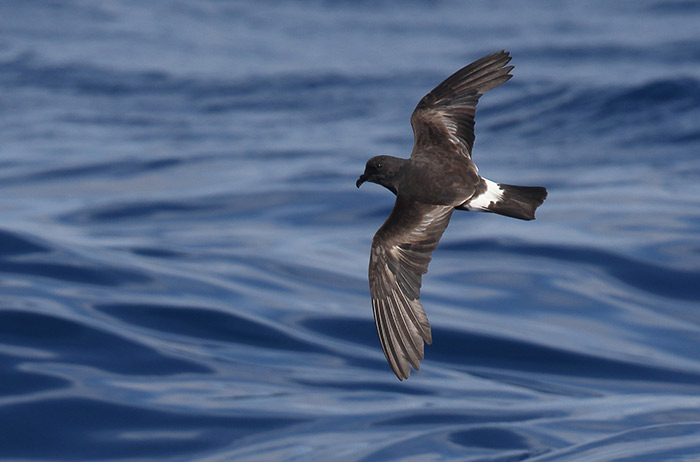
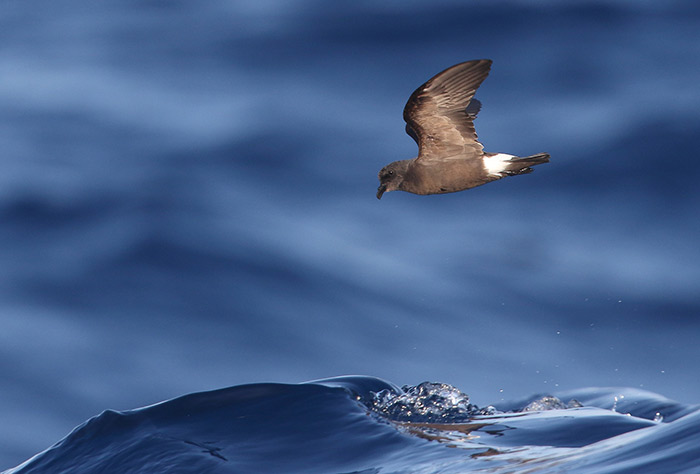
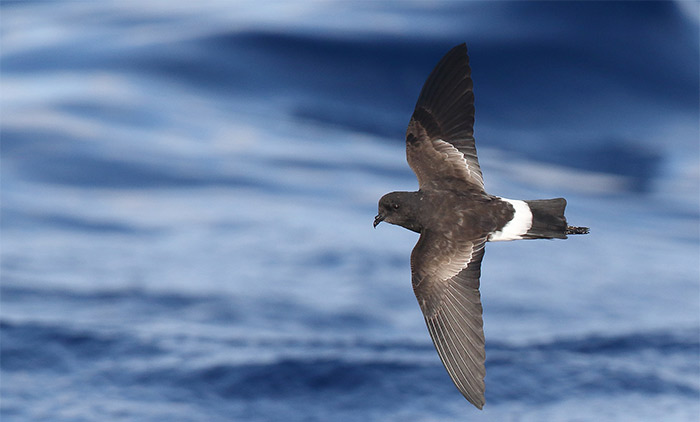
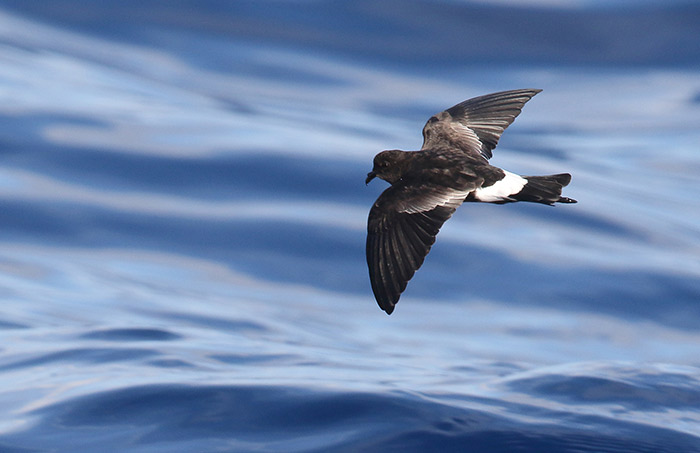
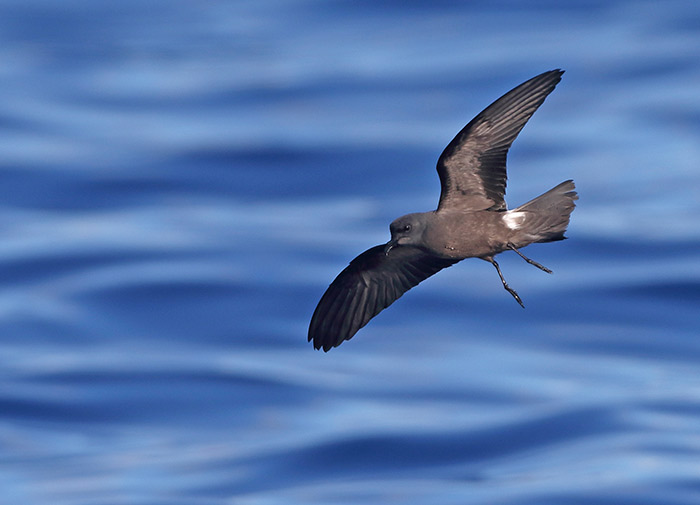
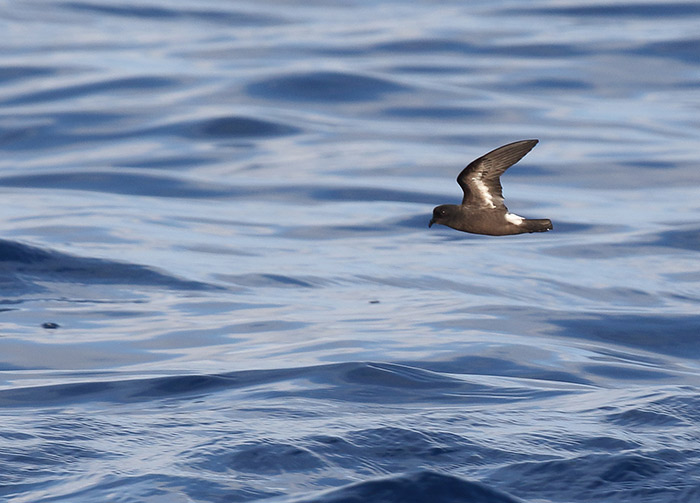
As a celebration, Maria and Georgie-Boy made and served a pasta dish – proper food, and Maria made us a cup of tea – nirvana. We all arrived safely back in Graciosa, exhausted but elated.
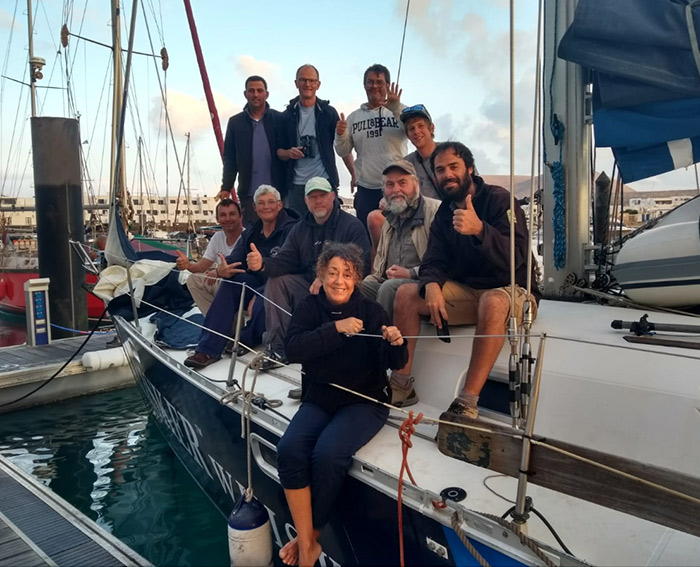
Thank you Juan Sagardia, thank you Marcel Gil Velasco, thank you Dani Lopez Velasco, thank you Maria, and thank you Georgie-Boy. Lanzarote Pelagics are not like Scilly Pelagics where you go out for a comfortable 5 to 8 hour trip, then home for dinner and a comfortable bed. It is rough and ready, the leaders assume that participants are 20/30-year olds, like them, when for example Bob is 63, but hey, it’s an amazing experience with amazing people and amazing birds. Fancy it? Contact lanzarotepelagics@hotmail.com
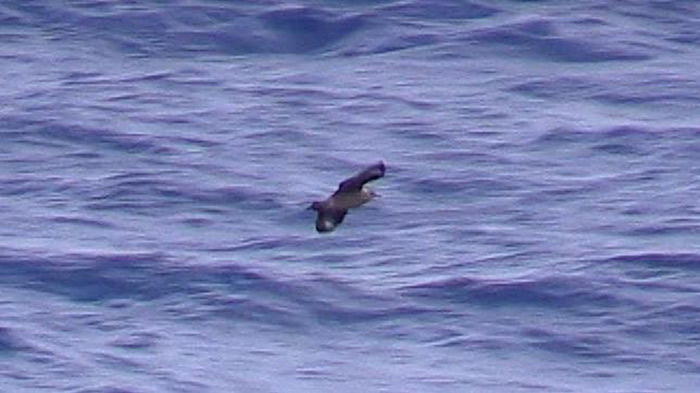
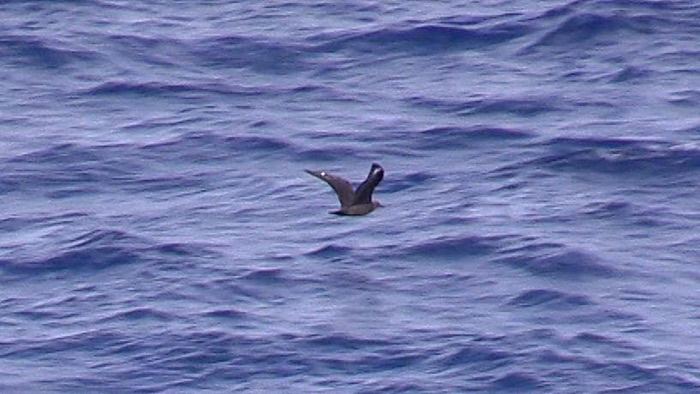
Wait a minute, there’s more. Don’t forget the ferry trip Arrecife to Cadiz. The return ferry departs at 01.00 (boarding two hours earlier at 23.00) and so has passed over the bank before first light. Nevertheless, while quiet at times there was good seabirding. Bob picked up a skua ahead of the ferry and it landed on the sea, back on. It appeared to be grey-bodied and so camcorder was fired up ‘just in case’. The ferry closed in and as the bird lifted it was obviously a SOUTH POLAR SKUA and Bob filmed it. Video grabs confirm ID and this is only the second record for Morocco.
There was one more night on board leaving several hours in the morning as the ferry approached the harbour. We got more great views of Balearic Shearwater and lots of Cory’s, but no Scopoli’s. Fast forward train journey… The last ocean leg was Scillonian III back to St Mary’s and the excellent seabirding continued with three seabird feeding frenzies and lots of Balearic and Great Shearwaters.
What an amazing adventure. Why not try Lanzarote Pelagics. If you’re going to Lanzarote, why not try the Cadiz to Arrecife ferry return. We’re seriously considering another Lanzarote adventure. What else might frequent those waters as yet undiscovered?
Bob Flood and Ashley Fisher
www.scillypelagics.com
28 September 2018
Share this story

Write for Rare Bird Alert
Do you have a birding story you would like to share? From foreign birding trips to your local patch we would love to hear from you.
All our articles are free for anyone to view and we include them in our weekly newsletter which goes out to thousands of birders every Wednesday. We also share them on our Twitter and Facebook pages, making sure your article will get read by as many people as possible.
If you would like to write an article please for us please get in touch with your ideas, thank you.
The RBA team