Irish Roseate Terns help sustain British colony
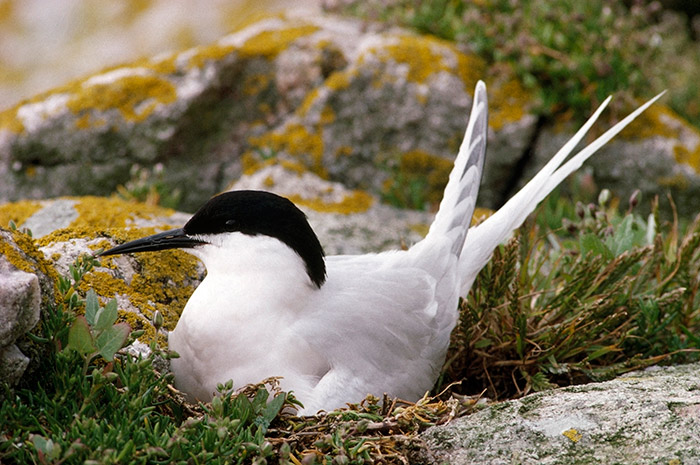
Authors of a new paper published in the Journal of Animal Ecology found that Ireland’s Rockabill colony, where 1,633 pairs of Roseate Terns nested this year, is the only site in the UK and Ireland which is currently effectively “exporting” Roseate Terns to other colonies.
The new research, co-funded by the EU LIFE Programme, RSPB and Natural England, shows that for over 20 years the growth of the Roseate Tern colony on Coquet Island, their only regular nesting site in the UK, was sustained by birds from the Rockabill colony. This meant that Coquet Island was, between 1992 and 2016, a “cryptic sink”, attracting more young birds to nest there than have fledged from it and survived to breed at the species’ other colonies.
Co-author Dr Mark Bolton, from the RSPB’s Centre for Conservation Science, said: “Our research highlights the complex decisions conservationists face when deciding how to improve the fortunes of seabirds like Roseate Terns. Despite the reliance of the Coquet Island colony on immigration from Rockabill, this nature reserve has played an important role in maintaining the species in the UK, thanks to management by the RSPB including building nest boxes and protecting the colony.
“Having an additional nesting colony, the UK and Irish population as a whole is better protected against catastrophes like severe weather events, disturbance or disease that might hit any one colony.”
It’s hoped that a successful colony on Coquet Island will eventually contribute to Roseate Terns settling at new sites, or re-colonising some of their old haunts where they nested decades ago. Since the research was carried out, it appears that the Coquet Island Roseate Terns are now beginning to sustain their own numbers. In 2016, 50% of terns nesting on the island had been hatched there, and this year the number had climbed to 60%.
The RSPB’s Daniel Piec, who manages the EU Roseate Tern LIFE project, says “With birds moving between colonies across borders international co-operation is vital to their conservation. We’re working across Britain, Ireland and France with BirdWatch Ireland, National Parks and Wildlife Service, North Wales Wildlife Trust, Bretagne Vivante and other partners which means we are learning a great deal about what the terns need, and the areas they use.”
This shared knowledge will be vital for the future of these magnificent seabirds, and thanks to the research, conservationists are better able to identify suitable sites to attract them to nest.
Co-author Dr Richard Caldow from Natural England says “We now know that where coastal colonies of other tern species, such as common terns, are doing well and feeding predominantly in the marine environment, there is probably enough food and safe nesting areas for Roseate Terns to thrive there too.
“The next step is to look for such potential nesting sites and consider “Coquet” style management to give Roseate Terns a helping hand to colonise them.”
This summer, 118 pairs of Roseate Terns nested on Coquet Island, making this the most successful UK breeding season in 40 years. It’s hoped that this boost will help give the UK birds the numbers they need to maintain the colony and begin to spread to other locations in the future.
6 Nov 2018
Share this story