IBIS Rice: the bird-friendly rice scheme boosting livelihoods in Cambodia
BirdLife Cambodia recently hosted a Farmer’s Day at Khet Svay village in Siem Pang, to celebrate the area’s first harvest of IBIS Rice. This award-winning project is helping to conserve Cambodia’s national bird, the Giant Ibis, and its crucial wildlife sanctuary home.
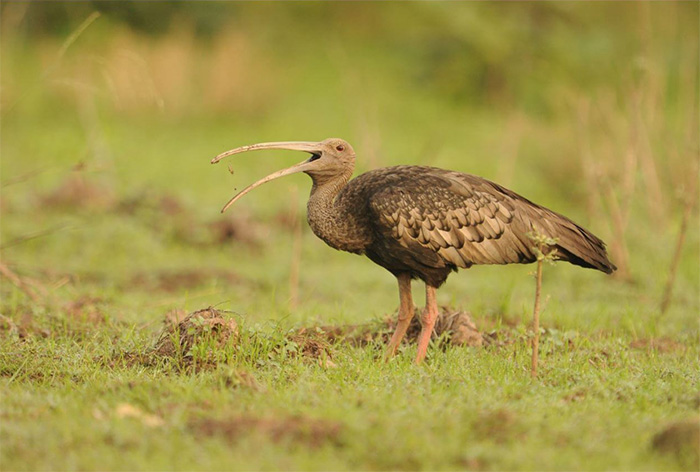
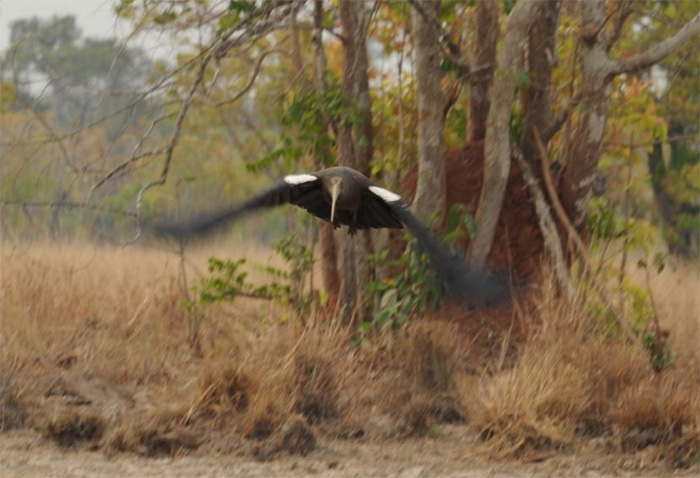
The Western Siem Pang Wildlife Sanctuary is truly special. It is a vital refuge for not one, but five Critically Endangered bird species. These include 20% of the world population of the Giant Ibis and 50% of the world population of the White-Shouldered Ibis.
It’s no surprise, then, that the BirdLife Cambodia Programme* has been striving for years to protect Western Siem Pang. In 2016, the last puzzle piece fell into place when the southern part of the forest was finally added to the Wildlife Sanctuary. But logging, hunting and the encroachment of farmland are ever-present threats.
Recognising the important role that local communities play in conservation, BirdLife focused on the villages surrounding the protected area’s boundary. If these farmers had greater food security from their existing rice fields, they would be less likely to resort to hunting or clearing forest for farmland. And so BirdLife formed a partnership with IBIS Rice and the Wildlife Conservation Society (WCS) to establish the already highly successful IBIS Rice scheme in a prime new location.
How it works
Launched by the WCS Cambodia Program, IBIS Rice is an ambitious, not-for-profit conservation enterprise working with Cambodian farmers to produce world-class, Wildlife Friendly™, organic jasmine rice. They do this by selling their rice crop at a premium price, which aims to increase household income and reduce food insecurity. In return, villagers agree to respect the wildlife sanctuary laws.
The scheme has been doing fantastic work for some time. “We launched in 2009,” said Nicholas Spencer, IBIS Rice CEO, “and, thanks to our consumers in Cambodia and Europe, we are already protecting 500,000 hectares of forest and wetlands, helping conserve more than 50 endangered animal species, and increasing the incomes of 1,000 rice-farming families.
The scheme has been so successful and we were looking to expand it to areas with similar issues and ambitions. Working with BirdLife at Western Siem Pang Wildlife Sanctuary was an obvious next step.”
Ty Srun, BirdLife’s Site Manager at Siem Pang, foresees further expansion throughout the community. “We are confident that once other villagers see how much more participating households receive for their IBIS Rice, the number of families joining the scheme will quickly increase.”
Quality, not quantity
To participate in the scheme, farmers agree to abide by a protocol where they refrain from hunting, logging or using pesticides and herbicides. They also pledge not to expand their fields into the wildlife sanctuary. Participating villagers allow their fields to be mapped, and satellite imagery is then used to ensure that they continue to honour the sanctuary boundary.
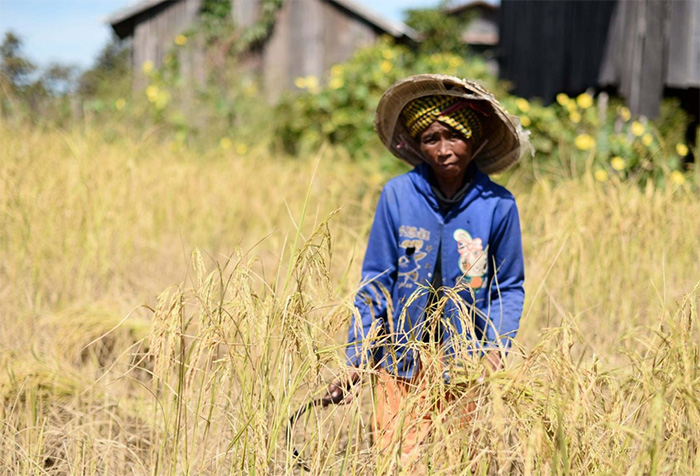
For the villagers, it’s well worth the effort. “I am happy to be a member of IBIS rice,” said Mr. Thun Kork, a villager of Khet Svay, Stung Treng Province. “IBIS rice encourages me and other villagers to protect endangered wildlife and stop using the chemical fertilizer. Most importantly, it helps improve our local livelihoods because we can sell our rice to the IBIS Rice project in a premium price.”
And so, we see once again that conservation need not come at the expense of livelihoods. In fact, as is often the case, improving one can enrich the other in one fell swoop.
Birdlife
9 January 2018
Share this story