Galapagos Island finches still spooked a decade after predators have gone
New research has found that the finches’ fearful response – known as antipredator behaviour - was sustained through multiple generations after the threat was gone, which could have detrimental consequences for the finches’ survival.
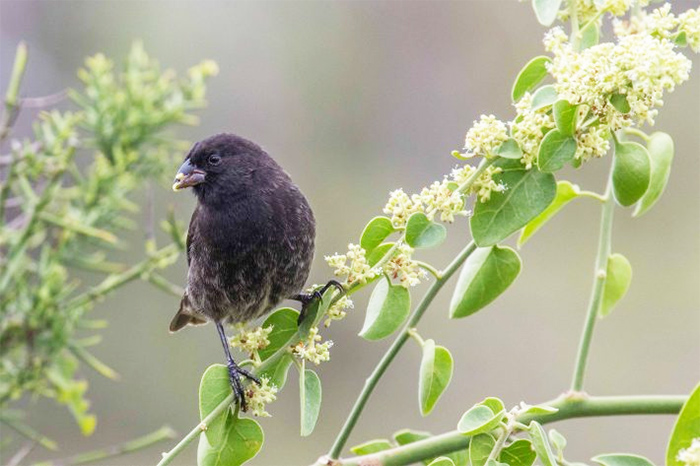
On some of the Galapagos Islands where human-introduced predators of Darwin’s finches were eradicated over a decade ago, the finches are still acting as though they are in danger.
The work by Dr Kiyoko Gotanda, a zoologist at the University of Cambridge, is one of the first studies to look at behavioural adaptations in a species following the eradication of invasive predators. The research focused on one species of the iconic Darwin’s finch – the Small Ground Finch. Given their estimated life span, today’s finches are not likely to be the same birds that had originally developed the response to defend themselves from predators.
“These surprising results suggest that whatever influences this fearful behaviour is more complicated than just the presence or absence of invasive predators,” said Gotanda, sole author of the paper.

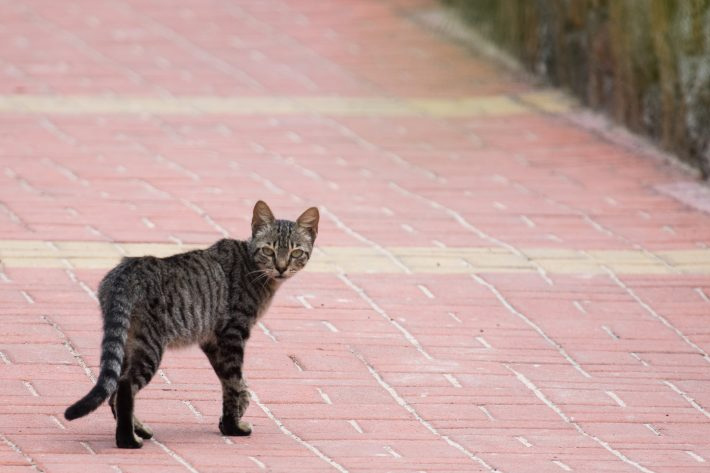
The Galapagos Islands provide a natural stage to compare different predator situations. Some islands have never had invasive predators, others currently have predators like domestic cats and rats that arrived with humans, while others have had these predators in the past and they have now been eradicated.
Gotanda found that finches on islands with predators were wary, and flew away from an approaching researcher – imitating an approaching predator – at a much greater distance than the finches on pristine islands without predators. This increased antipredator behaviour has been maintained on islands where invasive predators have been successfully eradicated, even though eradiation happened eight and thirteen years earlier.
“Whilst the mechanism for the transmission of the fearful behaviour through the generations requires further study, this sustained response has consequences for evaluating conservation efforts,” said Gotanda.
Conservation management of species of concern on islands often involves getting rid of invasive predators. Understanding how species adapt their behaviour once predators have been eradicated – and how quickly this occurs – could better inform efforts to support the recovery of a target species. Understanding the effects of human influence such as the introduction of invasive predators could help predict how species respond to rapidly changing environments.
Gotanda also looked at the effect of urbanisation on finch behaviour and found – as is generally seen in towns and cities – the birds were less fearful as they became used to the presence of humans. On some islands the urban finches were even bolder than those on islands that had never seen invasive predators at all. This could make them vulnerable to threats like invasive predators, which are present in urban areas on the Galapagos. This suggests that the effects of urbanisation on species are strong enough to counteract adaptations to other human influences such as invasive predators.
When Charles Darwin visited the Galapagos Islands during his Voyage of the Beagle in 1835, he could famously get close enough to throw his hat over the birds. The animals were so unused to humans that they did not see Darwin – a potential predator – as a threat. Since then, the arrival of both humans and invasive predators such as cats and rats on many of the islands drove the birds to develop fear, and fly away at the sight of danger. Subsequent eradication efforts have been necessary to protect the iconic finches.
26 November 2019
Read the article for free (for a limited time) here:
Further reading: Gotanda, KM. Human influences on antipredator behaviour in Darwin’s finches. J Anim Ecol. 2019; 00: 1– 9. DOI: 10.1111/1365-2656.13127.
Share this story