First ever breeding Bitterns on Isle of Wight confirmed
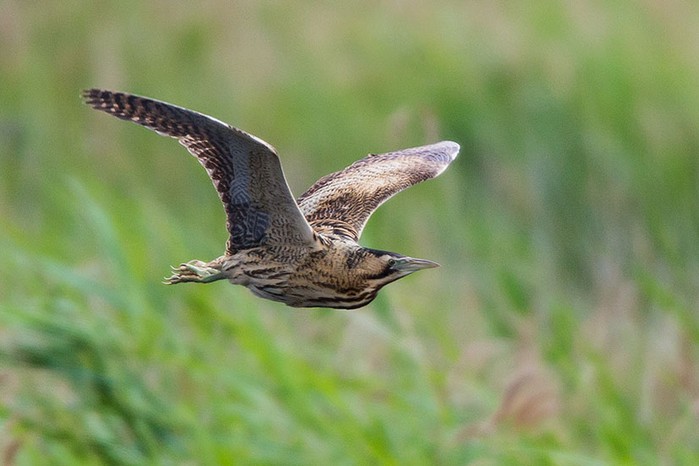
One of Britain’s loudest birds, the Bittern, had never been heard booming on the Isle of Wight before this spring, when its distinctive mating call was heard by staff at RSPB Brading Marshes.
The RSPB now reveal they are confident that the secretive birds successfully bred at the newly restored wetland, making this the first ever Bittern breeding record for the Isle of Wight.
Bitterns are highly camouflaged and can be hard to monitor, but wardens observed regular feeding flights over the summer, indicating young were present. Luke Gaskin, Assistant Warden, even managed to capture photographs of a bird that may be one of this year’s fledglings, peeking out from the dense reedbed.
For conservationists, attracting breeding Bitterns is widely considered one of the best indicators of successful wetland management. Expert habitat management at RSPB Brading Marshes reserve has already seen three new wetland species; marsh harrier, little egret and great crested grebe, successfully breed on the Isle of Wight. The restoration of the historic wetland made possible through partnership working with Natural England, the Environment Agency and thanks to funding from the Heritage Lottery Fund.
In the South East, Bitterns had previously recolonised restored wetlands at RSPB Dungeness in Kent, and three booming males recorded there this year. However, there are still less than 200 Bitterns at fewer than 75 UK sites, making the discovery of new pair breeding on the Isle of Wight even more remarkable.
Keith Ballard, warden of RSPB Brading Marshes said; “Hearing a booming Bittern on a wetland reserve is like receiving a Michelin star as a restaurant; it’s one of the highest marks of success we could hope for. Bitterns have very selective habitat needs, and to attract them you need a truly thriving ecosystem. The work we have done to manage the reserve for insects, fish, reptiles and mammals, as well as birds, now means we have one of the most UK’s most sensitive species choosing to raise its young on the Isle of Wight.”
12 Dec 2018
Share this story