Finders in the Field: Swainson's Thrush, Skokholm, June 2015
by Richard Brown
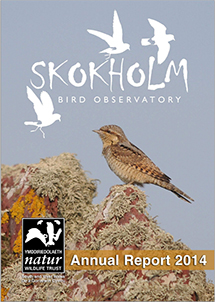
Skokholm Island is a seabird paradise, home to the densest Manx Shearwater colony in the World, thousands of nesting Storm Petrels and with cliffs covered in an ever expanding mass of auks. It was also Britain’s first Bird Observatory and over the years a fine selection of rare and scarce birds have been recorded. In our first two years here as Wardens we have logged Cory’s Shearwater, Purple Heron, Collared Pratincole, Pectoral Sandpiper, Richard’s Pipit, Nightingale, Barred Warbler, Siberian Lesser Whitethroat, Eastern and Western Subalpine Warblers, Blyth’s Reed Warbler, Icterine Warbler, Melodious Warbler, Booted Warbler, Siberian Chiffchaff, Greenish Warbler, several Red-breasted Flycatchers, Red-backed Shrike and a couple of Common Rosefinches and Ortolans. Although not as scarce as some of Skokholm’s previous rares (birds such as White-throated Robin, Scops Owl, Little Swift and an excellent variety of American species spring to mind), we cannot feel too hard done by. We are also treated to some spectacular falls of common migrants in early spring, particularly Phylloscs and Sylvias. However, as spring progresses, some days can feel very quiet migrant wise (perhaps no bad thing as it allows us to get on with our seabird monitoring).
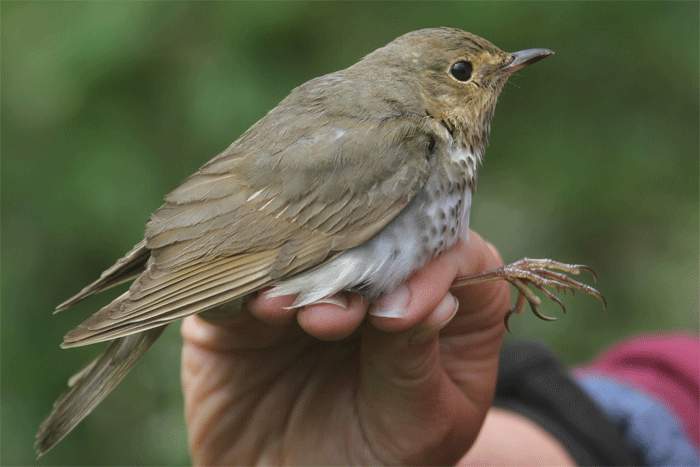
On the quiet spring days, such as on 2nd June this year, the words of a Bardsey regular always come to mind: ‘le grande un, he travels alone’. On this particular morning ‘the big one’ would be very alone; two Spotted Flycatchers were the only new migrants logged during the morning census. It was the third push of the Heligoland Traps that morning and I was joined by Skokholm regular, top birder and trainee ringer Ian Beggs. I entered the Cottage Heligoland and watched a bird move through the Sycamores towards the trap box. It was a fleeting glimpse, but upon arriving at the trapping end I was expecting the perched bird to be a Spotted Flycatcher. It wasn’t. Sat on the ramp was a small thrush which was quickly trapped. Looking back now I can vividly picture lifting the bird to my face and seeing the buff lores and eyering. I said to Ian ‘it’s a Swainson’s Thrush’. His response included more than one expletive.
We have one main rule when it comes to ringing migrants: the welfare of the bird always comes first. I immediately checked the bird’s fat reserves and found that it was not carrying any visible fat whatsoever; its pectoral muscles were almost entirely reduced. Although we were now basking in glorious sunshine, the night and early morning had seen persistent heavy rain and gale force westerly winds. Presumably the bird was fresh in from a remarkable trans-Atlantic crossing. My only thought was to get the bird back out and feeding. I thus skipped the usual feather examination, feeling that a couple of quick photographs and a rapid release were for the best. The bird headed for a dense patch of Elder and Nettles; although far from ideal in terms of viewing, this area provides the only sheltered cover from a westerly gale on Skokholm and is typically a mass of invertebrate life. Although the bird was only seen briefly after release (conditions were far from ideal for viewing), it seemed likely that the bird would stick around to put on some weight.

It was a huge relief this morning when I arrived at the Obs to see the Swainson’s sat on a branch above the very same Nettles, wiping its bill from side to side as it tidied up after securing a meal. Although it can disappear down into the Nettles for up to an hour, it seems to be feeding well and shows best when it returns to its favourite branch for a bit of bill cleaning.
We arrived to Skokholm saying that were we ever to find a properly scarce bird, that we would do everything we could to allow other birders to see it. This has meant a bit of a logistical headache as we have tried to find a suitable window in the tides and weather which will allow us to get birders on and off safely (there are no day trips to Skokholm due to the difficulties of the landing). At the time of writing we have 40 folk lined up for a morning boat, all hopeful that the swell will drop and that the bird will stick another night. Time will tell. We would like to say a huge thank you to Dale Sailing for agreeing to attempt a landing and to the volunteers who will help martial the twitch. This is going to be something of a trial run for us here; the Island is a fragile honeycomb of burrows and crevices (filled with Manx Shearwaters and Storm Petrels) and it is vital that everyone sticks to the paths. If all goes well (and if we ever find anything this exciting again in the future) then hopefully tomorrow’s twitch will be the first of many.
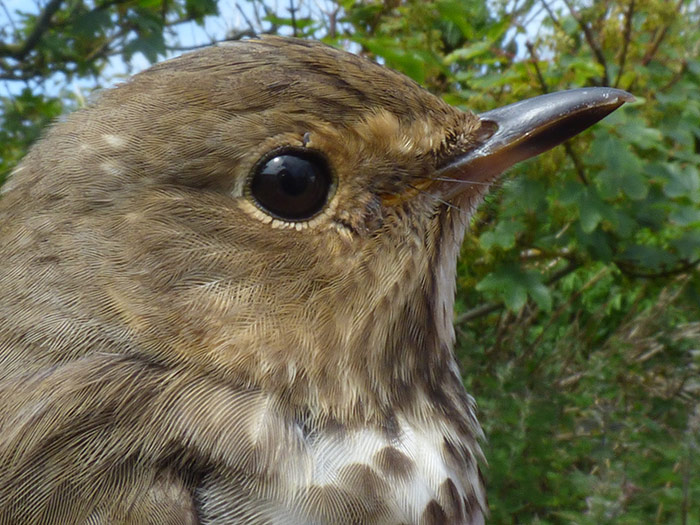
This is not the first Swainson’s Thrush to grace Skokholm; the first live record for Britain and Ireland was found here on 14th October 1967. There was also a Red-eyed Vireo that day and nine days previously a Rose-breasted Grosbeak and a Northern Oriole had been logged! That Swainson’s hung about for five days before it moved on; hopefully this bird will do the same.
Following an extensive renovation project over the last few years, Skokholm Island is again welcoming up to 20 overnight guests, with scheduled boats running on Mondays and Fridays. During the breeding season our guests are surrounded by Manx Shearwaters, Storm Petrels and Puffins and there is always the chance that something very special might turn up.
Swainson's Thrush records in Britain and Ireland

Richard Brown
Skokholm Warden
04 Jun 2015

Write for Rare Bird Alert
Do you have a birding story you would like to share? From foreign birding trips to your local patch, finders accounts and more, we would love to hear from you.
All our articles are free for anyone to view and we include them in our weekly newsletter which goes out to thousands of birders every Wednesday. We also share them on our Twitter and Facebook pages, making sure your article will get read by as many people as possible.
If you would like to write an article please for us please get in touch with your ideas, thank you.
The RBA team