Finders-in-the-Field: Siberian Blue Robin, Shetland
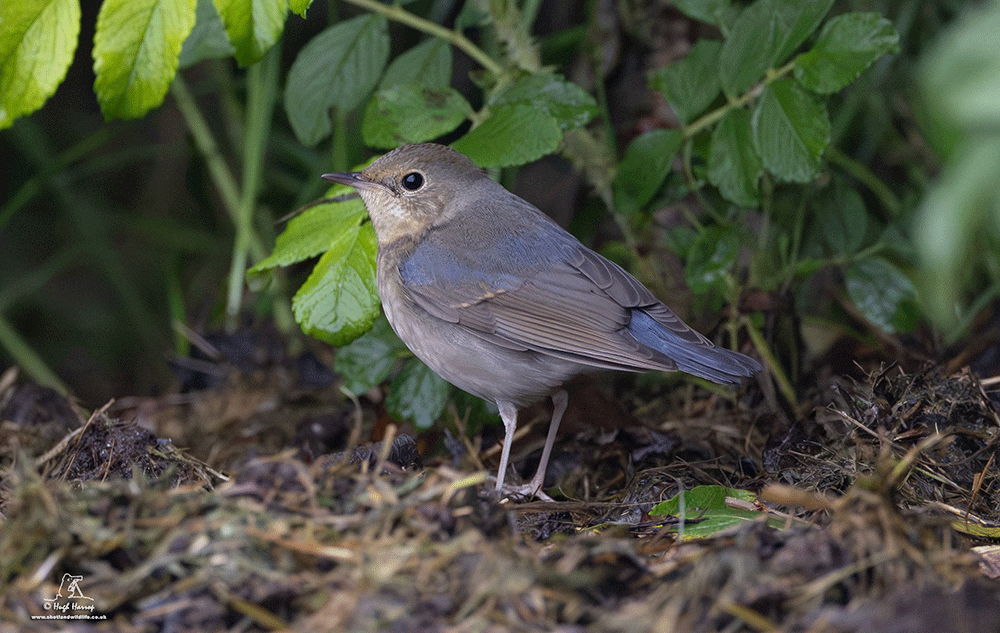
Thursday 1 October 2026 dawned calm after the previous day saw south easterly gales gusting to 50mph and a band of heavy rain crossing Shetland. I was up early and after breakfast headed into our garden to empty a moth trap I’d had running overnight. That proved to be a quick exercise with just a handful of moths caught. It was, however, clear that a few migrants had arrived following the south easterlies and within ten minutes I’d seen Yellow-browed Warbler, Lesser Whitethroat, Blackcap, a Robin and a handful of Song Thrush and Redwings. Several Bramblings flew over too, so the day ahead was looking good.
As I wandered back to the house I noticed a small robin-type bird lift up from a flattened pile of grass cuttings and manure under one of our larger patches of roses. I’d placed that combination along with a big pile of chicken manure nearby a month ago to create a micro-habitat for migrant chats, thrushes and flycatchers and hopefully Bluethroat - which I still need for my garden list! That split second observation happened too quickly for me to get any detail, but I was sure I’d seen some blue on its rear end. I waited for a few minutes and walked the fringes of the roses but nothing appeared. At this stage I thought it could have been a Red-flanked Bluetail.
I went back to the house and grabbed my camera and decided to concentrate on the perimeter of our garden in the hope that I’d relocate it perched on a fence line or on some of the lower branches of the trees. Three walk arounds later and a search of our neighbours garden a hundred metres or so away and nothing. At this stage I started to doubt myself. Did I see blue? Was it just a trick of the light? Was it just a European Robin I’d seen poorly?
A Jesus, Mary and Joseph and the wee donkey moment if there ever was one!
I headed back to the house and decided to have a good look in the garden again. As I was coming back towards the cuttings and manure pile I saw the same robin-type bird running into the roses. Again, I had no time to get my binoculars on it and after waiting for around five minutes, it didn’t reappear.
Having now seen it twice within thirty minutes and knowing how much food must be present in the grass cuttings and manure ‘combo’, it was obviously favouring that area and likely to return. It was clearly skittish and whatever it was, it wasn’t going to give itself up easily. I often photograph birds in the garden from a vehicle and thought sitting and waiting would be the best ploy. I drove into the paddock with a clear view of the cuttings pile, put down the window and waited. And waited. And waited…
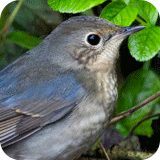
About twenty five minutes later the bird appeared at the base of the roses. It was mostly obscured but through binoculars I could see that the head was uniform brown with a pale eye ring, the throat appeared pale and unmarked which contrasted with a ‘scaled’ upper breast. A couple of seconds later it suddenly ran a few inches out into full view. When I saw the mostly blue back, even brighter blue rump and tail, I could hardly contain myself - it was a young male SIBERIAN BLUE ROBIN.
A Jesus, Mary and Joseph and the wee donkey moment if there ever was one!
For the next minute or so it paraded itself out in the open. It made short runs with bouts of tail and wing ‘flicks’ so characteristic of the species but was clearly agitated by the constant calling of a nearby European Robin which eventually appeared, chasing the Siberian Blue Robin back into the roses.
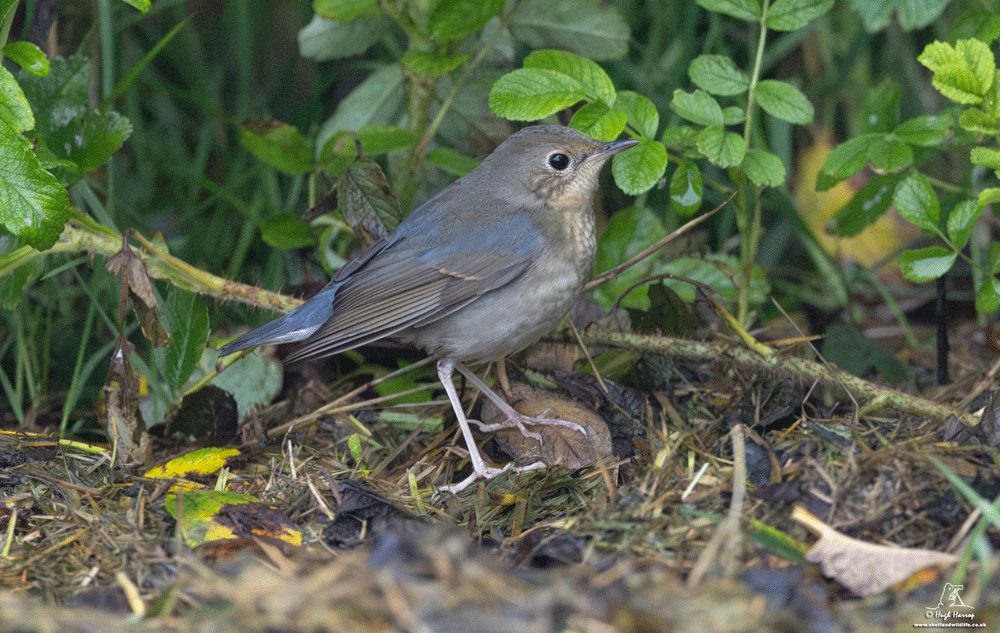
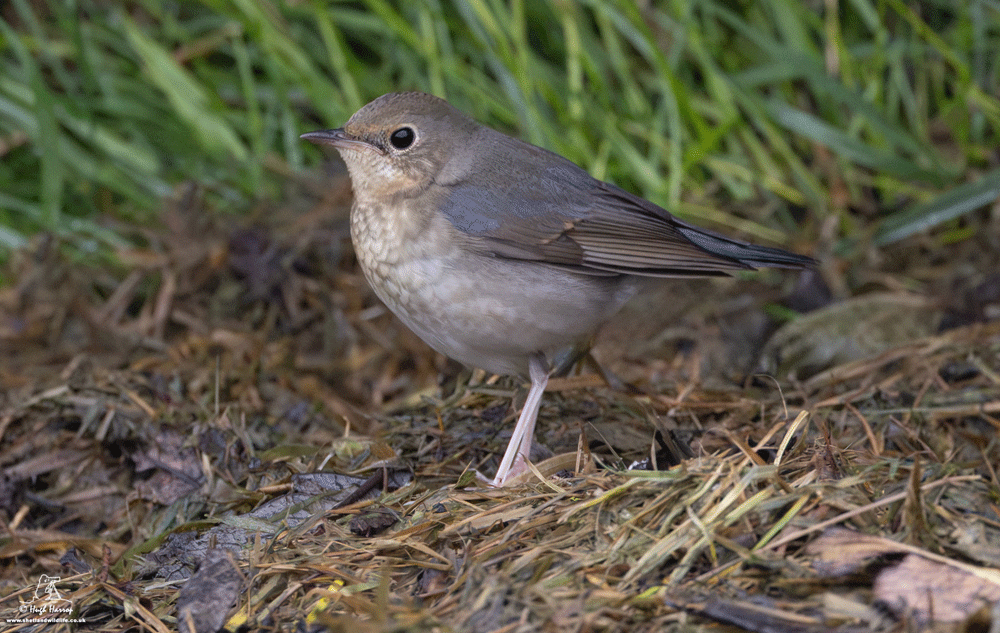
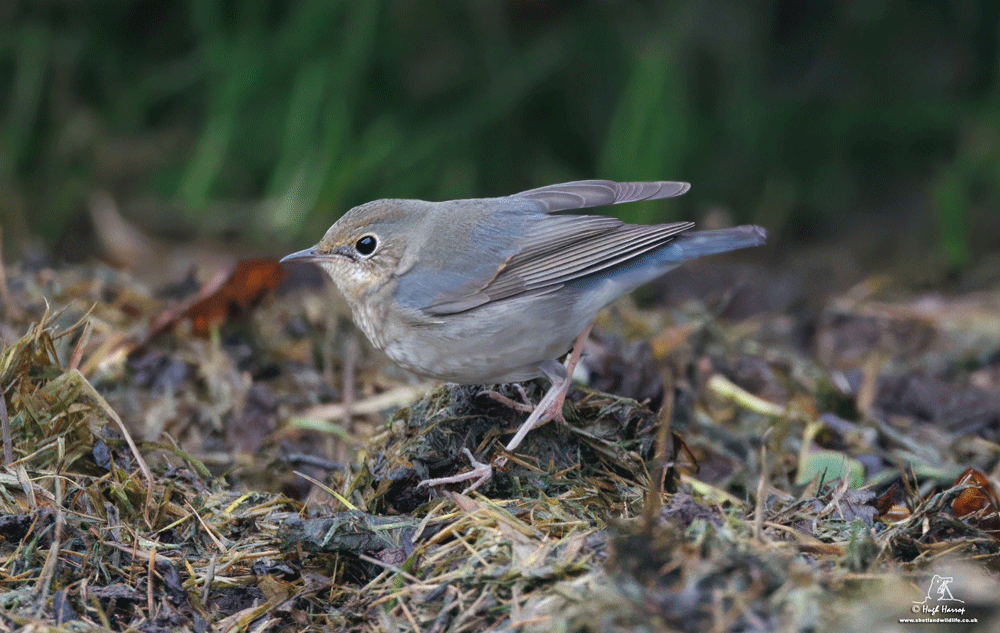
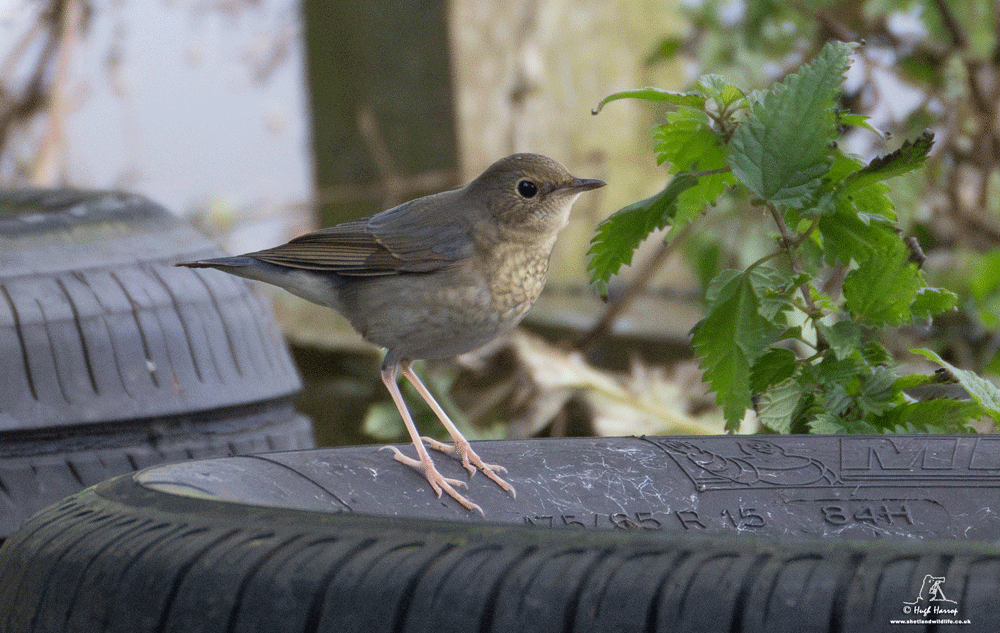
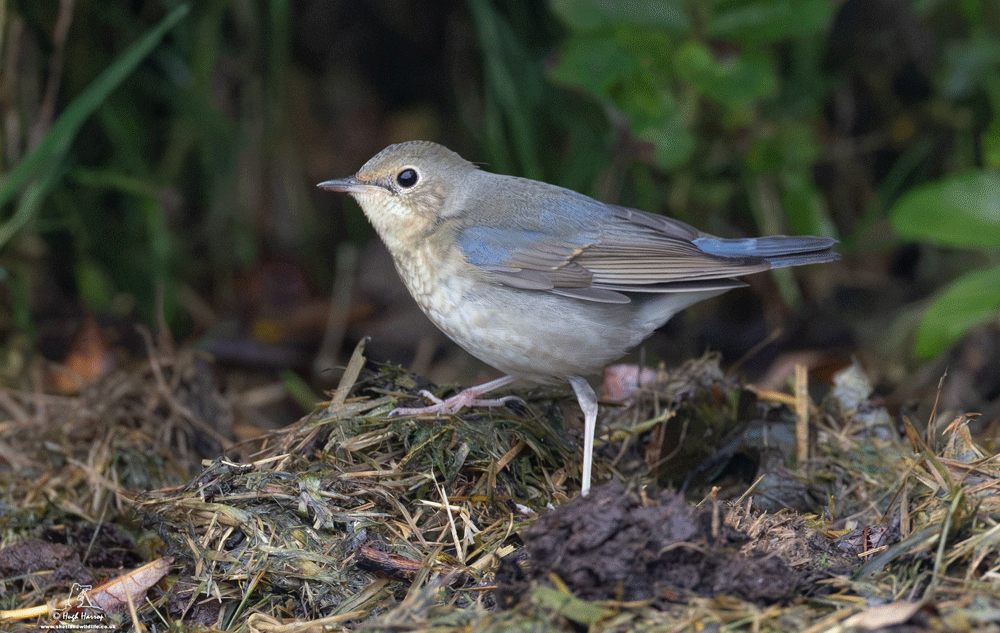
My eyes remained fixed on the area and after a couple of minutes (which felt like hours), out it ran again and was on full view for about 30 – 40 seconds before heading to the base of the roses and out of view.
At this juncture, the magnitude of the find started to kick in. I reached for my phone and saw I had a message from Paul Harvey saying he had an Olive-backed Pipit in his garden. Knowing he was home, I called him first and tried to get the words of my discovery into some kind of coherent sentence. Dan Pointon was with Paul so I agreed to meet them both at the bottom of my track and I also called Roger Riddington, who on his way, bumped into Phil Harris. We headed into the garden and I walked the inside perimeter. I heard a call several times that I was not at all familiar with and walked back a few metres to play a recording on my phone to my ear – it matched Siberian Blue Robin perfectly so I called Paul to say it was calling in front of me and I would try and walk it out. A minute or so later the bird appeared in full view in the leaf litter under one of the sycamores and further views were obtained on the ground and perched up due to the antics of the European Robin continuing to chase it.
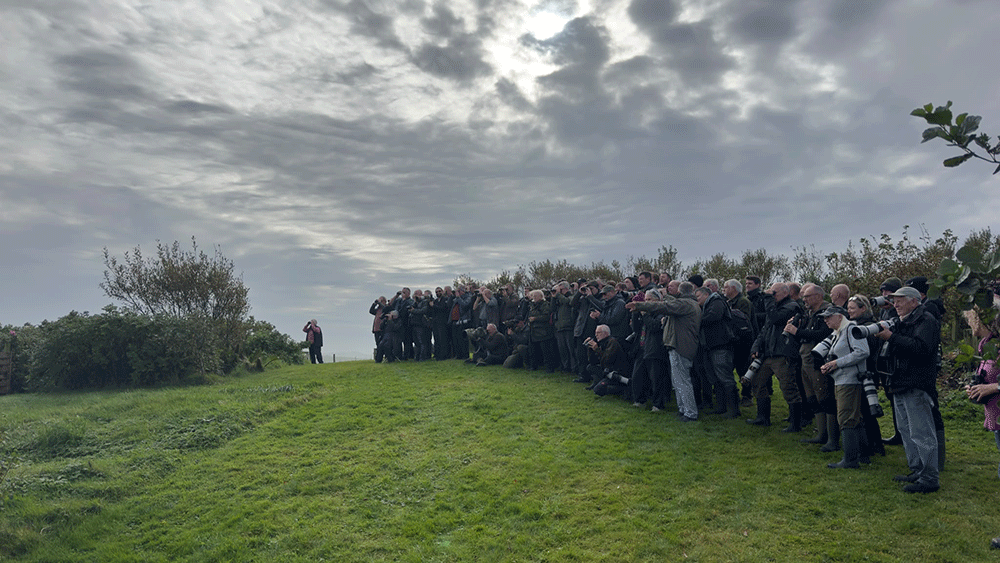
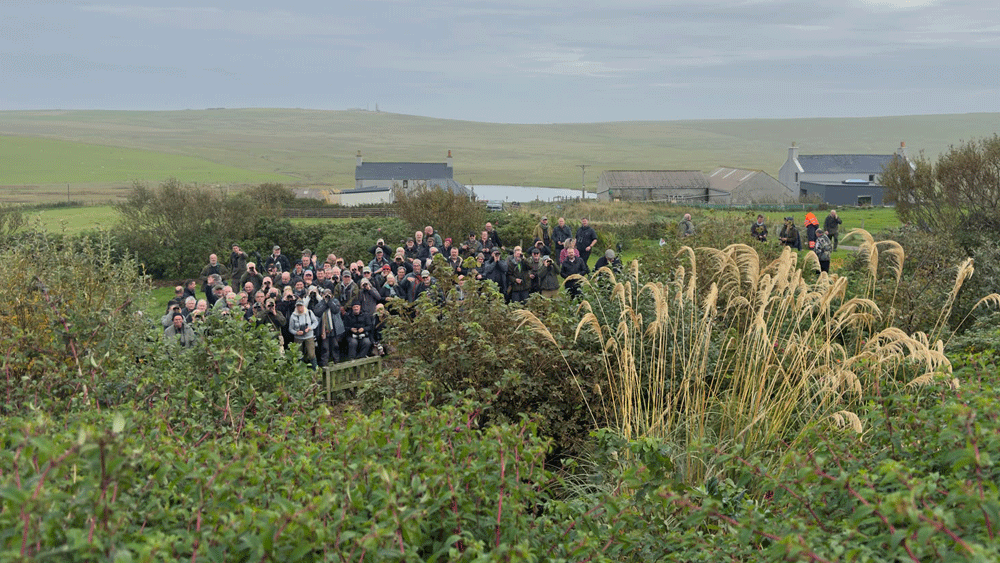
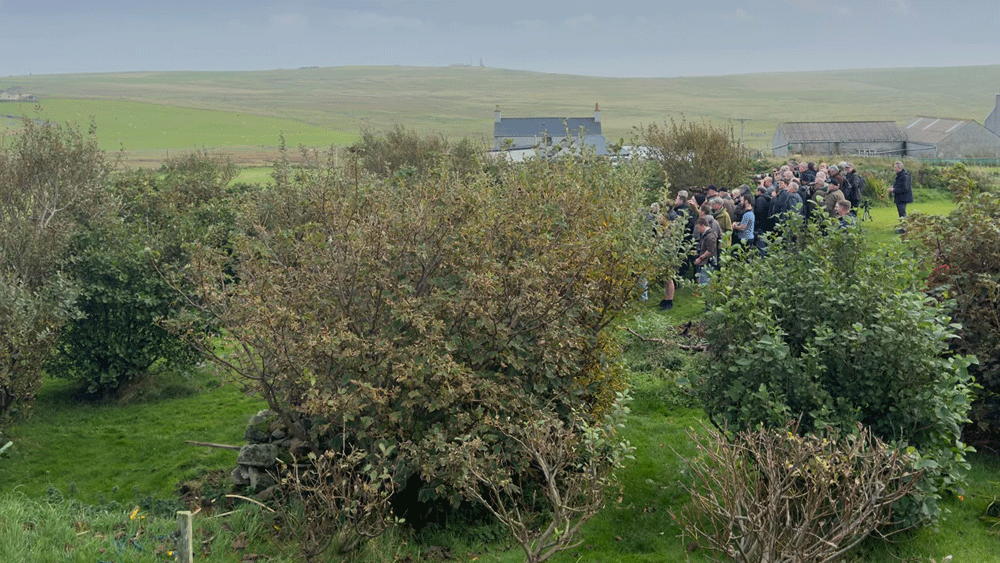
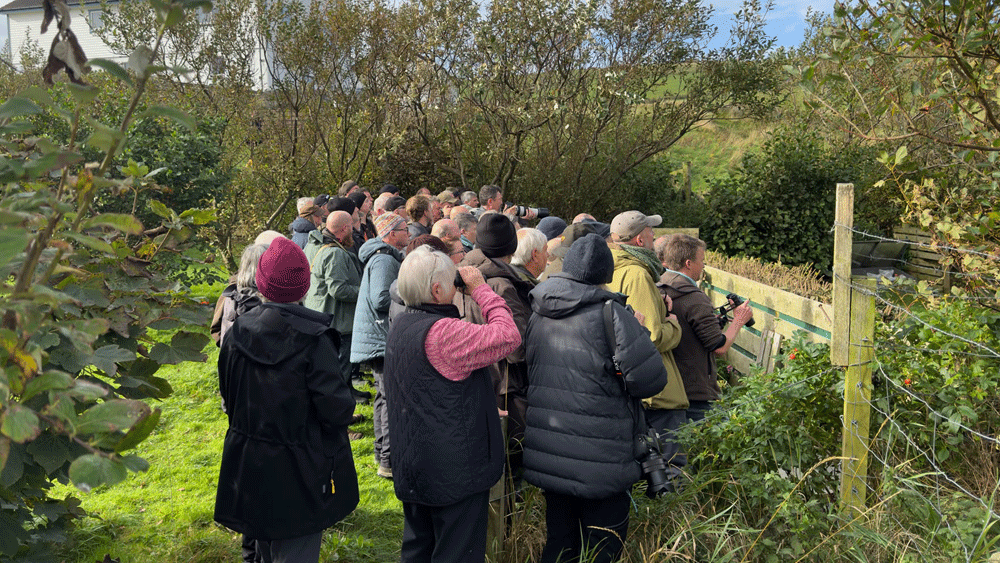
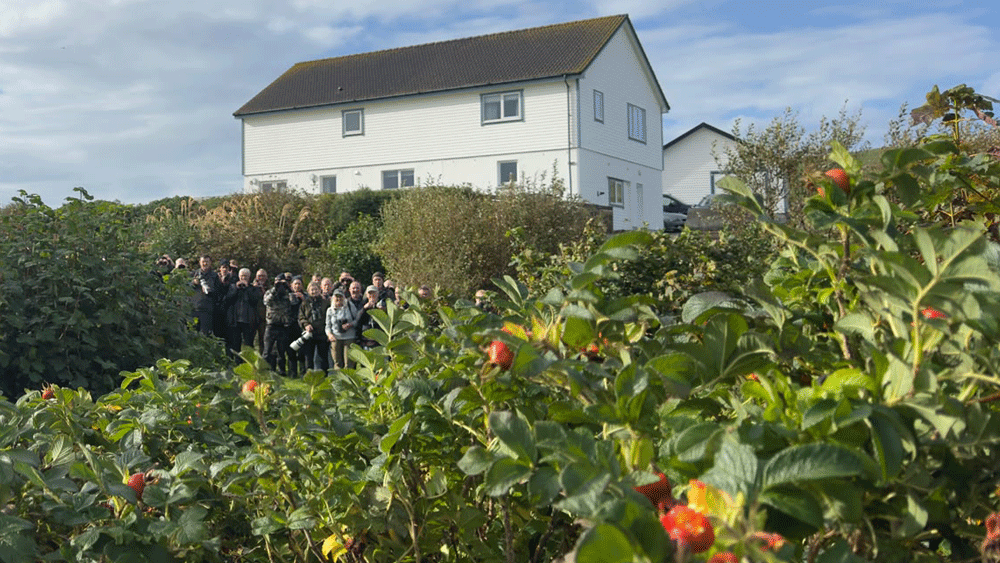
We have around 20 active and keen resident Shetland birders but at this time of year, another 150 or 200 or so visiting birders are present. The garden is an acre in size and so accommodating that number of people was not going to be a problem - getting views of a notoriously shy species in areas of deep cover inside the garden perhaps was. I typed out a message on the Shetland birding Whatsapp group and pressed send.
Within minutes the first birders arrived and within an hour there were well over a hundred people gathered in our garden. Clearly some kind of structure was needed and I felt the best ploy was to first and foremost give the bird some space and then after a while slowly walk it to its favoured spot. This worked well on several occasions with people getting some excellent views though it predictably remained elusive.
As the morning wore on, sightings became fewer and fewer. It was felt the bird had now left the garden and was not seen at all between noon and 2pm. With so many people now in the garden, I thought it pragmatic to temporarily close off access to the inside of the garden and hopefully allow the bird to come back to its favoured areas. I also set up a couple of cellular trailcams on those areas which would send images by email to my phone if something ‘broke the beam’ and if the Siberian Blue Robin did, then we would open access to the garden again.
Most that had seen the bird left the area and many continued to search from the perimeter. The discovery of a Two-barred Warbler just down the road at Quendale Mill saw a lot of folk (myself included) heading there in the mid afternoon and as I was watching that, I kept getting images emailed through from the trailcams. The European Robin, Blackbirds, Wren and Meadow Pipits were all that were coming through but in the hope it had returned, I opened up the garden to birders for nearly an hour late in the afternoon and did two more walk-throughs. Sadly, there was now no sign for nearly six hours.
Overnight it was clear and calm. I walked through the garden again in the morning several times prior to 0800 hrs but there was still no sign of the bird. I kept the trailcams ‘live’ for the rest of the day but nothing blue and beautiful appeared. It’s almost as if it knew a brief appearance for just a few hours would ensure its mythical and Holy Grail status remained in place.
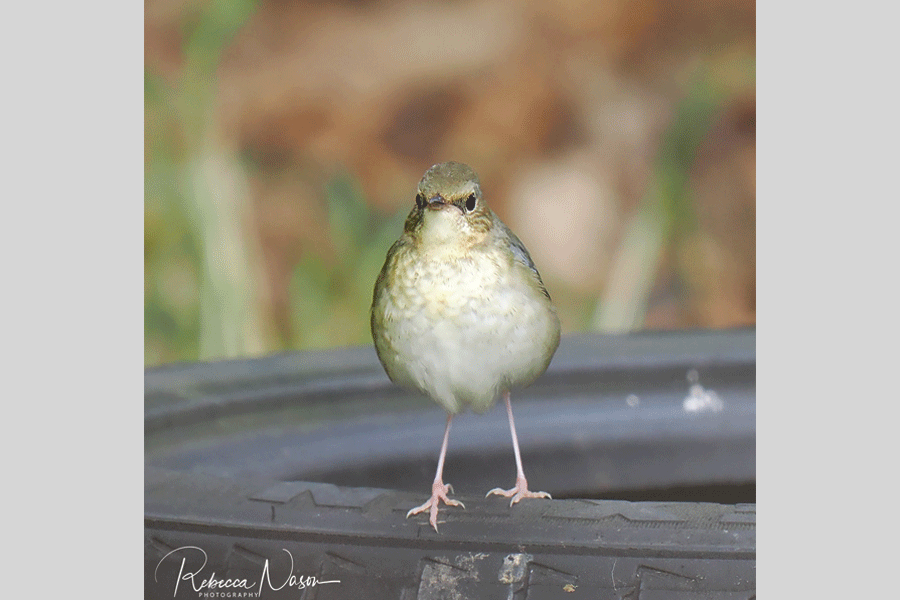
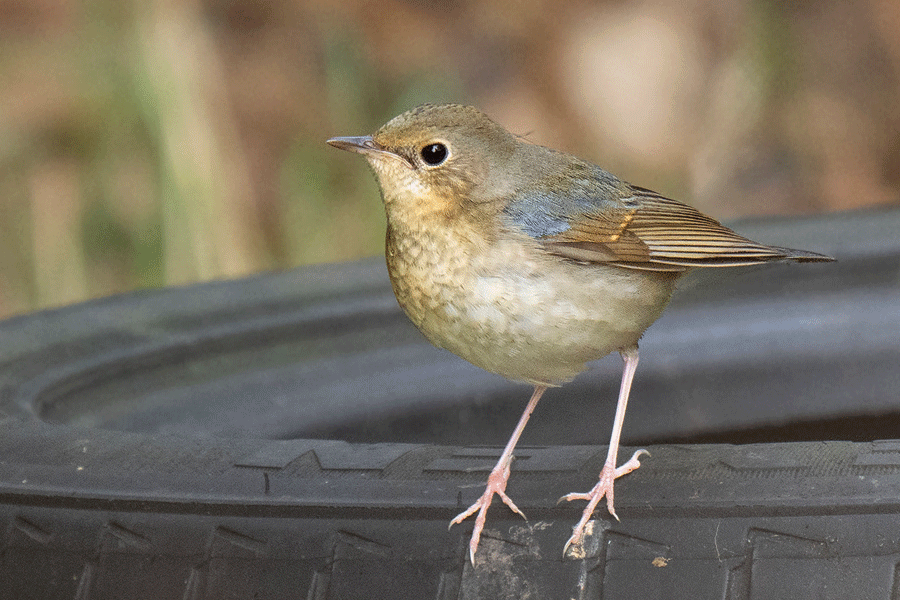
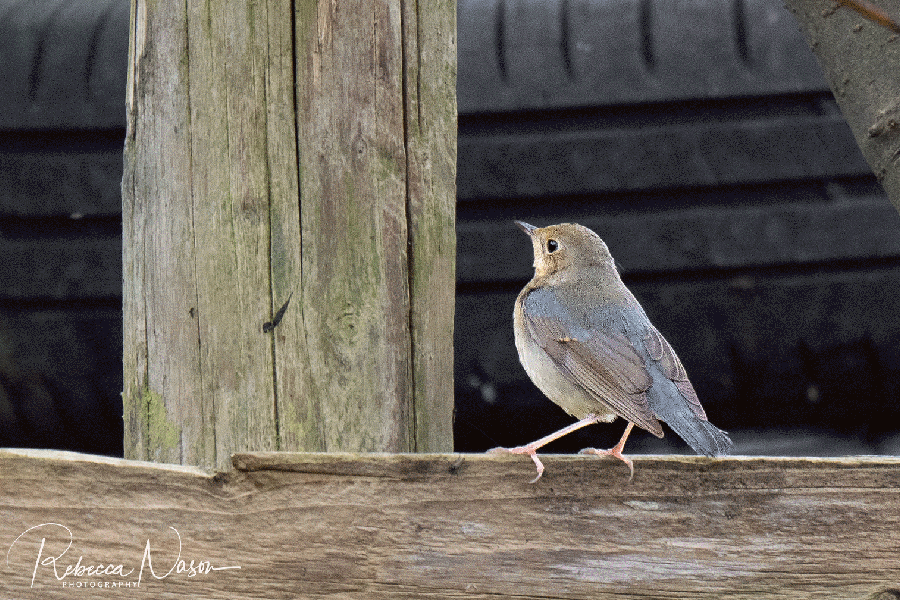
Thank you to all that came into the garden to share this magnificent bird and for following all the on-site instructions and parking requests. Your cooperation was appreciated not just myself but by my neighbours and local residents.
I will however add that the garden and approach track isn’t open to the public and is our private space, so please respect that at all times in the future. Be assured that if I discover any more rarities in there, I would hope not to have any hesitation doing the same again and allow people in to enjoy whatever is making the headlines.
My garden list (birds seen in or from the garden) currently stands at 219. Fingers crossed a Bluethroat finds us and makes it 220…
6 Oct 2026
Get Breaking Birdnews First
Get all the latest breaking bird news as it happens, download BirdAlertPRO for a 30-day free trial. No payment details required and get exclusive first-time subscriber offers.