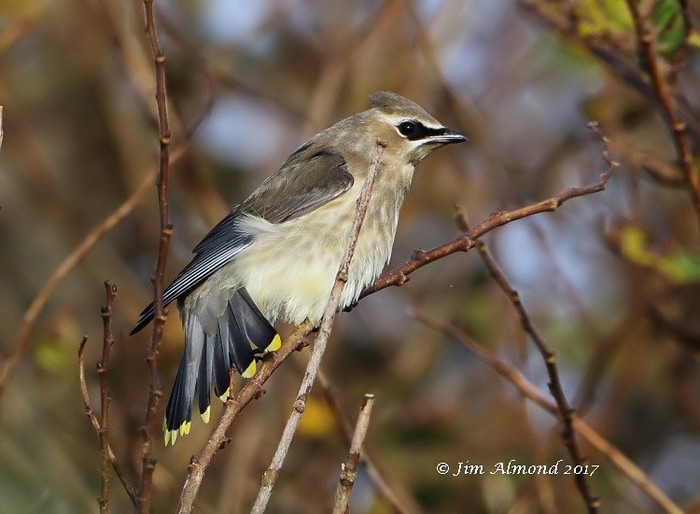
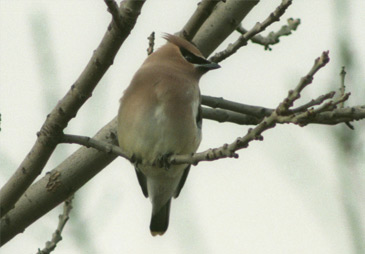
Finders-in-the-field: Cedar Waxwing, St. Agnes, Isles of Scilly
BOU/IRBC Status: A
RBA status: Extremely Rare Vagrant
Accepted British records: 6
Accepted Irish records: 2
Most recent accepted record:
26 Jun 2015 - Treginnis, St David's, Pembrokes
Prime month(s) to occur: June
To say the last few days of September and early October has seen a return to form for Scilly has been an understatement. I had not been able (and I didn’t want to get wet!) so I didn’t go to look for the Rose-breasted Grosbeak or the Red-eyed Vireo on St Agnes. The nice thing about having lived here for over thirty years is that I have seen a few of these over the years. However the news that the Isabelline Wheatear, that had been found at the end of last week, had been seen again on the airport late on Sunday afternoon was enough to get me on my bike and cycling up to the terminal building where it was showing well, despite the stiff breeze. I had not seen an Isabelline Wheatear since 1991 so thought it was about time I made the effort.
On Monday I was back to work leading one of my wildlife tours on Tresco and was very happy with the day so far by lunchtime, having seen the three Bee-eaters near the Abbey Gardens and then the flock of six Pink-footed Geese that have been around for a couple of weeks. Later in the day I was at Old Grimsby and had a message to say a Red-rumped Swallow had been seen over the Great Pool, shortly followed by another message saying it was not a Red-rumped and might be a Cliff Swallow. I lead my group along the Pool Road in what was becoming a rather damp afternoon when we found a group of hirundines feeding low over one of the fields behind the ‘David Hunt’ hide. The majority were Swallows with at least one House Martin and one, which looked like a Cliff Swallow. It flew low over the field a couple of times and although a bit paler than last year’s bird still looked like a Cliff Swallow. As I had not seen anything on the pager I thought I should ring it out which I gather caused some consternation in the hides overlooking for the pool as the paleness had caused some doubts about its identity. My views against the dark trees were closer and in better light which gave me quite an advantage. We then left the island knowing that others were on their way and gathered later they had seen the bird going to roost on the Abbey.

I seemed to be going the wrong way next morning as I was going to St Agnes with a Tour whereas everyone else with binoculars seemed to be heading to Tresco. We began the tour heading towards the western side of the island and I was stood with my group looking into one of the Browarth fields having been quite happy with the morning so far, having seen Pied Flycatcher and Whinchat, when I became aware of a small bird sitting on the top of the hedge in the far corner of the big field. Something about it didn’t look right but somehow familiar. It then flicked up to catch a passing insect and I soon realised I had seen Cedar Waxwings do this in Florida. I commandeered my scope from the group and was soon looking at a juvenile Cedar Waxwing. To say I was surprised was an understatement, but I didn’t swear! The bird then worked its way up and down the top of the hedge chasing insects but sat still long enough between sallies for each of my group to have a look through the scope. They were not keen birders but soon got the idea it was a good idea to text any birders they knew to say what they had seen! I was busy on the phone putting the news out and was talking to local birder Doug Page when the bird dropped off the back of the hedge. At that point Fran Hicks turned up. He had not heard about the bird but was coming to work on his field. Doug arrived shortly after but we had not seen the bird since it vanished when I was talking to him. We looked for the bird for a while with no luck before I had to carry on with the tour. We could see more and more people looking and knew that boats were on the way from Tresco and St Mary’s but the bird seemed to have vanished. Despite the numbers of birders looking the bird remained out of view until much later in the afternoon. We guessed something had happened when we saw a line of jogging birders heading inland from Wingletang Down in mid afternoon. It then took a little while to pin down, but over four hours since we saw it, the bird showed very well and some much better photos than my record shots were taken. I was very relieved, as the return boat trip with a boat full of birders who had missed it would not have been fun. As it was there were smiles all around. A superb bird on a warm sunny day on St Agnes- what could be better.

Having missed the previous one here, even though I had been the one to identify it and put out the news, I was more than pleased to catch up with this species on Scilly. Only a handful of the local birders had seen the previous one so those who missed it then were very happy to see this one. Although I am not sure whether I have recovered from the man hug from Higgo in the Club later in the evening!
To quote a phrase I heard after all had seen the Cedar Waxwing ‘the slumbering giant has awoken”. Scilly birding back to its best.
Will Wagstaff
05 October 2017
Share this story