Pied Wheatear, Meols, Wirral - A county first
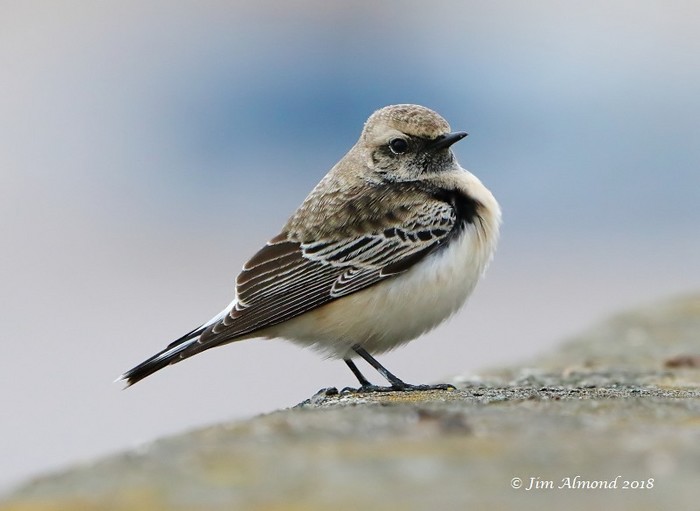
It is pretty much every ‘patchers’ nightmare to find out about a rare bird on his or her patch, after the event! On Tuesday November 6th I walked through the door at home having spent the day out in the field. I had been looking for the usual late autumn suspects - Pallas’s Warbler, Humes Warbler or even a rare late autumn Wheatear. In reality on my West coast patch however, it’s more about hope than expectation. Taking off my ‘bins’ and jacket I noticed I had missed a couple of calls from fellow Wirral birder Steve Williams. Within a couple of minutes, I had returned his call! “Have you checked your e-mails?” was his opening comment. I hadn’t! I fired up my laptop and after a few seconds up came the e mail with the header ‘not 100% it’s a Northern.’ I’d almost guessed what was coming before opening the attachments but open them I did and up popped two pictures of a 1st winter male Pied Wheatear with a line saying it had been present since Monday!! A flurry of expletives was my response. An instant reaction but of course I was delighted for the finder, Richard Ashford. Full credit to him for forwarding his photos to Richard Smith (RS) at www. deeestuary.co.uk who in turn forwarded the pictures to Steve and myself. “It’s a Pied, isn’t it?” came the rhetorical question from Steve which brought me back into the land of the living as I continued to stare at my screen in disbelief. “Yes, it’s a Pied “I replied. In fact, Steve had already responded to RS some 10 minutes or so earlier to say ‘it could be a Pied’. We briefly discussed and quickly dismissed Desert Wheatear and the most likely confusion species, Eastern Black Eared. “I’ll see you in the morning” ended the briefest of calls and the news was then put out on our local Wirral Whatsaap group and the finder’s pictures sent out on social media.
I was delighted (we all were!) to receive these photos but it was a bitter sweet moment from a personal perspective for a number of reasons. Firstly, I’d been out all day contemplating the very real potential that one day Wirral would have a rare Wheatear; secondly, the bird had now been present for two days but most of all, it had been at the end of my road and it was now completely dark!
It was a long night! With the phone ringing and pinging through much of the evening I needed something to stop the turmoil, to numb the pain, to make it all better. The answer was of course obvious, the answer was alcohol! After a few large glasses of wine and one last dash into the garden to check the cloud cover for the fifth time it was time to turn in. Batteries charged and SD cards inserted, I was set. Ordinarily I’d have checked the car too but this ‘twitch’ was different, I could walk it. Apparently, it was bone idle of me to even consider driving according to Mrs C!
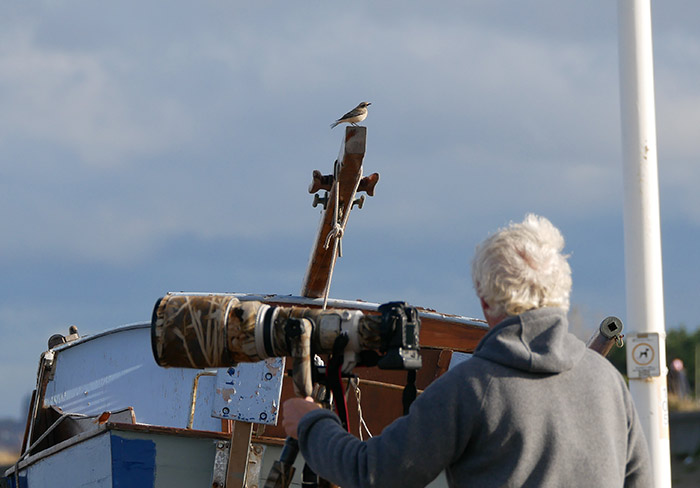
The next morning was a chilly start. I arrived on site (by car!) at 07.00. I wasn’t the first; as shapes and silhouettes of fellow birders emerged through the pre-dawn gloom. The weather and mood remained gloomy until 07.16 when the distinctive shape of a ‘Wheatear’ standing ‘tall’ appeared on the sea wall. It had stayed! The relief was palpable, the excitement tangible and with much mutual congratulatory back slapping the assembled crowd enjoyed a very confiding 1st year male Pied Wheatear – a county first. The light improved during the morning, as did the photographs, many of which made social media and the various birding websites. The bird remained faithful to a very small stretch of sea wall at the eastern end of Meols promenade making occasional forays to the rooftops of the seafront houses or the masts of the nearby boats. After a five day stay the bird decided to do a classic Friday night flit and was sadly not present for those who made the journey on the Saturday.
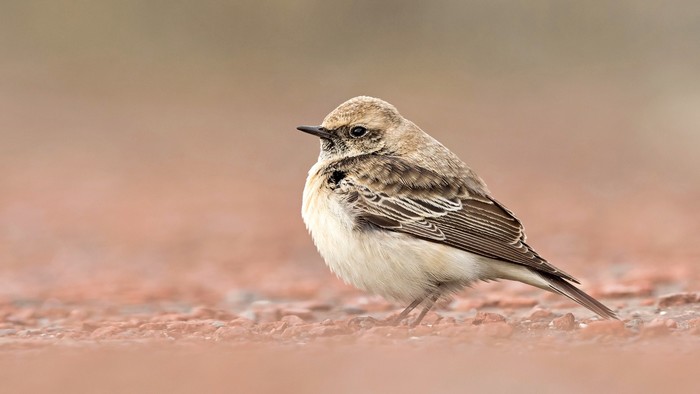
So, a great bird, a county first and full congratulations should go to Richard Ashford for finding it and to Richard Smith of www.deeestauary.co.uk for being so quick in distributing the photographs. Great work! Our West coast peninsula is perhaps only famed for the Leach’s Petrel passage in autumn but rarely does it hit big with this quality of rarity so it’s incredible to think this Pied Wheatear was within 100m of the site of Britain’s 4th ever Desert Warbler in October 1979.
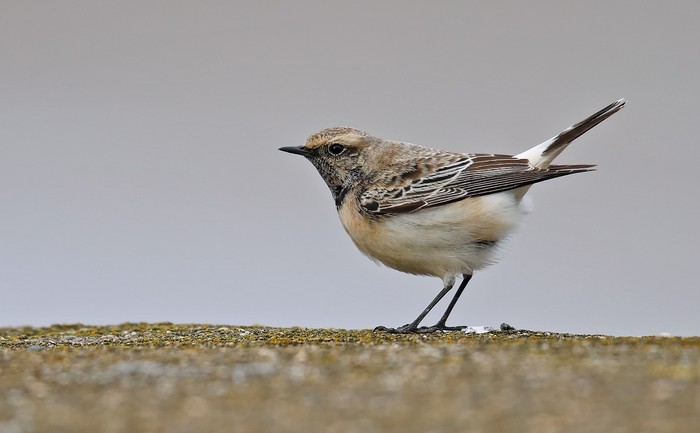
As a postscript, long time Wirral birder and Hilbre Island Bird Observatory founder Tony Bell recalls another ‘dark’ Wheatear he had on Nov 17th 1957 also along the same stretch of coast. His notes from the day appear to describe a Pied Wheatear although I suspect not detailed enough to satisfy the BBRC.
Allan Conlin
12 November 2018
Share this story