Finders-in-the-Field: Probable Brown Booby, Swalecliffe, Kent
On the morning of the 19th August Geoff Burton, Ted Lee and myself met up at at our regular local patch, Swalecliffe, on the North Kent Coast. It had been a quiet period for the site and the clear skies, light southwesterly breeze and bright sunshine did not seem to point to this morning being much different. We had watched a couple of groups of whimbrel drop in and a trickle of sandwich terns passed by, when just after 7 a.m. Geoff picked up a large dark bird flying east, low over the sea, which through his binoculars he assumed was a juvenile gannet. I was still scanning the terns but I could tell by the tone of Geoff's voice that something about this bird was troubling him and that started troubling me as well. After all its not unusual to see gannets off here.
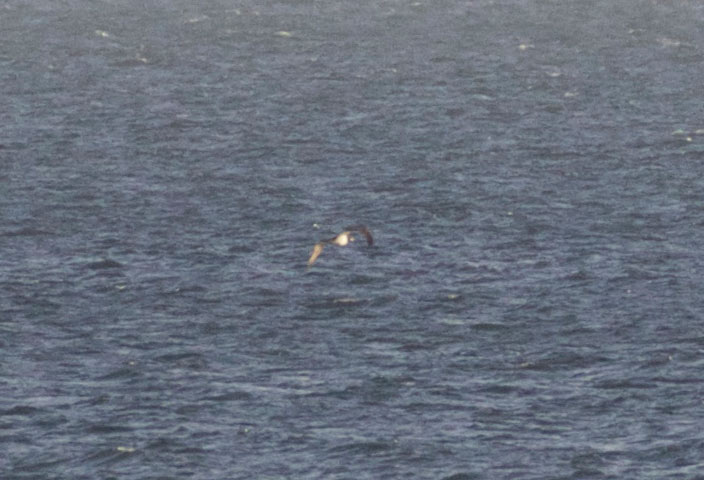
Geoff then shouted to me to get on this bird now on full alert and luckily simultaneously we both got our scopes onto the bird as it flew past us a few hundred metres offshore. I was shocked ! As the bird in my scope appeared uniformly black brown above with black brown head, neck and chest with a sharp demarcation with the almost gleaming white belly and a very pale bill. I blurted out in incredulity that it looked like brown booby! which an equally incredulous Geoff concurred.
We were also struck by the overall neat and tidy appearance of the bird - we could see no obvious wing moult, scaling or white markings on the upper parts and the white under parts looked completely unsullied. If this was an immature northern gannet, and it would have to have been an immature, it was strikingly unlike any of the literally 1000s of juvenile gannets either of us have seen off this coast over the years. The bird was already past us heading out and away fast into the early morning sun so I instinctively went to my camera feeling I just had to try and get something of this bird, more in hope than expectation.

Although distant, the back of camera images showed that the bird appeared to show pale underwing coverts - something that we did not see as the bird passed us. Also reconfirmed that this was unlike any gannet we had ever seen and seemed to showed features which were consistent with adult Brown Booby. However views had been incredibly frustrating in their brevity and the conditions conspired against getting better photos. Our main concern was whether any aberrant immature northern gannet could some how replicate the striking appearance of this bird. After all this would seem a far more likely and believable explanation than a potential amazing first for Britain being sighted off here of all places.
With the potential enormity of this sighting and the potential pitfalls not lost on us we compared my record shots with images of Northern Gannet and B. Booby including a Brown and white N. Gannet seen off Spain initially identified as a Brown Booby. However there were several thing on this bird that were not right for the bird in my photos and the views of the bird I had that had flown past me. However many images I looked at and however many times I scrutinised my photos and despite the frustratingly brief views, I had I found myself returning to the same barely believable conclusions.
After much thought and natural trepidation I decided to publish and be dammed. I felt this bird needed to be out there as at the very least this was an exceptional looking Sula worthy of wider attention regardless.
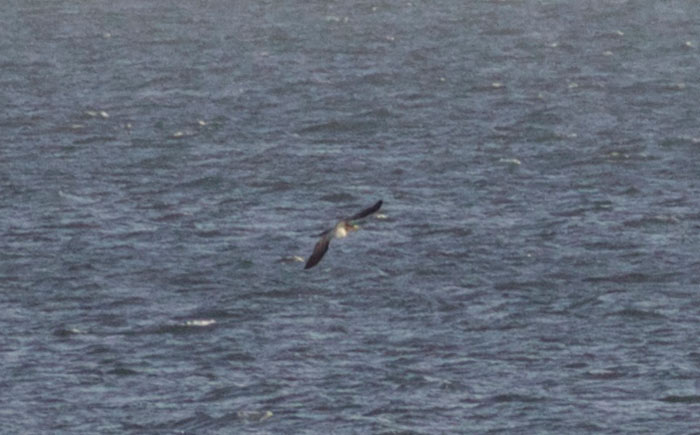
The reaction to the image was huge and I was grateful for the time and input many in the Birding community put in. While opinions ranged from definite Brown Booby to understandable caution and disbelief, (mirroring closely the process that Geoff and myself and gone through with actual bird), a recurring theme was that nobody could recall ever seeing a bird like this in British waters.
Interestingly a Brown Booby was seen in Holland two years ago almost to the day and seven days after our sighting one was found off Cornwall.
Andy Taylor
September 2019
Share this story