Finders-in-the-Field: Barolo Shearwater, Corsewall Point, Dumfries and Galloway
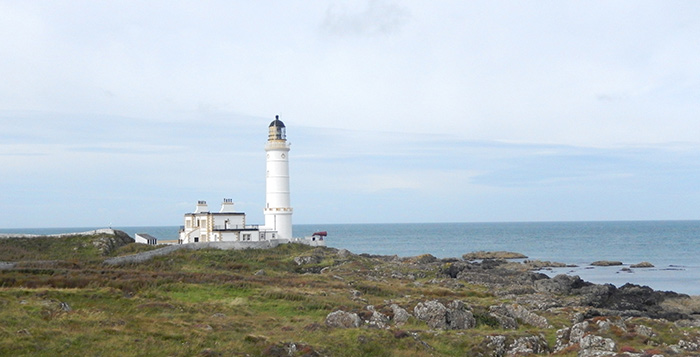
At the northern tip of the hammerhead-peninsula known as The Rhins of Galloway on the westernmost coast of Dumfries and Galloway, nestles Corsewall Point – a rocky promontory overlooking the north Irish Sea area of the North Channel. Offering panoramic views from the Ayrshire coast encompassing views of Ailsa Craig, the Isle of Arran and the Mull of Kintyre peninsula, to the North Antrim coast of Northern Ireland, with Rathlin Island viewable on days of good visibility, it affords good land-based seawatching opportunities throughout the year. Although seawatching from the point can be fraught and exacting at times, it can be rewarding and on the whole it is usually productive providing sought after target species within seasonal passage periods coupled with favourable winds. Depending on the time of year, favourable winds are a southerly orientated moving clockwise to a south-or-north-north-westerly or a north-north-westerly moving anti-clockwise to a west-south-westerly or to a direct westerly.
Corsewall Point has long been a personal favourite birding location of mine for seawatching in Dumfries and Galloway, previous fortnightly visits, often during peak passage periods prior to November 2014 were timely and costly, often resulting in over a 200 mile round trip. It was during late November 2014 that I relocated to the nearby town of Stranraer situated on the western and south-western shores of Loch Ryan. I immediately assigned myself to undertake a minimum of a 5-year study of seabird movements past the point (I have now extended this to a 7-year study) targeting, in particular, all species of petrels, skuas and all vagrant shearwater species together with Puffin movements and numbers, with a view to writing up a paper for publication in the Scottish Ornithologists’ Club’s journal Scottish Birds.
Since November 2014 I have spent many a long seawatching hours at the point and have recorded and have had the following birds accepted by various rarities panels - White-billed Divers (2), Cory’s Shearwater (1), Great Shearwater (1), Surf Scoters (3) and an Alpine Swift (currently pending with BBRC) together with numerous other local descriptive species such as Balearic and Sooty Shearwaters, Sabine’s Gulls, Little Auks and Grey Phalaropes. Other notable species recorded past the point have included all four species of skua, a Red-necked Grebe, Glaucous, Iceland and Little Gulls, Little, Roseate and Black Terns, a White-tailed Eagle, a Bewick’s Swan, a Little Egret and a Temminck’s Stint to name but a few.
Sunday 18 August 2019 started off a normal day; I drove the 10.3 miles to the point from my house, arriving at around 06:20am. I parked the car up in the usual place at Dunskirloch, which sits to the east of the lighthouse and before Well Isle, at an elevation of only 18m above sea level, facing Milleur Point at the mouth of Loch Ryan which allowed me to view out of the open passenger door window looking towards the Kintyre peninsula and Sanda Island. After setting up my Manfrotto tripod and Swarovski ATX 95 Spotting Scope in the passenger seat area of the car, I duly proceeded to undertake a seawatch starting at 06:30am. Straight away, there was a good movement of Manx Shearwaters passing south-westerly together with good numbers of Fulmars plus all the usual species I’d expect to find passing the point. I recorded my first Balearic Shearwater of the day passing the point at 07:47am and by 08:38 I had seen 14 Storm Petrels plus 4 Whimbrel and 2 Black-tailed Godwits, all going south-westerly.
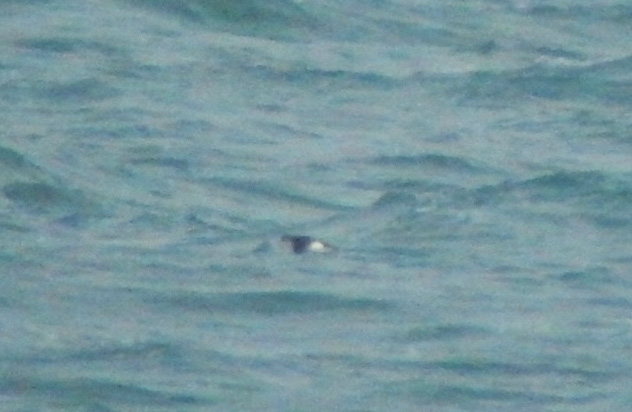
At 10:06 I then spotted a bird moving south-south-westerly and immediately I realised that it was something different to the norm so I dropped my four-clicker bank teller counter that I was using to count the Manx Shearwaters with, and upped the magnification on the scope from x30 to x50 and it immediately became obvious that its mode of flight/flight action warranted close scrutiny. As the bird flew closer, I dropped the magnification back down to x30 (for extra clarity) and started taking notes. I jotted down its flight action, noted its size, its compactness or stockiness as I called it, its head shape profile and head and body plumage characteristics, all at the same time comparing it to the nearby Manx Shearwaters that were passing close by. At this the point the bird turned slightly and flew in a more south-westerly direction giving me better lateral views. Straight away I then realised that I was looking at a Barolo Shearwater – the aforementioned features that I had noted a short time earlier now became more obvious and evident and allowed for me to make more detail notes including proportionate body dimensions and back end views together with a more accurate and clearer view of its head and underwing markings.
In the ensuing time that I observed the bird, I made fuller, more detailed notes of the number and sequence of wing flaps, timed its short glides and compared these with the nearby Manx Shearwaters. I realised that by this time I should try and get a images of the bird!! I got my Nikon Coolpix S9600 compact camera out and handheld it onto the eyepiece of the scope. I managed two accutations and then the bird was suddenly lost to view – phew!! But my joy was short lived, on playback the first image was blurred so it was instantly deleted and the second was a ‘doable’ record shot. Not the crippling shot that I wished for, but at the end of the day it is what it is - still better than nothing I suppose!!
After a sigh of relief I decided to put word out but as luck had it, there was no signal on my mobile phone (an annoying and regular occurrence at Corsewall Point with my current phone service provider). After uttering a few expletives I decided to carry on with the seawatch, at the end of which I added another Balearic Shearwater, 7 more Storm Petrels and 2 Great Skuas to the day’s tally and finished off the day with decent views of a pod of Bottlenose Dolphins. So, all in all, a decent seawatch made all the more memorable by the Barolo Shearwater sighting. If accepted it will be the second Barolo Shearwater for Dumfries and Galloway following the first, which incidentally was also seen off Corsewall Point, on 14 September 1985.
Brian Henderson
22 August 2019
Share this story