Finders-in-the-Field: Northern Mockingbird, Exmouth, Devon
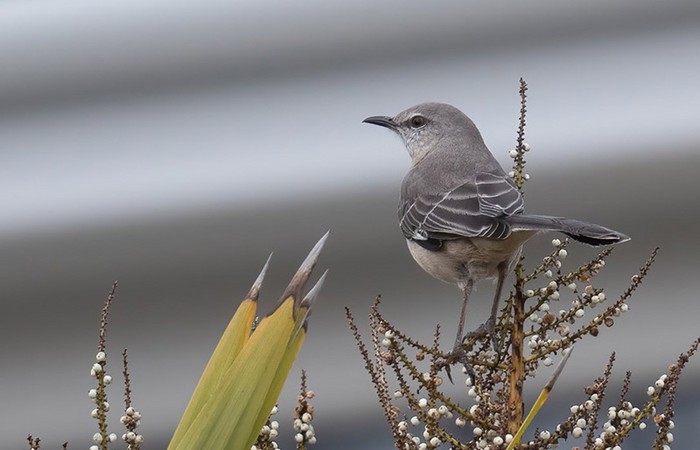
We live in Exmouth, East Devon, in a residential area on top of a hill approx. ½ mile from the Exe estuary and 1 mile from Exmouth seafront.
Our garden is south facing and sheltered with several mature hollies, palms and apple trees.
We first noticed a long tailed greyish bird on 23rd January eating the flowers on our tallest palm. Our children were taking part in the great garden birdwatch and were using the RSPB poster to try and identify the visitor. Our first thought was that it might be a Dunnock but we were still unsure as we couldn’t find a match for it in a bird book.
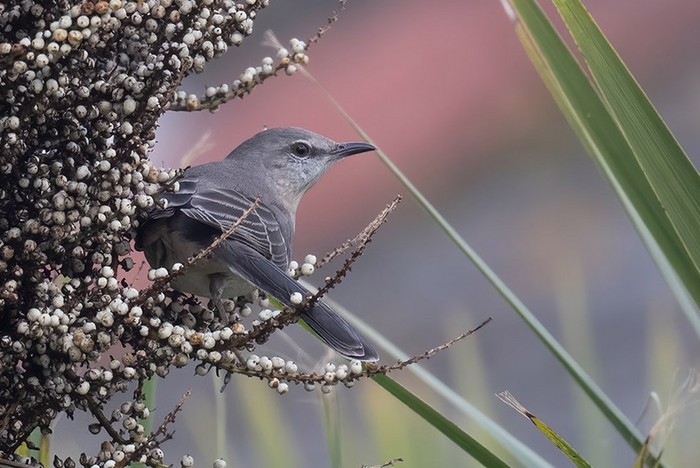
The bird became a regular visitor to our garden, moving between the holly and palm and often perched in the top of the apple tree. Bad weather often made it difficult to spot, but as I was working from the spare room I noticed the long tail on a number of occasions.
On Wednesday 3rd feb the bird was really active around the largest holly tree, which has been particularly full of fruit this year due to the mild weather. We have a couple of wood pigeons who have frequented the garden for the last few years and who normally nest in the tree. I noticed the bird chasing the pigeons away from the tree, and then out of the garden - this has become an ongoing battle whenever they return!
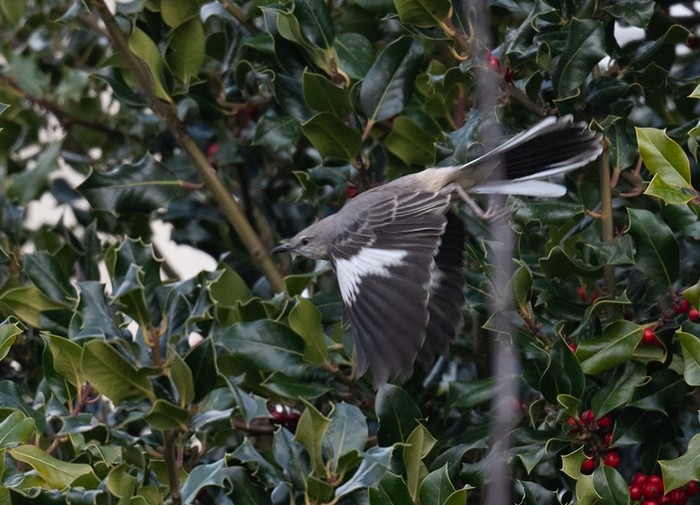
We sent a couple of photos to some friends, Nick Barlow & John Woodward from Marsh Lane Nature Reserve, Balsall Common, who first identified our bird as a possible Northern Mockingbird. We mentioned this to our neighbours who said they had noticed some unusual birdsong over the last week or so too.
Finally, on Saturday the 6th of Feb we managed to get some clear photographs and sent a tweet out to the local RSPB at Bowling Green Marsh for verification.
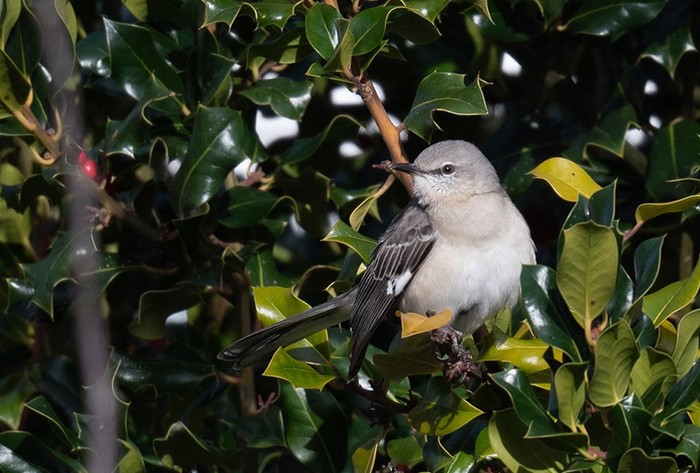
We are delighted with the positive response and the good wishes from the whole birding community. We realise how popular such a rare UK sighting is and are grateful for the restraint shown by everyone in respecting the current lockdown.
We plan to donate the fee for this article to Lympstone pre-school – a small community run preschool currently struggling due to the COVID restrictions.
Chris Biddle
Februsry 2021
Northern Mockingbird in Britain and the Western Palearctic
This is the fifth Northern Mockingbird to be recorded in Britain although of the previous four records only two are fully accepted as wild birds.
Britain: 2 accepted records
First record: Aug 30th 1982, Saltash, Cornwall
Most recent: May 17-23 1988, Horsey Island, Essex
Western Palearctic: 4 accepted records
The first Northern Mockingbird to occur here was in Norfolk at Blakeney Point on 22nd-25th August 1971 but the British Ornithologists' Union Records Committee thought it most likely to have been an escape from captivity on account of its heavily abraded tail and wings, and that feathers were missing from above its bill.
The second individual was present at Worm's Head, Glamorgan on 24th July-31st August 1978 wasn't accepted as a wild bird either due to the mid-summer discovery date and belief that if wild it must have been ship-assisted and as a result the record was not fully accepted.
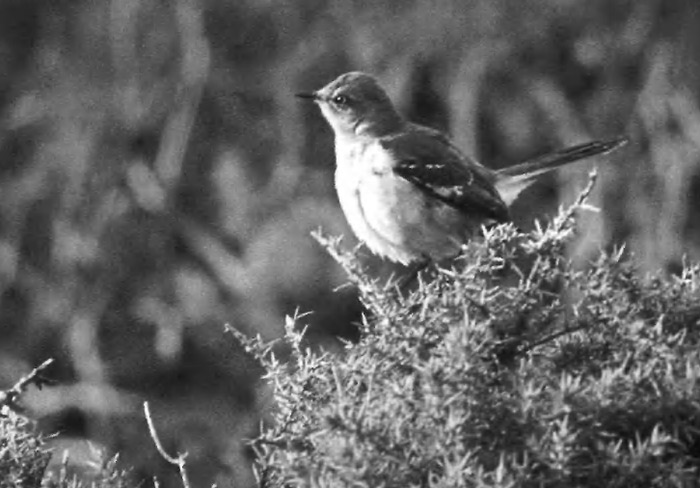
The species was added to the British List by the BOURC on account of a bird seen briefly at Saltash, Cornwall on 30th August 1982 - the day after a Black-billed Cuckoo on the Isles of Scilly and two days before a Black-and-white Warbler in Cornwall - as by this time the species was considered less abundant in captivity. The fourth record - but the second to be accepted - was present on Horsey Island, Hamford Water, Essex on 17th-23rd May 1988 although it was acknowledged that ship-assistance for this record was most likely.
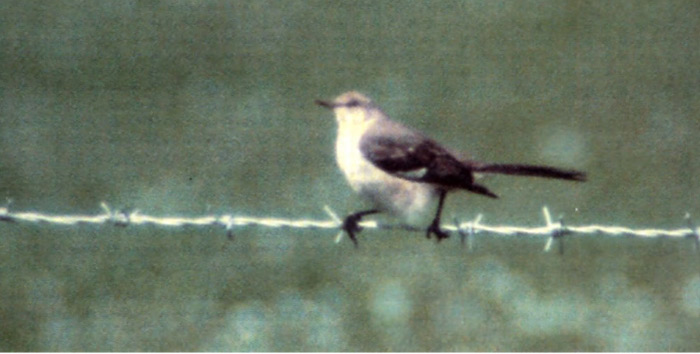
Elsewhere in the Western Palearctic one was in the Netherlands on Schiermonnikoog on 16th-23rd October 1988, and in Spain on the Canary Islands one stayed on Gran Canaria at Arguineguin from 15th November 2004 until February 2006 when it was reportedly taken into captivity. The latter was only accepted onto Category D of the Spanish List.
Share this story