Egyptian Vultures found nesting in Cape Verde
By Vulture Conservation Foundation
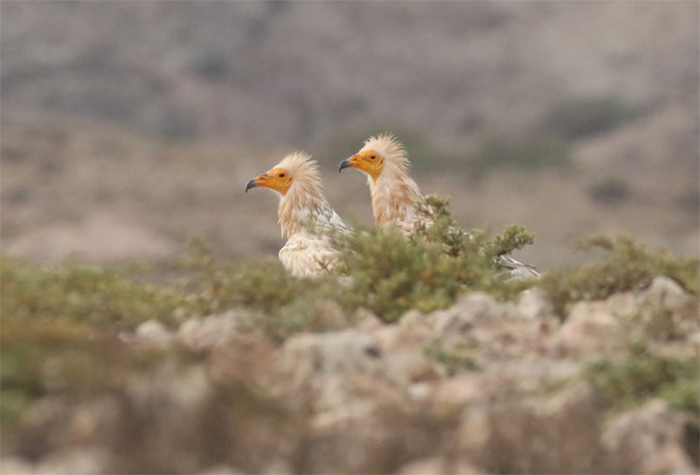
The recent discovery of an Egyptian Vulture nest in Cape Verde is exciting news, considering it is only the second occupied nest of this extremely endangered island population found in the country over the last five years. Currently, a dedicated team of conservationists from the Bios CV NGO in Boa Vista island, Cape Verde, closely monitor the nest to keep track of the progress during the ongoing breeding season.
Egyptian Vultures in Cape Verde
The Egyptian Vulture used to be widespread in Cape Verde, an Atlantic oceanic archipelago off the west coast of Africa, until about 25 years ago. Unfortunately, it underwent a very rapid decline in the last few decades and virtually disappeared from the country. While the current population size is not accurately known, it is likely that no more than 20 individuals still survive on only three islands: Santo Antão, Boa Vista and Maio. Population decline in the archipelago has been attributed to poisoning, reduced food availability and, as revealed over the last few years, electrocution on power lines.
In Cape Verde, like in other archipelagos (Canary Islands, Balearics, Socotra), the Egyptian Vulture is sedentary — most other populations are migratory, with Eurasian birds spending the winter in Africa, the Arabian Peninsula and the Indian subcontinent.
In Boa Vista, there may be no more than 1-2 breeding pairs and less than six individuals. The cryptic behaviour of the species, the low population numbers and the location of potential active nests in the most remote areas of the island make it difficult to estimate population size and breeding parameters.
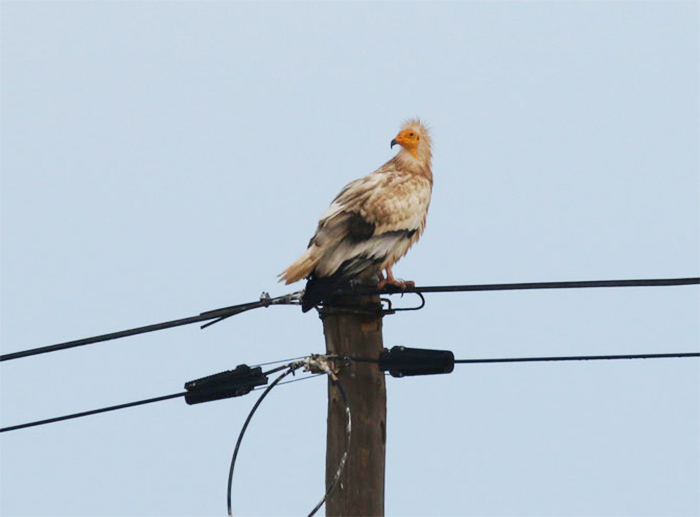
Monitoring the newly found Egyptian Vulture nest
The discovery of the occupied Egyptian Vulture nest transpired earlier this month in an inland mountainous area of the Boa Vista island. Now, conservationists survey the nest every 3-4 weeks to confirm breeding activity. Of course, they monitor the nest from a safe distance to minimize disturbance, which is extremely important especially now that the breeding season started and the birds are more sensitive to disturbance.
Bios CV has been implementing monitoring and conservation activities for the Osprey and Egyptian Vulture since 2012, with generous support from Cabeólica S.A.
22 April 2021
The paper is freely available at: DOI: 10.1111/mam.12249
Share this story