EU-funded project restores key site for critically-endangered terns
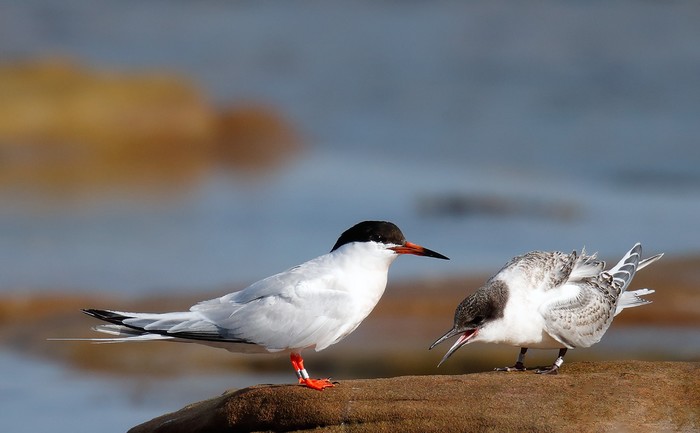
Roseate Terns – the rarest breeding seabirds in Europe - could be brought back from the brink in Northern Ireland thanks to a major island restoration project.
The critically endangered species has been in near-terminal decline since the late 1980s.
Blue Circle Island, part of the RSPB’s Larne Lough reserve, is one of the most important sites on the island of Ireland for breeding terns. After being flooded and eroded it has now been restored in a £391,000 project, with costs partially covered by the EU-funded Roseate Tern LIFE Recovery Project and additional match funding from Tarmac and the RSPB.
Sea defences on the island had collapsed and up to a third of it had eroded through flooding. Ahead of the 2019 breeding season, RSPB-led works have shored up the island and extended the nesting area, making it a prime potential site for a Roseate Tern colony.
While there were between 20 and 35 breeding pairs in Larne Lough between 1985 and 1989, just one pair has been recorded in recent years.
The good news is that two Roseate Tern chicks have hatched, according to a survey last week by RSPB NI Tern Conservation Officer Monika Wojcieszek.
“This is fantastic news that we have two roseate chicks on Blue Circle and we’re hopeful that we can see their numbers increase year on year,” said Monika.
“This restoration project was a major piece of conservation work and it was vital to safeguard this tern colony. The works were needed to preserve the integrity of the site – parts of it were completely inundated at high tide periods, limiting nesting and breeding opportunities.
“On the island we have approximately 7,000 birds including common terns, Sandwich terns, common gulls, black-headed gulls, Mediterranean gulls, oystercatchers and black guillemots, but the Roseate Tern is one of the rarest of all our breeding birds in the UK and Ireland, so it’s fantastic that we have been able to work with partners including Tarmac to complete this work on the island.”
Due to the importance of the site and because of the presence of the protected bird species, there is no public access to the island.
Monika carried out ecological supervision during the construction and led the habitat management with the help of volunteers prior to the breeding season.
The entire UK and Ireland population of Roseate Terns in 2018 was 1,987 pairs, distributed between just three colonies: Rockabill Island and Lady Island Lake in the Republic of Ireland, and Coquet Island in Northumberland. The terns spend winter on the coast of West Africa and come back to these breeding colonies in May.
The EU LIFE Roseate Tern Recovery Project aims to safeguard all the main Roseate Tern colonies and provide suitable conditions for re-colonisation in places where the birds used to breed, including Larne Lough.
Larne Lough and Blue Circle Island provide an important refuge for breeding seabirds owing to several factors:
- the sheltered sea lough provides conditions that are free from the worst of the coastal weather
- offshore locations for ground-nesting birds mean that the effects of disturbance and predation are less than at other more vulnerable sites
- proximity to productive feeding areas allows breeding adults the best chance to raise chicks to fledglings
- there is also a stable colony of common terns, as well as a large assemblage of Sandwich terns and black-headed gulls, which help provide protection against predators
Blue Circle Island was initially created by Tarmac (previously Blue Circle Cement) using excess materials from Magheramorne Quarry. Construction was completed in 1990. The site is designated as a Special Protection Area, Area of Special Scientific Interest and a Ramsar site.
The restoration was completed at the end of last year, with the costs covered by EU-funded Roseate Tern LIFE Recovery Project, Tarmac and the RSPB.
1 July 2019
Share this story